
History
Programme for January 30, 2016
Not really. We have not yet set the date for our first program of 2016.
The holiday season is always much too busy for us to schedule any new films in December.
Rest assured we plan to return with an exciting new program in January of 2016. Wanna know what that program is going to be? Those of you who have subscribed to our mailing list will get an email from me as soon as we have picked a program and scheduled a night. If you have not yet subscribed, now would be a good time click on the JOIN button on the left and give me your email address.
2015 saw us in a reduced schedule while we looked for and moved to our new venue. Favorite programs in 2016 included our Spooky Silent Film Night with live musical accompaniment by the incomparable Shauna Gordon-Picket and last month's night of Latin music and film.
Details about these events and every other film we have ever screened can be had by clicking on the HISTORY button on the left.
See you in 2016.
Joe Devlin, Information Director, Coastside Film Society.

Back to
take 1
Programme for November 20, 2015
Two pre-release Films about Latin America by two local filmmakers
short: A Gift for Abuelo
A poignant tale of a young boy who honors his grandfather on Day of the Dead by protecting the endangered Olive Ridley sea turtles that nest near his home. Gail Evenari, the local filmmaker behind the film will attend the screening.
Live music by Maikel Garcia & Ander Meyer
The score for our short was composed and performed by Maikel Garcia, a Cuban-born jazz saxophonist who lives now in the Bay Area. He will perform live with pianist/bassist Ander Meyer.
feature: Laser Beam of Santiago
A documentary shot in Santiago de Cuba by the Film Society’s own Warren Haack. The film focuses on the life & music of Sergio delis Sabouvin-the Laser Beam of Santiago. Sergio is a colorful street singer who is seen as a modern-day “Cuban Woody Guthrie”. He sings protest songs in a Communist dictatorship, walking a fine line to keep out of the eye of the police by blending honesty and humor.
Warren will attend the screening and regale us with tales of his many visits to Cuba.

Short: A Gift for Abuelo
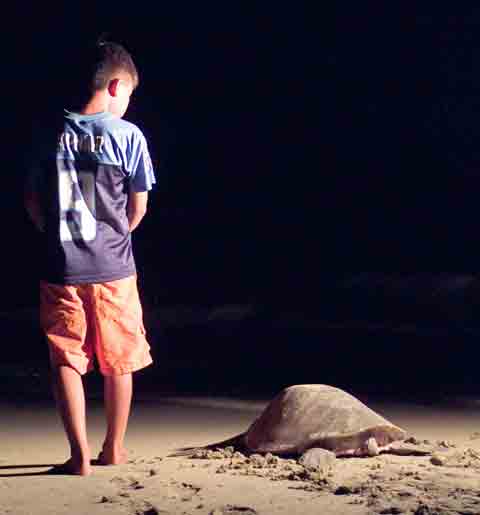
A poignant tale of a young boy who honors his grandfather on the Day of the Dead by protecting the endangered Olive Ridley sea turtles that nest near his home. The film not only teaches the value of our coexistence with the natural world, but it also immerses viewers in the traditions and lifestyle of another culture — creating a unique, engaging educational experience that can be enjoyed by children of all ages. The film, which was shot in Mexico, is the work of the Half Moon Bay based filmmaker Gail Evenari.
Short: Live music by Maikel Garcia and Ander Meyer
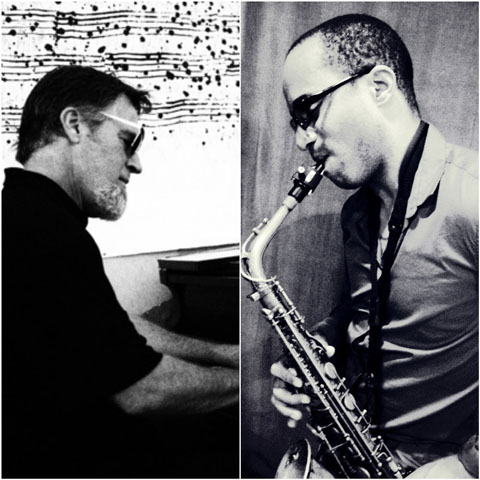
Maikel Garcia was born in Santiago de Cuba and has performed throughout South and Central America and the U.S. with his own ensembles as well as some of the most influential Caribbean and Latin jazz artists. His unique music is a fusion of jazz, funk, Cuban and classic rhythms. He currently resides in Half Moon Bay, CA.
Ander Meyer is a pianist/bassist with over 30 years of experience performing in multiple musical genres. The Ander Meyer Trio plays weekly at The Sushi Mainstream Sake Bar, in Half Moon Bay.
Feature: Laser Beam of Santiago-The Bard of the Barrio

A documentary shot in 2014 in Santiago de Cuba by the Film Society’s own Warren Haack.
In describing the film, critic and historian Joseph McBride says: “Haack’s personal journey to Cuba takes him to the heart of the Afro Cuban culture. personified by the bold and delightful Sergio (The Laser Beam of Santiago). Using lively and spontaneous documentary filming techniques, Haack expertly captures Sergio’s street singing, his artistry, and the communion he shares with his fellow Cubans. The film has an infectious quality and a real-time feeling to its shooting style that brings this great talent to us as if we were right there with him and his audience in the streets of Santiago. Bravo Sergio! Bravo Warren!"
This intimate, lively documentary follows Sergio in several impromptu performances and gives the audience a view into the Cuban consciousness through his music. His performances and messages exemplify the spirit of tentative hope that now exists as the relations between Cuba and the U.S. have begun to thaw, offering the possibility of a new cultural exchange between our two countries, a development that will benefit the cause of international harmony.
Warren Haack lives in El Granada, works for the Department of Cinema at SF State and serves as a Board Member of the Coastside Film Society.
Back to
take 2
Programme for October 23, 2015
A Night of Creepy Silent Films
Given that this Fall’s Silent Film Night comes the week after Pumpkin Fest and the week before Halloween we decided to make it a spooky event. Our Feature, the “Man Who Laughed” from 1929, is a swashbuckling melodramatic retelling of a Victor Hugo novel featuring a cast of thousands. We open with “The Count’s Daughter” shot two years ago by Johnny Villar, a local wunderkind who loves old silent films and creates comedic shorts that feel like they were made in the 20s. Johnny will act as master of ceremonies for the night.Come in costume and save a few bucks.
$7.00 Adults - $4.00 Children - $2.00 off for those in costume
Lets make it a festive night! In keeping with spirit of the night, we are encouraging folks to attend in costume. Two bucks off ticket price for costumed attendees. What to wear? These are Gothic movies so powdered wigs and flouncy clothes would be appropriate. Or you might want to wear a Joker mask given that this Batman villain was based upon the protagonist of our feature. Whatever costume you decide will be fine with us.
Live Musical by Montara’s own Shauna Pickett-Gordon.
Audiences love Shauna’s piano accompaniments of our silent films. She has been working on the score for this night’s event for the last two months. She starts by coming up with and memorizing themes for all the major characters and scenes in each film. Once she has memorized all those themes she is ready to adlib her entire performance. This will be the seventh film she has scored for us. Can’t wait to see what she has come up with this time around.

Short: The Count's Daughter (3 Mins - 2013)
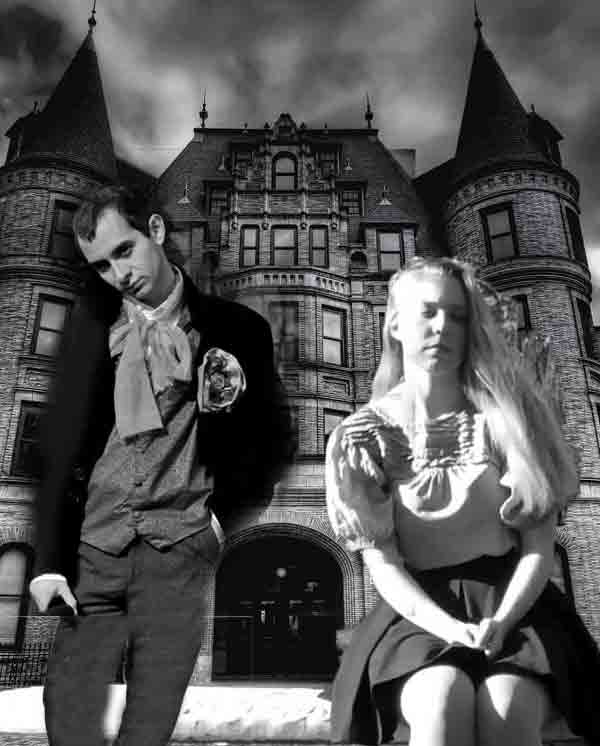
This silent short by Johnny Villar, a 22-year-old Bay Area actor/singer/filmmaker/wunderkind. Created in homage to the 1920 Silent films Johnny loves it features a unique visual style and frightfully funny over-the-top performances. Winner of the "Best Acting" award at the 2013 International Youth Silent Film Festival. Johnny will attend the screening and act as the night’s master of ceremonies.
Feature: The Man Who Laughed (110 Mins - 2029)

“One of the most exhilarating films of the late silent cinema era.” Time out London
Three years in the making, with a cast of thousands “The Man Who Laughs” was one of the most ambitions and unconventional silent films of all time. Universal Pictures hired the great German Expressionist filmmaker Paul Leni to helm the project. The story is pulled from one of Victor Hugo’s best romantic novels. The result was a gloomy swashbuckling melodrama awash with deep shadows and harsh angles. A film unlike anything American audiences had ever seen before. It remains of the great romantic melodramas and a monument to the expressive power of the silent screen.
German superstar, Conrad Veidt plays, Gwynplaine, who as a child has his face carved into a perpetual grin when his noble father slights the King of England. He lives as a traveling sideshow freak along with his adopted father and the beautiful but blind Dea, played by American screen star Mary Philbin. They fall in love, but Gwynplaine refuses to marry Dea because his hideous face makes him feel unworthy. When the current Queen, discovers that a Lord of the realm is living as a freak she brings him into her court as part of one of her elaborate court intrigues.
"Watching the film I fell into a reverie, sometimes moved, sometimes amused, sometimes involved in a strange dreamlike way. By not alerting us with the logic of language, silent films can more easily slip us off into the shadows of fantasy. Remarkable, how a film like "The Man Who Laughs" refuses to declare its intentions, but freely moves from pathos to pity, from melodrama to true excitement, from cheerful horror elements to the dark stirrings of desire, from easy laughter, to something very moving. The film is more disturbing than it might have been because of Leni's mastery of visual style. All it seeks to engender is an indescribable fluidity of light, moving shapes, shadows, lines, and curves. It is not extreme reality that the camera perceives, but the reality of the inner event" Roger Ebert, Chicago Sun Times
Back to
take 3
Programme for September 11, 2015
short: BASHA MAN - Chinese man returns to his remote village home.
feature: WE CORNER PEOPLE - Buiding a bridge in Nepal
Near Nepal’s border with China sits a small village that is breathtakingly beautiful, but oh so isolated. The inhabitants call themselves the “Corner People”, living as they do with their backs up against a mountain without benefit of electricity, roads, a doctor’s office, or even a single store. They are proud of their 3-room school, but that just goes up to 3rd grade. The nearest town with a store, customers to sell their bamboo weavings to, or a school for older children is a 4-hour, round-trip hike away. The path to the stores and customers crosses a river that can be easily leapt in a single bound during the dry season but grows to a raging torrent during monsoon season. Everyone in town mourns the loss of at least one individual who slipped and drowned while attempting to cross the angry river.
Now the local government has raised the money to build a bridge over the river and sent supplies and an engineer to supervise the construction. No power tools have been provided to string the heavy metal cables across the river gorge or to lay deep bridge foundations. Large gangs of locals must work together in harmony to do this hard work.
“This subtle, multi-dimensional film tells the story of a bridge, not as a monumental or heroic achievement of development, but as an event that occurs within a local social history… The portrait is holistic ….a story of a participatory development, told entirely without romance, false egalitarianism, or teleological overtones.” Dr. Stacy Pigg, Simon Fraser University
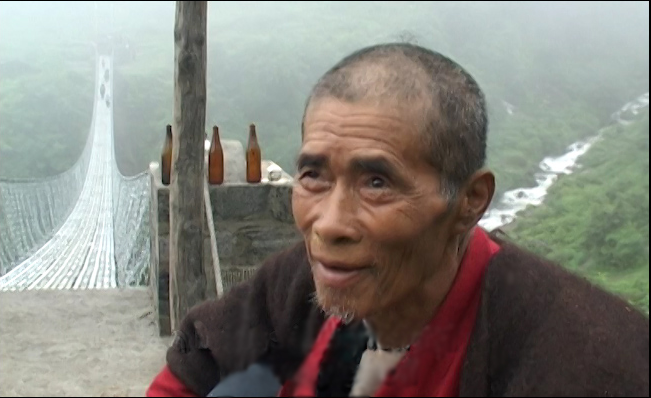
Short: Basha Man
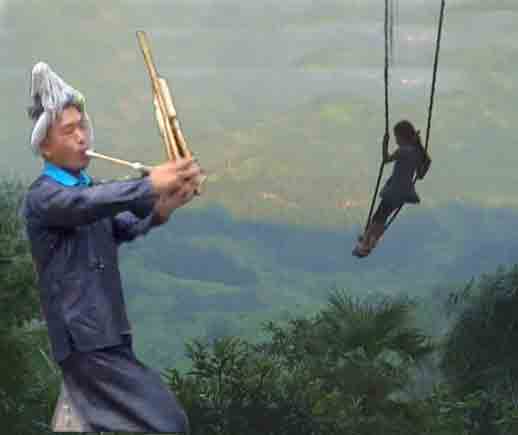
Daniel Chien is a film MFA Cinema student from San Francisco State who has just returned from an documentary workshop to the deep mountains
of China's Guizhou province. There he filmed the Basha people – an ancient tribe that still favors unique scimitar-carved hairstyles and distinctive handmade blue vestments. The ocumentary focuses on a Basha man who has returned home from the big city to raise his
family in his hometown and to return to making his living by playing his bamboo instrument and dancing in the traditional manner. Daniel will take questions after the screening.
Feature: more about: We Corner People

“This straightforward tale turns into a metaphor for present-day Nepal itself.(Director) Kesang Tseten has distilled the country’s realities into the life of one village, bringing everything into the microcosm: underdevelopment, Maoism, Buddhist shamanism, Christian evangelism, migrant labor, marriage, life and death. Like all great stories, it is told simply in the words and actions of the protagonists themselves.” Kunda Dixit, Nepali Times
The film will be introduced and questions taken by Karma and Wendy Lama of KarmaQuest Ecotourism and Adventure Travel. KarmaQuest is a Half Moon Bay company that organizes tours to Nepal and beyond the Himalaya that seek to benefit local communities and support conservation. Donations for victims of the 2015 Nepal Earthquake will be accepted at the screening. Donations paid by check can be most easily deducted as charitable contributions.
Back to
take 4
Programme for February 27, 2015
IDA - A film about faith & dark truths in post war Poland.
“By far the best movie of the year! Shot in a hard-focused black & white with images so distinct and powerful that they sharpen your senses.“ David Denby, New Yorker
Filmmaker Pawel Pawlikowski, long known for his award-winning English films, returns to his native Poland to craft a gorgeous, moving and intimate drama about the country he loves and some of the secrets about its Nazi and Communist past.
IDA won the OSCAR for Best Foreign Film in 2015 and was judged Best Film by the European Film Academy. It was also one of five films in contention for the Oscar for Best Cinematography.

Feature: IDA
Poland 1962. On the eve of taking her vows, 18 year old novice Anna, who has lived almost all her life in a convent, meets her estranged aunt Wanda. Wanda is a cynical Communist judge who shocks the naive Anna with the revelation that Anna was born to Jewish parents who lovingly called her Ida. Ida and Wanda embark on a revelatory journey to their old family home to discover the fate of Ida's birth parents and to unearth dark secrets dating back to the Nazi occupation.
As serious as the film can be, not all is dark and much of the action is life-affirming. In fact, if you want to get the director's goat, describe this film as a Holocaust piece. As he frequently says, "IDA is just as much about jazz and rock and roll as it is about Nazis."
Critic Dana Stevens, in her review in Slate Magazine, agrees with the director. The music the characters listen to throughout the film "is significant and carefully chosen, from Wanda's treasured collection of classical LPs to the tinny Polish pop that plays on the car radio as the women drive toward their destination. The truths this young nun and her aunt discover in the Polish countryside may be terrible, but the journey they undertake together to unearth those secrets is hauntingly beautiful. Take the journey with them."
In Polish, with English subtitles.
Rated PG-13 for adult themes and heavy smoking.
Back to
take 5
Programme for August 29, 2014
Half Moon Bay Silent Film Festival
“Charlie Chaplin was the first great star of motion pictures. He made films everyone could understand. Chaplin was not only famous, but very good and in a constant state of rediscovery.“ Roger Ebert, Chicago Sun-Times.
All three will be shown with live musical accompaniment written and performed by pianist Shauna Pickett-Gordon.
If you have seen these films a million times before, come again - Shauna's music brings them to life in a new way. And don't forget to bring the kids. Time they got a taste of Chaplin at his best. Kids tickets are half priced with an accompanying adult.

Feature: 3 SILENT CHAPLIN MASTERPIECES
A Dog’s Life - (1918)
Chaplin’s Little Tramp shambles around the cold, cruel world with his partner Scraps the dog. They pull off brilliant coordinated food heists and befriend a lonely and lovely dance hostess. But things still look pretty desperate until Scraps discovers the hidden loot from a bank heist. Of course the crooks want it back.
The Idle Class - (1921)
The tramp sneaks into an upper class resort where he is mistaken for an inebriated millionaire. The millionaire’s neglected and lonely wife is thrilled at her husband’s transformation and spirited hi-jinx
ensue. The tramp remains the tramp, but the opulent interiors and
costumes contrast richly with the grunginess of the first film.
Pay Day - (1922)
Here Chaplin plays a construction worker who loves his job but is especially looking forward to getting paid at the end of the day and enjoying a night out with his pals. His penny pinching wife has other ideas. This gleeful romp showcases Chaplin in an extended choreography of expert brick-catching and an overactive elevator that catches everybody unaware. Arriving home at daybreak, Chaplin is getting ready for bed when the alarm clock rings, waking his wife. Another day at work begins.
Once again the music playing during our Silent Film Night is provided by Montara's own Shauna Pickett-Gordon. This is the sixth time that the Film Society has hired Pickett-Gordon to write a score for one of its silent film night features and to play that score live on her grand piano. Why go this effort when canned music is much cheaper? Check out the short video of Pickett-Gordon at work linked to above shot during the February Coastside Silent Film Night to see just how great she can be.
Back to
take 6
Programme for August 1, 2014
A Documentary that explores the effects of Modernization on China
Missing Home is a documentary that explores modernization - specifically its effects on the culture & lives of people living in hutongs, Beijing’s ancient sprawling alleys.Hutongs, which date to the Yuan Dynasty (1206-1341), have long been regarded as the heart and soul of Beijing. They are chock-a-block with family homes and crammed with countless small shops and restaurants, but are now disappearing at a prodigious rate as Beijing modernizes. It is estimated that 80% of these revered ancient alleyways have been plowed under in the last decade, displacing close to 580,000 souls. Few of the displaced residents have reaped the prosperity that was promised to accompany modernization –most face more economic struggles than ever before.
Although the loss of the historic architecture is significant, it is perhaps more important to note the loss of an ancient social network of neighbors and friends, of spirit & culture that have defined the way of life in Beijing for centuries of generations. A collective way of life is being edged out by sterile high-rises, which are rapidly inundating the spaces hutongs once filled. This displacement & replacement stands at the heart of an increasingly controversial dialogue about progress and modernization in China: How can the China of the future balance the preservation of culturally & historically significant traditions & sites, while building a global city?
Director Weimin Zhang will attend the screening and take questions from the audience.

Feature:
Its rapid economic boom has gained China much attention from the world, as it is experiencing a complex restructuring of its major metropolis areas. However, under the facade of progress, the majority of Beijing’s hutong residents have yet to experience the prosperity- rather, they face more economic struggles than ever before. These issues are not only occurring in China, but all across the world. Modernization is changing traditional ways of life and unjustly displacing families. Although the loss of this ancient architecture is significant, it is also important to note the loss of a social network of neighbors and friends, of spirit and culture that have defined the way of life in the hutongs for generations. This collective way of living is jeopardized by the sterile environments of the high-rises, as they are rapidly replacing the space where hutongs once stood. Today they are at the heart of an increasingly controversy between progress and modernization in China: What balance should be struck between preserving Beijing’s culturally and historically significant sites, and building a developed, global city for the future China?
Long considered one of the standout film makers of China’s sixth generation of filmmakers, Weimin Zhang holds degrees from both the Beijing Film Academy and the Ohio University film school. She has recently taken a post at the Film School at San Francisco State.
Directions to the screening
The new venue we moved into in May 2014 is part of the Senior Coastsiders facility within the sprawling Coastside Senior Housing Complex. Because the building is brand spanking new Google maps and other mapping programs still can't find it or may take you to the wrong location. Typing in the address (not the name) should get you close. Or check out the map I provide on the previous page.
The parking lot is off of Arnold Way. Feel free to park in one of the 35 parking spaces marked SC-Reserved or CADH-Reserve or on Main Street in front of the complex. Do not park in any numbered spaces. The entrance is to the right of the fountain next to the parking lot.
Back to
take 7
Programme for June 27, 2014
Experience the passionate journey of the California dulcimer.
Patricia Delich and Wayne Jiang of Pacifica met at a dulcimer festival in the Santa Cruz Mountains in 2006, fell in love, and married in 2008. At this month’s Film Night they share their love with us in two parts:Opening Act: The Dulcimer concert begins at 7:30
Patricia and Wayne start the evening by introducing us to some of their beautiful instruments and by playing us some of their favorite songs. Don’t be surprised if a few of the stars of their documentary show up to provide accompaniment to their short but sweet concert.
Film: Hearts of the Dulcimer begins at 8:00
Patricia and Wayne screen their recently completed feature-length documentary about the unlikely California mountain dulcimer boom in the late 1960s and early 1970s.

Feature:
More about Hearts of the Dulcimer
“An extraordinary film, beautifully shot, with a storyteller's sense of mountain and sky, and the intricate workmanship that goes into the creation of this American-born, folk craft instrument." Jean Barlett, Pacifica Tribune
The instrument that brought Patricia Delich and Wayne Jiang together is a simple one with a quiet but haunting sound and a glorious sustain. As they studied it they came to realize the history of the dulcimer in Northern California was as deep and rich as the sound it produced. So they set out to make a documentary about that history, the musicians and the craftsmen who shaped these wondrous instruments and the unique sounds that evolved in California.
Two and half years in the making, “Hearts of the Dulcimer” is a feature-length documentary about the unlikely California mountain dulcimer boom in the late 1960s and early 1970s. Even back in 19th-century Appalachia, the dulcimer represented something different from mainstream, materialistic, industrialized America; barely 100 years later, Californians who heard the call of the dulcimer used it as a vehicle for their counter-cultural self expression.
Through colorful interviews, rare archival footage, and live performances, Hearts of the Dulcimer gives a firsthand account of living life in the counterculture, following one's passion, and playing and building mountain dulcimers.
The film prominently features the story of the 1960’s Santa Cruz dulcimer builders and players Howard and Michael Rugg and Neal Hellman. Little did they know that the unique sound they grew and embraced would echo forth till the present. To prove their point Patricia and Wayne have filled their movie with the words and sounds of dozens of other dulcimer enthusiasts who follow in the steps of Hellman and Ruggs.
Patricia Delich and Wayne Jiang will gladly take questions about filmmaking and/or the Dulcimer at the end of the screening.
Back to
take 8
Programme for May 30, 2014
World War II Propaganda
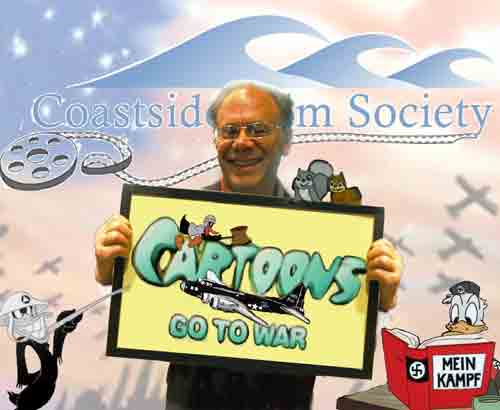
How animated and documentary films made before, during and after the war taught us what to think.This is the fifth program curated for the Film Society by world-renowned film scholar, Karl Cohen. This program explores how short films were used to pivot the mindset of the American public, changing us from a nation of disengaged isolationists to a people eager for war — and then, later on, helped to cool us down and support the effort to rebuild a world ravaged by war. It’s a fascinating look at how Bugs Bunny, Donald Duck, Daffy and other animated stars persuaded us to recycle, pay our taxes — to buy guns, guns and more guns — and laugh at Hitler.
Karl Cohen will attend the screening & lead the post screening discussion.
Caution: Some of these films were designed to inflame rage & may now seem offensive.
Feature:

The program includes:
Peace on Earth 1939
Grandpa squirrel preaches an antiwar message to young’uns shocked to learn of the insane violence perpetrated by human beings in their now peaceful forest. This film was nominated for both a Nobel Peace Prize and an Oscar.
Women in Defense 1942
Katherine Hepburn narrates a script written by Eleanor Roosevelt. Women, do your part to win the war!
Bugs Bunny Bond Rally 1942
Bugs does a brief impersonation of Al Jolson, singing in black face, and encouraging you to buy savings bonds. Clearly racist by today’s standards, this film was typical of its time.
Blitz Wolf 1942
The Three Little Pigs join the fight against Hitler in this fast-paced, outrageous Oscar-nominated short.
Der Fuehrer’s Face 1942
This Oscar-winning tale recounts the day Donald Duck woke up in Naziland. The titular song, recorded by Spike Jones’ band, is still popular.
Scrap Happy Daffy 1943
Daffy tells us why and what we need to recycle.
Spirit of ’43
Donald Duck and Scrooge tell us why we need to pay our taxes.
Russian Rhapsody 1943
In this outrageous cartoon, Kremlin Gremlins destroy a plane piloted by Hitler.
To Win the Peace 1945
This very short tear-jerker asks you to buy savings bonds during the seventh Victory Bond drive.
Seeds of Destiny 1946.
This Oscar winner warns that if we don’t rebuild Europe, another Fascist dictator might arise.
Back to
take 9
Programme for January 31, 2014
We look forward to seeing you in 2014
The holiday season is always busy and The Film Society does not screen any films in December.Sincere thanks to all the members who have suggested great venues for us to explore as our new home.
We have signed a contract for a new venue. That venue is currently under construction. We will let you know as soon as we are ready to move in.
Feature:
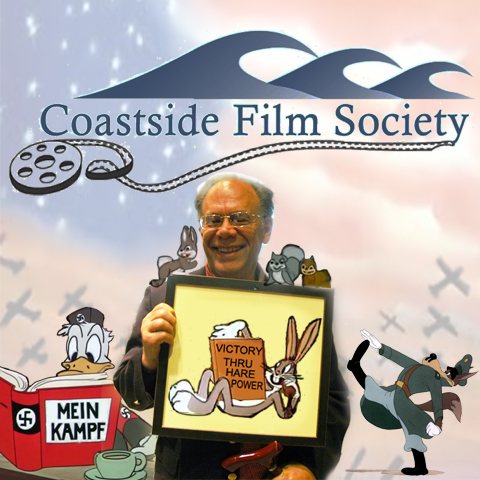
This is the fifth year in a row that Karl Cohen, the world-renowned film scholar, has dug into his vaults to build a night of animation for the Film Society.
We are not currently sure when our new venue is going to open. We will let you know when we finalize the date for this screening.
Back to
take 10
Programme for September 27, 2013
A Comedy about Cultural Divides
“Eran Kolirin's debut film is about the comedy and tragedy of the things that separate people: borders, religions, languages, loneliness. It's a small, profoundly satisfying movie that keeps echoing long after it's over.” — Ty Burr, The Boston GlobeThe members of the Ceremonial Band of Alexandria Egypt hopped on the wrong bus on their way to a gig at an Arab Cultural Center in cosmopolitan Israel. The bus stops, they get out and find themselves stuck for the night in a remote Israeli town with no cultural center and no hotels. The locals don’t know what to make of the crowd of strange Arabs dressed in power-blue police uniforms carrying tubas and ouds. The only language they all speak in common is a halting English. Thus begins a day and night of cultural awakening writ small.
Dave Wiegand of the San Francisco Chronicle called this a “lovely, smart and beautifully understated film.” He also said: “While this is a film about Egyptians wandering around the Israeli sticks, it is not overtly political at all. Whatever happens between Cairo and Jerusalem happens, as far as these people are concerned. They're just trying to get on with their lives and perhaps find a little meaning as well. By the end of the short but perfectly pitched gem, we understand that its apparently observational distance has not only given us precious insight into the lives of ordinary Israelis and Egyptians, but, tacitly, a sense of political possibility as well.”
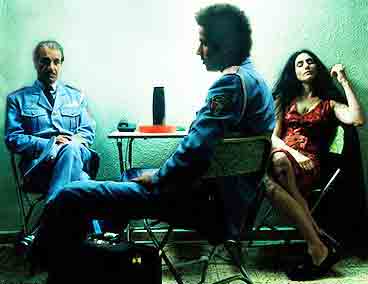
Feature: THE BAND"S VISIT
Slowly the locals begin to take pity on the lost Egyptians and offer them a bed here, a couch there to rest their weary heads for the night. There is lot going on in this film, but it all very subtle. As a result, the Band’s Visit does not provide “any of the narrative payoffs we might have expected” but it does provide “something more valuable: An interlude involving two ‘enemies’ Arabs and Israelis, that shows them both as only ordinary people with ordinary hopes, lives and disappointments, It has also shown us two souls with rare beauty.”
Roger Ebert, Chicago Sun-Times
Parental Advisory: PG-13 for some coarse language in English.
Back to
take 11
Programme for July 26, 2013
A Tale of Great Divides in Modern Iran
A Separation is the Picture of the Year
"The exposition may be “specifically Iranian, but I believe the more specific a film is about human experience, the more universal it is. The film combines a plot worthy of a great novel with the emotional impact of a great melodrama. It involves a struggle for child custody, the challenge of a parent with Alzheimer's, the intricacies of the law, and the enigma of discovering the truth. In its reconstruction of several versions of a significant event, it is as baffling as Rashomon."
Roger Ebert,Chicago Sun Times
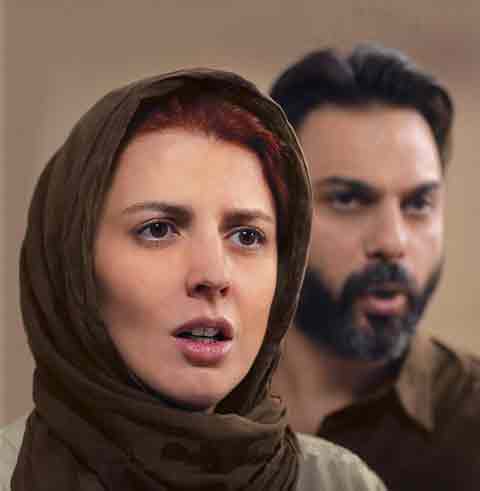
Feature: A Separation
A Separation presents a compelling story about the forces that lead to fractures in a marriage in modern Iran. The initial conflict is that Simin wants to leave Iran to give her daughter a better life in the West, and her husband Nader wants to stay in Iran to take care of his ailing father. Simin and Nader love each other, and both have equally reasoned arguments — but only one path can be followed if the marriage is going to survive. As other people, each with their own unique perspectives, get pulled into the growing vortex, things begin to spin out of control. In time, it falls to the very conservative Iranian court system to decide the right and wrong of the matter.
Colin Covert writes in the Minneapolis Star Tribune: “ The film is stunningly acted, emotionally universal and culturally specific in ways that make it all the more engrossing. ... Telling a story in which no one is without guilt, A Separation moves beyond one couple's sundering marriage to reveal growing rifts between generations, ideologies, religious mind-sets, genders and classes in contemporary Iran. As for who is right judicially or morally, see it with a group of friends and prepare yourself for a long debate.”
Back to
take 12
Programme for July 26, 2013
Silent Film with Live Musical Accompaniment
“A little-seen yet engaging tale of betrayal & jealousy, set within the seamy-by-default world of carnivals and circuses.” Film Fanatic.orgGerman director E.A. Dupont’s silent masterpiece from 1925 features an extraordinarily striking expressionist flair and a dark neo-realistic undertone.
The basic story is simple, if a bit tawdry: A man abandons his wife and child to run away with a beautiful trapeze artist. Little did he know just how much conflict living a life in the circus could bring!

Feature: VARIETY
The music in question is provided by Montara's own Shauna Pickett-Gordon. This is the fifth time that the Film Society has hired Pickett-Gordon to write a score for one of its silent film night features and to play that score live on her grand piano. Why go this effort when canned music is much cheaper? Check out the short video of Pickett-Gordon at work linked to above shot during the February Coastside Silent Film Night to see just how great she can be.
Critics agreed that Variety was a great groundbreaking film when it was released in 1925 — and it’s a film that still delivers. “Flashbacks from a prison straight out of a Van Gogh painting … impressionistic lighting, lingering expressionist imagery, and giddily mobile camerawork are all pushed to unprecedented extremes,” says Time Out London.
Back to
take 13
Programme for June 21, 2013
An Evening with Director Bob Elfstrom and his star Johnny Cash
Bob Elfstrom is a director and cinematographer who specializes in documentary filmmaking. In this program, Elfstrom will reach way back to 1971 when he worked with county legend Johnny Cash to create a musical documentary about the life of Jesus Christ.Elfstrom worked with Cash on two occasions. The first time, he served as the director of a critically acclaimed, but fairly standard, documentary about Cash’s music. That experience got him the job as the director and star of Cash’s much more unusual musical biopic.
Some critics love this film and feel it has been hugely influential on many subsequent films about Jesus’s life. Others freely admit to being totally befuddled about the approach Cash and Elfstrom took to telling this story.
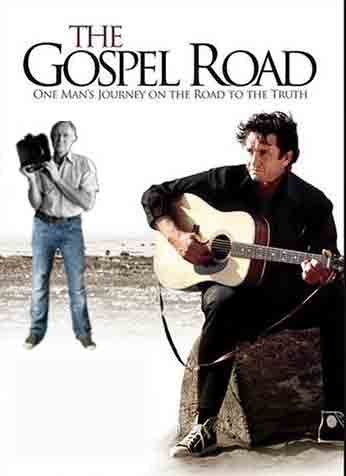
Feature: Gospel Road: A Story of Jesus
The movie is based upon a script written by Cash and Larry Murray shortly after Cash converted to Christianity. It features songs sung by Cash and written by Cash and the likes of Kris Kristofferson, Joe South, John Denver and Christopher Wren.
Shot with a tiny budget of Cash's own money, mostly on location in Israel, the film threw many of the conventions about biblical films out the window. For example, Cash, wearing his usual all-black outfit, gave himself the role of narrator, singing almost all of the film's dialog. The only major character given a speaking role in this film is Cash’s wife June Carter Cash, who plays the role of Mary Magdalene — which was probably a statement about her life as a religious but divorced woman.
The day before shooting began, Cash decided to cast the blond director Elfstrom as the star of the film -- Jesus Christ himself.
Of course all these unusual decisions upset some folks. But they also won a great many converts. For example, the Bible Films Blog gushes effusively about Elfstrom’s cinematography, which it found to “introduce a simplistic beauty into the film.”
Elfstrom will introduce the film and will regale us after the screening with stories about working with Johnny Cash
Back to
take 14
Programme for May 24, 2013
An Evening of Contemporary Animation
Animation historian Karl Cohen will host a night of contemporary international animation guaranteed to expand your consciousness of what this art form can be.Enjoy award-winning work from Japan, Argentina, Canada, England and the US. This selection of films explores a wide range of techniques and new creative approaches to storytelling. An outstanding collection intended to amaze adults and older teens.
Karl Cohen is an animation historian and collector, a professor of animation history at San Francisco State University, president of the San Francisco chapter of the international animation organization, ASIFA, and author of many books and articles on animation. He will lead a discussion about his selected films after the program.
Feature:
Included in the screening are several fascinating puzzles.
* Mt. Head by Koji Yamamura (Japan, Oscar nomination) is about a man who swallows a cherry seed, resulting in a tree growing on top of his head. It is up to you to decide what the symbolism, if any, might be.
* Romance by Georges Schwizgebel (Canada) is a boy meet girl adventure.
* The Fantastic Flying Books of Morris Lessmore (USA, Oscar, 2012) is a wonderful Wizard of Oz type of journey to a magical world where books are alive and have personalities and feelings.
* Luminaris is a charming fantasy by Juan Pablo Zaramella, winner of 200 festival prizes, a romantic daydream from Argentina.
* Adam and Dog by Minku Lee (USA) tells the story of the first man and his other companion, 2013 Oscar nomination.
There are also two films with unusual, subtle, political/social content.
* Body Beautiful by Joanna Quinn (England) stars Beryl, a woman who works in a factory who overcomes great odds and obstacles to become a positive role model/hero.
* Black Hula by Marv Newland (Canada) begins with a journey to a once beautiful tropical paradise by a mysterious ship.
The program is also rich in humorous moments including:
* Jumping by Osamu Tezuka, the father of Japanese anime, will make your spirit soar.
The program is filled with tons of humor and positive content, but don’t come expecting a mindless fast paced gags that are typical of a Hollywood animated feature (nor any ever so cute animals or Disney princesses). This program offers a rich variety of fun works targeted at grown ups and older teens.
Back to
take 15
Programme for April 19, 2013
Santiago is Santiago
The Coastside Film Society screens a documentary about the rich homegrown Afro-Cuban folk culture that has thrived in the eastern region of Cuba. It's been more than 50 years since the Cuban revolution; Cuba's isolation from the U.S. has allowed its culture to evolve on its own. In 2011, filmmaker Warren Haack went to Cuba on a lark to experience the music. He ended up falling in love with the culture. He returned to film this in-depth look at the music, dance, religion and everyday lives of the people -- in the streets, at home and in the clubs where life throbs to a distinct, captivating rhythm.
Feature:
The film features over 12 musical groups performing and dancing. Images of everyday life are woven into the music. The cars may be old-fashioned, but the music is revolutionary, featuring new genres created out of a fusion of styles of music that the originators had never envisioned.
Haack lives in El Granada, works for the Department of Cinema at San Francisco State University, and serves as a board member of the Coastside Film Society. He will attend the screening and regale the audience with stories about his trips to Cuba.
Back to
take 16
Programme for March 15, 2013
The Desert of Forbidden Art
“A tale that is stranger than fiction several times over.” — Kenneth Turan, Los Angles TimesNukus is a remote capital deep inside Uzbekistan, a Central Asian country where water is scarce and 120-degree weather is common — an unlikely location for one of the world's greatest avant-garde art collections. How the collection came to be there makes for a fascinating story. It took filmmakers Amanda Pope and Tchavdar Georgiev six years to get access to the collection, to shoot all the film needed to illustrate this remarkable collection, and to capture all the interviews needed to tell the story of the remarkable man who was able to create this artistic oasis in the remote Uzbek outback.
It began when Uzbekistan was still part of the Soviet Union, and modern art and artists were being harshly condemned by Stalin and the state. Wannabe artist Igor Savitsky came to Uzbekistan as part of an archeological expedition, and found himself surrounded by talented Soviet artists hiding out in the Uzbek outback to get away from Soviet persecution. Realizing he could never produce work as beautiful as what he was seeing, he redirected his passion to collecting the forbidden art he loved. In time his collection grew to over 40,000 pieces housed in the “folk art” museum he talked the state into founding.
Unfortunately, this vast collection that took a lifetime for Savitsky to gather has fallen on hard times — the victim of inadequate storage practices during lean times and a renewed hostility to modern art by the Islamic extremists who are gradually taking over the rule of the county. Once again, life is precarious for this great collection.
“The Desert of Forbidden Art provides a dramatic examination of the power of art against forces of repressive tyranny. It is a fascinating work that will ennoble art lovers, students of Russian history, and anyone who believes in the power of culture.” — Phil Hall, FilmThreat.com
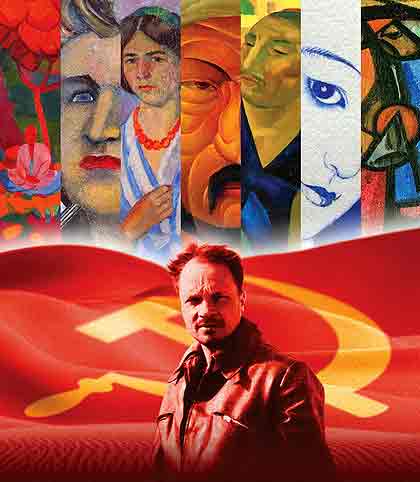
Feature:
Back to
take 17
Programme for February 22, 2013
Sunrise: A Song of Two Humans
1927 was the year in which the silent film reached perfection and then died. That's the year that Sunrise was released. Critics were quick to acclaim that Sunrise was perhaps the finest film ever made. It was awarded the first Academy Award as as the best and most artistic picture of the year. The public could care less. 1927 was also the year in which the first talkies were released. That's what they wanted to see. As a result, Sunrise was a huge box office flop.
Critics still rave about Sunrise, noting that a great silent film like Sunrise can provide a purity of experience that just can't be achieved when voices are added to the mix.
Here's what the reviewer Landon Palmer says about Sunrise on FilmSchoolRejects.com: "Here you have it all: A romantic comedy worthy of a wise-cracking Cary Grant and Katherine Hepburn. A horror film whose use of shadows is worthy of any Universal monster movie. And an adventure/thriller worthy of Bogart. (The film) goes to so many places, accomplishes so much emotionally, earns all of it, and does so through a visionary style that manages to suck the audience in. The extended trot through the city is one of the most unapologetically whimsical sequences in cinema, and I love it. (And lets not forget the hilarious ) drunken pig as a metaphor for the political treaties that led to WWI."
Chicago Sun-Times film critic Roger Ebert asserts that modern audiences will be astonished by the boldness of the visual experimentation the film utilizes. Because the characters are simple, they take on a kind of moral clarity, and their choices are magnified into fundamental decisions of life and death… The more you consider "Sunrise" the deeper it becomes -- not because the story grows any more subtle, but because you realize the real subject is the horror beneath the surface.”
Michael Atkinson of the Village Voice agrees with Ebert’s conclusions: “The individual passages are so lyrically tactile, so swoony as they transform spectatorship into something else. They defined what was/is "cinematic" from that point on, away from the old debts to novels and theater.”
The keep the experience authentic the Film Society has once again commissioned Montara's own Shauna Pickett-Gordon to write a custom film score for the night's screening. Shauna will perform her score live during the film screening on her grand piano.
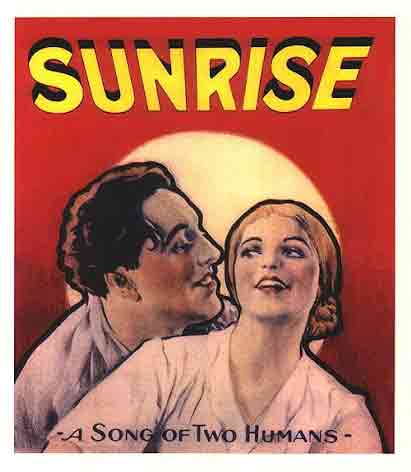
Feature: The Desert of Forbidden Art
1927 was the year the silent film achieved artistic perfection and then died. In that year, F.W. Murnau's tense psychological drama Sunrise was released. Critics were quick to acclaim that Sunrise was the finest film ever made. It won three academy awards including the coveted best and most artistic picture of the year. The public could care less. You see, 1927 was also the year in which the first talkies arrived. Talkies are what people clamored to see and Sunrise was a box office flop. As a result few people alive today have heard of it. Thats a shame because this is a film that still sits on many critics top ten lists of the best movies of all times.
Reviewer Landon Palmer calls Sunrise one of the greatest films of all time: "Here you have it all: . A romantic comedy worthy of a wise-cracking Cary Grant and Katherine Hepburn. A horror film whose use of shadows is worthy of any Universal monster movie. And an adventure/thriller worthy of Bogart. (The film) goes to so many places, accomplishes so much emotionally, earns all of it, and does so through a visionary style that manages to suck the audience in. The extended trot through the city is one of the most unapologetically whimsical sequences in cinema, and I love it. (And lets not forget the hilarious ) drunken pig as a metaphor for the political treaties that led to WWI." FilmSchoolRejects.com.
"Modern audiences will still be blown away by the boldness of the film's visual experimentation. The more you consider Sunrise the deeper it becomes." Roger Ebert, Chicago Sun-Times
"The individual passages are so lyrically tactile, so swoony, they transform spectatorship into something else. They defined what was/is cinematic from that point on." Michael Atkinson , Village Voice
This is the fourth year that the Coastside Film Society has staged a silent film night featuring live musical accompaniment by Montara's own Shauna Pickett-Gordon on the grand piano. If you have not seen Shauna perform at a silent film night before, check out the video clip attached to this article.
Back to
take 18
Programme for January 4, 2013
Zeitgeist: Moving Forward
"In the past, throughout nearly all of human history, the main threat to human survival was nature. Today it is culture."
- - - - Dr. James Gilligan, from the movie Zeitgeist: Moving Forward
The central premise of director Peter Joseph's documentary is that the time has come to abandon the socioeconomic paradigms that have governed our society for eons. The core problem, the movie argues, is that our current economic systems reward the wrong types of behaviors, and as result are steering us into dangerous waters. The time has come to use the rigors of scientific method to better drive social change.
The movie starts off with an examination of what forces really drive human behavior. Dozens of academics from a wide range of disciplines speak on the relative importance of nature vs. nurture, genetics vs. epi-genetics, and the true effects that social engineering and monetary policy can and should have on society.
Next the film delves deeply into a discussion of macroeconomic theory and what approaches can and should lead to the optimum results. The film ends with an imaginative envisioning of a utopian paradise we can all look forward to if we follow the filmmaker advice and let science lead the way.
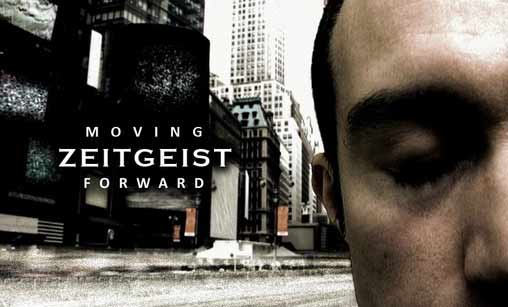
Feature: Zeitgeist: Moving Forward
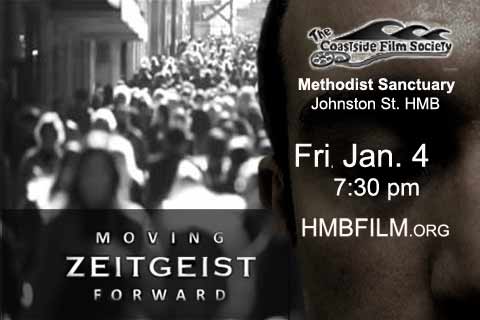
Is the Zeitgeist Movement prophetic, or futuristic claptrap, or a little bit of both? That's for you to decide. In an article published in The New York Times, Alan Feuer admitted that his study of the movement gave him a lot to think about, calling it "a wholesale reimagination of civilization, as if Karl Marx and Carl Sagan had hired John Lennon from his "Imagine" days to do no less than redesign the underlying structures of planetary life." You may not agree with all the ideas this film espouses, but our guess is that the after-screening conversation is going to be lively.
Back to
take 19
Programme for November 30, 2012
A colorful blockbuster from China
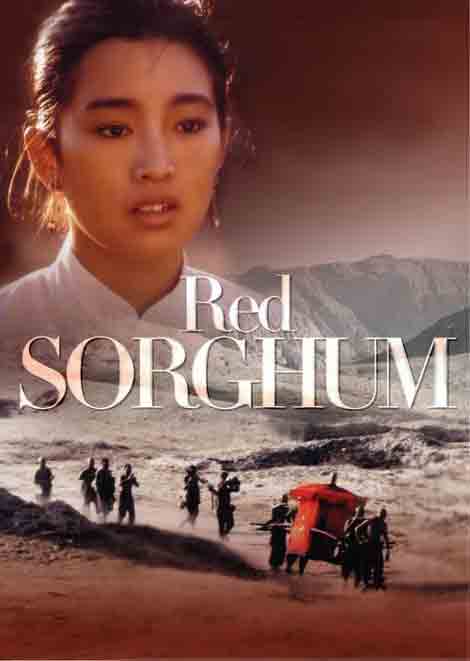
“Red Sorghum is beautiful, visually, but with that extra edge of human darkness; lust, greed, violence, death, murderous invaders, all set within or close to the wavering seas of sorghum grasses, grown for making a blood-red wine. ... A story that starts simply but which builds into a brazen attack on the senses, the superb use of color mixing with excellent dramatic acting, slow-moving and evocative long takes and occasional bursts of action — and some comedy, good natural comedy that's actually a joy and which breaks down any boundaries concerned with race, or time.” — Tim Kidner, IMDB.com
Feature: Red Sorghum
The film’s opening scene shows a young woman nestled deep within a sedan chair as it winds its way through the arid landscape of northeastern China in the 1920s. The porters cheerfully sing ribald songs celebrating the beauty’s upcoming wedding. She is not so cheerful, dreading her first encounter with the old wine merchant that her father has arranged as her new husband. She does not agree that his wealth more than compensates for his diseased leprous body. When she gets there she finds a life that is even more complicated than she could ever imagine. In short order she falls for one of the servants -- and when her husband dies, she pivots her devotions towards rebuilding the winery, which is on its last legs. In doing so, she inspires her workers to take pride in the sorghum wine they produce. Then the Japanese invade, and her life changes radically once again.
“Red Sorghum has no desire to be subtle, or muted; it wants to splash its passionate colors all over the screen with abandon, and the sheer visual impact of the film is voluptuous. ... Hollywood doesn't make films like this anymore, because we have forgotten how to be impressionable enough to believe them.” — Roger Ebert, Chicago Sun-Times
This film was brought to the Film Society by Jenny Lau of the Cinema Department at San Francisco State. Lau, a well-known scholar of Asian cinematography, will introduce the film and lead the after-screening discussion.
The dialog is in Mandarin and Japanese with English subtitles. This film includes violence and adult themes and is not appropriate for young children.
Back to
take 20
Programme for October 26, 2012
A documentary about Paul Simon's controversial album, Graceland
“A cultural lightning bolt that soars on its music and an unshakable belief in the transcendence of art.” Peter Travers Rolling Stone MagazineA documentary about Paul Simon’s return to South Africa for the 25th anniversary tour celebrating the birth of his Grammy-winning 1986 record of year, “Graceland” The album was both a hit and a controversial cultural phenomenon. It teamed Simon, a white American musical legend, with wonderful group of South African musicians to create an exciting work of fusion. Some felt that the album exploited the work of his African colleagues; other argued it paid homage to the unique African song styles it borrowed from, and in doing so opened up African Music to a much wider world audience. More controversial yet was the fact that Simon had openly defied a U.N. cultural boycott by touring through and recording music in a South Africa that was still in the grips of apartheid oppression.

Feature: Under African Skies
The documentary celebrates the roots of the music showing countless clips of Simon jamming with his African collaborators including Joseph Shabalala and his group Ladysmith Black Mambazo, Miriam Makeba, Okeyerama Asante, and Ray Phiri both in 1986 and during the 2011 tour. It also features recent interviews with Dali Tambo of Artists Against Apartheid, Paul McCartney, David Byrne and Peter Gabriel who ruminate on the influence that Graceland made on their lives and their work. In the peaceful tranquility of Foster City, California, a dastardly bicycle thief steals a bicycle from a young boy, and a hilarious chase ensues, in this award-winning short silent film by 20-year-old Bay Area artist Johnny Villar, which was proclaimed the winner in the 2011 CSM Student Film Festival. With a unique suburban visual style and frightfully funny over-the-top performances, “The Bicycle” pays tribute to the films of Chaplin and Keaton, and, much like the feature film, playfully combines humor with menace. Short: Taylor the Latte Boy (4 minutes) Kayla Sanchez and Kari Biel's local short about a boy and his pepper. 2nd place winner at the 2011 Coastside Teen Film Festival. A video slideshow from Half Moon Bay's own poet/photographer Lou Solitske. The film features a selection of Solitske's beautiful local nature photographs carefully cut to traditional music. Narrated by Indian-born actress Joanna Lumley, Mine tells the story of the battle between an underdog, the Dongria Kondh tribe of India, and Vedanta Resources, a huge mining corporation. As the beautiful photography in the film attests, the home territory of the Dongria Kondh is both remote and extraordinarily beautiful. The tribe considers the land they live in holy. Unfortunately under all that beauty is a wealth of bauxite that the Indian government really wants to get at. Contracts were written that would allow Vedanta to strip mine the "holy" mountain tops to get at all that bauxite. When the filmmakers arrived to document this David and Goliath story, the assumption was that this Goliath was going to win. As everyone knows, that is not how this story was destined to end. In 1936, a widow named Ruth Harkness arrived in China to settle the affairs of her husband Bill. Bill died while observing a mysterious animal known as the giant panda. No one was surprised at his death. After all, everyone knew pandas were ferocious and dangerous beasts. That's not what Ruth read in Bill's notes. The pandas he described were gentle herbivores, not terrible carnivores. Ruth decided to follow in the footsteps of her husband and prove to the world that her husband was right. The Panda Adventure is a retelling of Ruth's story, shot in the remote Chinese mountain terrain that pandas call home. The footage is breathtaking and the close-ups of these gentle giants in their natural habitat is heartwarming.
Sherlock, Jr. (1924, 44 mins.) The programme: "Burt encounters all kinds of people from Los Angeles to Bonneville, and somewhere, midway, the lovely thing happens: The movie takes on a magical quality. (The film) finds a pleasant, measured rhythm and makes a viewer feel as if it would be quite all right to watch Burt's journey for hours and hours. He is, after all, the only unself-conscious man in America, and we look upon him in the same way as most people do in the movie, with bemusement, at first, then fascination, and then affection." Mick LaSalle San Francisco Chronicle Moore "clearly articulates his point of view. You know where he stands on this issue... But, to be fair, he very wisely presents AMA spokespersons, doctors and other people who claim socialized medicine puts health care into the hands of the government, and that's a very bad idea. Moore's films are always well-made, timely, thought-provoking and about subjects that really matter. This is a film you must see." Jennifer Merin, About.com 3 Idiots centers on three friends who meet while attending a prestigious engineering college in India. Indian superstar Aamir Khan plays Rancho, the charismatic leader of the trio. He's a genius prankster who is not only the top ranked student, but also the bane of the administration whose rigid rules he constantly mocks and challenges. He works to get his friends to stop worrying so much about their grades and to instead devote more energy to following their dreams. A documentary that looks at China's economic juggernaut from a perspective any parent can appreciate. A documentary about Malana, a tiny village hidden away from the rest of the world high up on a remote plateau in the mountainous far north of India. The people speak a language of unknown origin, shun foreigners, and live in harmony in the oldest democratic republic in the world. Will the Malanese be able to preserve their unique culture, or will it be swept away by the forces of globalization? A documentary celebrating the great nature-loving heritage of the ancient Celtic Irish, Native American, and Aboriginal Australian peoples.
Irish singer and filmmaker Mairéid Sullivan spent years visiting and filming the sacred gathering places and ancient symbols of three of our most ancient cultures. She then partnered with Native American composer Ben Kettlewell to create a soundtrack of poetry, prose, and music to bring her images to life. Kurzweil's theories can't be easily dismissed out of hand. He has just too long a track record as a prescient tech pioneer. He has been a leader in the fields of optical character recognition, text-to-speech synthesis, voice recognition, and artificial music. Musicians will recognize the Kurzweil synthesizer as the first keyboard capable of generating artificial music that sounds like the original. A man plays fetch with his dog. The game is complicated by the fact that the world they occupy is chock full of optical illusions. Director/editor/animator Nina Paley juxtaposes the story of Sita and husband King Rama from the Hindu epic the Ramayana of Valmiki with her own Indian divorce creating "the greatest break-up story ever told." The movie utilizes a different style of animation for each type of scene: Irreverent Indonesian shadow puppets provide narration. A curvaceous Betty Boop-like Sita takes center stage when she sings the blues. Battle scenes are rendered either in a style reminiscent of the Yellow submarine or as Mughal drawings from ancient Hindu texts. Paley's own life is rendered as fuzzy cartoon squiggles. The musical score jumps back and forth between traditional Indian instrumentals to smoky 1920s American Jazz vocal used to give Sita voice when she feels blue. It was a quiet day in 1942. A shy 23-year-old welder named Fred Korematsu is having a quiet picnic with his Italian-American girlfriend when he discovers the U.S. government has big plans for him. Because Korematsu's parents were born in Japan, he is ordered to report to an internment camp. Korematsu refuses. A documentary short about the beautiful art produced within the walls of Japanese-American internment camps during World War II. Gaman is a Japanese word for "enduring the seemingly unbearable with patience and dignity." “Wonderful storytelling, from the lyrical opening shot of a mountain's reflection piercing the sea to the closing portrait of open air. Director Oguz's narrative is just as crystalline as the Aegean Sea he photographs. Bliss easily could have been an astoundingly depressing and hopeless tale of Muslim oppression ... but after Oguz establishes the old-world order that the leads are escaping, he never looks back.” Justin Strout, Orlando Weekly
“Doubly satisfying: We get not only a trenchant political drama but a bang-up concert film as well.”
Back to
take 21Programme for August 31, 2012
A Night of Horror and Humor
Dark films, featuring strong characters and a touch of humor are favorites of 20-year old Bay Area film maker and retro singer Johnny Villar.
Johnny twisted our arm to convince us that we had to screen "The Night of the Hunter" at one of our Film Nights in Half Moon Bay.
Night of the Hunter is a brooding film noir from 1955 that Roger Ebert calls "One of the greatest of all American films, that never received the attention it deserves." Ebert goes on to say " What a compelling, frightening and beautiful film this is! And how well it has survived its period."
Why then is this film not better known?
Ebert argues that is a complex work that covered topics and used techniques that audiences were not yet ready to handle in the 1950s. "It (was) risky to combine horror and humor, and foolhardy to approach them through expressionism" According to Ebert this was and is "A film like no other before or since."
"The Night of the Hunter" was a flop when it was released. Slowly, over time the film began to develop an audience, to become recognized as the masterpiece that that is. By the mid 60s it had become what many consider to be to the first cult hit -- a film that film scholars and aficionados revere but to this day most of the public has never heard of.
When Johnny's suggestion was brought up at the next meeting of the Film Society's Selection Committee the film got several rousing second nominations by members of the Board in the know. "How did we never think of this before?" But where could we find a short that we could pair with this masterpiece?
Without his knowing, Johnny provided the answer to this problem as well. As we researched Johnny's background we discovered his catalog of short silent films he has been producing as a film student over the last few years.
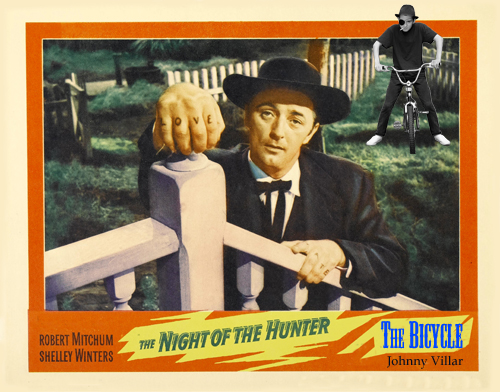
Johnny has a annoying habit of winning all the student film competitions he enters. One of his winning films, stars Johnny himself as a dark and dastardly bicycle thief and his little brother as the victim who fights back. We felt that this little short provided the perfect counterpoint to all the dark goings-on in "The Night of the Hunter".
Of course we booked Johnny to introduce the night and to lead all the post screening discussion.
Short: The Bicycle
Feature: The Night of the Hunter
"The issues are elemental, the morality biblical, the trials Homeric. In terms of cinematic texture, it's a hound from hell." Michael Atkinson, The Village Voice
The first (and only directorial) effort of the distinguished British actor Charles Laughton. Too dark for its time, the film initially flopped at the box office. By the mid 1960s it had become a cult favorite and it is now widely acknowledged as one of the greatest examples of film noir.
Robert Mitchum plays Harry Powell, a charismatic psychotic preacher who marries and murders widows for their money. Shelley Winters plays Willa, a bank robber's widow destined to be the preacher's next victim. What no one realizes is that only the kids know where the loot is stashed — so they get pulled into the center of the drama. Lillian Gish plays Rachel Cooper, an indomitable welfare worker who can quote scripture just as avidly as the preacher, but whose determination to save the children is just as strong as the preacher's design to bend them to his will.
"Grim, dark and brooding, Night of the Hunter is film noir par excellence. ... It’s an eerie tale of religious greed, children's lost innocence, ominous sexuality and cold-blooded murder." Emanuel Levy, EmanuelLevy.com
Back to
take 22Programme for June 22, 2012
Tales of Love & Jobs, Jobs, Jobs
Several months ago a panel of economists recommended an 80 year old musical film for screening during film night. Schedule a Busby Berkeley musical extravaganza from 1933 on the say so of couple of economists? We were skeptical.
"No you have to show it" the economists wailed. This is too serious a piece of art to pass up. Just ignore the sexy over the top song and dance numbers.
They argued, "The US has not seen the sort of jobless recovery we are currently suffering through since the 1930s." No film has ever captured the mood of these times as honestly as the "Gold Diggers of 1933".
Just ignore the half naked dancing girls! Seemed like a lot to ask. We decided to get a copy of the film for Film Society Board members to review. That sparked a huge new kerfuffle. Some members of our board argue vociferously that Gold Diggers is nothing more than dazzling fluff of the first degree. Others disagree and side with the economists and a few serious film reviewers who feel that deep waters flow underneath all the glitter.
Come see for yourself, and give voice to your perspective during our after screening conversation. We have paired the film with a great musical short about a budding workplace romance shot by some talented coastside teens. It should make for fun night.

Feature: Love & Jobs, Jobs & Love
A music video by Rikki Condos and her friends from Pacifica's Terra Nova High School. Cut to a Kristin Chenoweth song. Who'd have thought that love could be so caffeinated?
Feature: Gold Diggers of 1933 (96 minutes)
"Gold Diggers is as savvy and hip a denouncement of the status quo as hard times can produce." — Erich Kuersten, Film Experience blog
This film was recommended to us by a panel of economists who saw it as a superb parable of how smart people should behave during a jobless recovery. An 80-year-old Busby Berkeley musical extravaganza that can teach us how to weather the current financial storm? We had to check it out.
The movie opens with Ginger Rogers leading hundreds of showgirls dancing their hearts out while wearing only strategically placed gold coins and singing one of the shows big hits — “We're in the Money” — sometimes in Pig Latin. Yes, it is zany, but serious folks also believe that deep currents run underneath all this kaleidoscopic glitter.
John Greco of Twenty Four Frames calls the opening "ironic and iconic ... a brilliant start to what is probably the grittiest musical ever made." The grit begins when the sheriff arrives to shut the rehearsal down and seize the property and costumes — including the coins keeping Ginger modest — to pay off the show’s debtors. Plenty more goes wrong; after all, "it's the depression, dearie."
This opening scene sets up the tone for the rest of the story. The three leads (played by Ruby Keeler, Joan Blondel and Aline MacMahon) are singers and dancers forced to share a tiny apartment with a single bed and one good audition dress. Of course there is a madcap struggle to come up with enough money to bring their show to life. Along the way there are a few mistaken identities, madcap love affairs and lots and lots of outrageously lavish musical numbers.
This a movie that is light-hearted, sexy and witty — but also has an underlying dark undertone and richly drawn characters that gave it enough gravitas to earn it a place in the National Film Registry.
Parents be warned: Gold Diggers was produced before the film code of standards took effect. Chorus girls are shown in various states of dress and undress and the dialog can be risqué in a 1930s sort of way.
Back to
take 23Programme for May 25, 2012
Films with Stunning Views of Wild and Natural Beauty.
Four films that feature stunning footage of natural beauty. The shorts are about the natural beauty of the San Mateo Coastside. The features have stunning footage of natural beauty in faraway lands.
(OK, I admit it. I am waxing a little too poetic here -- one of films is about a boy and his red pepper. But I assert it is very pretty red pepper.)

Short: Hot Stuff

Short: Just Another Day in Half Moon Bay

Feature: Mine – Story of a Sacred Mountain

Feature: China - The Panda Adventure

Back to
take 24Programme for April 13, 2012
Half Moon Bay Silent Film Festival
"Buster Keaton is remembered as a master of silent comedy. We remember his great deadpan expression and his fearless stuntwork, but what's often overlooked is his skill as a director. His films are tremendous not just because he was a truly fantastic performer, but because he knew how to use the camera to his best advantage." Jay Seaver, efilmcritic.com
Three film classics from Buster Keaton
** Sherlock, Jr. will be shown with live musical accompaniment written and performed by pianist Shauna Pickett-Gordon. **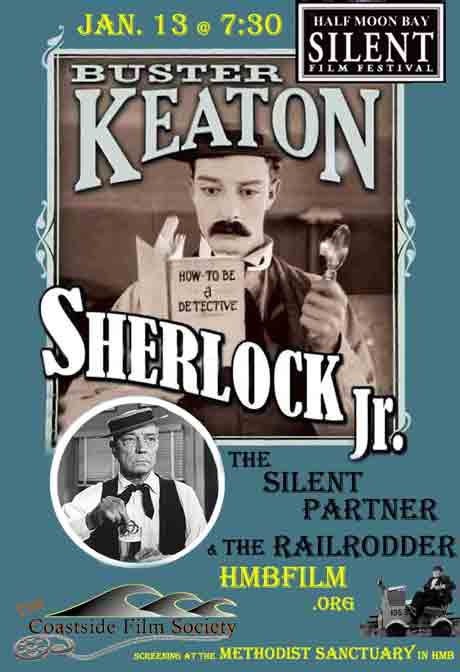
Feature: Three of Buster Keaton's Classic Films
Buster Keaton stars and directs in a silent feature that showcases his amazing physical comedy, captivating personality, and innovative use of visual effects. Keaton plays Sherlock Jr., a daydreaming movie projectionist in love with an unattainable woman. While napping on the job, Sherlock dreamwalks into a surrealistic fantasy world, where he successfully battles dastardly villains and wins the heart of his girl.
A mixture of wild slapstick physical comedy and more subtly crafted moments of humor. "The ingenuity of the set-ups and execution of the gags should impress even younger moviegoers who are spoiled by technology that can put anything a director imagines on the screen." Jay Seaver
The Silent Partner (1955, 30 mins.)
The arrival of TV in the 1950s helped Keaton revive his career. In this episode of the Screen Directors Playhouse Keaton plays an over the hill silent film star enjoying a beer at a local bar while watching the Academy Awards. When his name comes up during the telecast and clips from his old movies begin to scroll across the screen other tipplers gradually realize they have a star in their midst. Some care deeply, others get annoyed at all the attention being played to an old has-been.
The Railrodder (1965, 24 mins.)
An elderly Buster Keaton revisits the glory and daring do of his silent film heyday in the final film of his long career. In this silent short Keaton plays an old English gent touring Canada in a little motorized railroad car that narrowly averts or causes calamity at every turn.
Back to
take 25Programme for April 13, 2012
Friday the 13th cartoon classics that deal with bad luck, murder, trips to Hell, ghosts and other unwanted experiences
Once again the Film Society has asked Karl Cohen, the famous animator and film historian to assemble an array of captivating shorts (2-7 mins each) to show at film night in Half Moon Bay.
The night starts with a couple of early black and white cartoons from the 1920s. In "The Pet", animation pioneer Winsor McCay envisions a nightmare featuring a mystery pet who keeps eating and growing until it threatens the whole city. Our three Fleisher Brothers shorts push against the boundary of reality as Betty Boop (depicted as a dog this early in her career), her partner Bimbo and her sidekick Koko the clown each star in ridiculous musical nightmares.
Our picks from the 1930s are less surrealistic but just as much fun. In "Mickey's Nightmare" the Disney star dreams of a life full of far too many misbehaving children. Otto Soglow's chubby Little King bathes and plays with his pooch while a dastardly villain plots his murder in "The Fatal Note". In "Wotta Nitemare" Popeye dreams of a picnic in the clouds.
Next we feature two 1940s shorts by legendary cartoon director Tex Avery. "Who killed Who" deals with a detective who has to solve a murder in a haunted house. "Bad Luck Blackie" introduces us to a cute white kitten tormented by a bulldog and saved by a bad luck black cat. It is widely acclaimed as one of the fastest paced and funniest cartoons ever made.
Karl's final three picks are famous mind bending shorts from the 60s and 70s. You can guess who will win in "Bambi Meets Godzilla". "Vicious Cycles" uses stop motion animation with live people to give us a motorcycle gang without motorcycles. It's part Tarentino, part Monty Python. Then its back to the surreal with "Make Me Psychic" in which Anita the duck buys a gizmo that gives her psychic powers and makes her the hit of a party in an alternate universe.
Don't miss this once in lifetime chance to share these classic cartoons with Karl. Stick around after the screening to ask Karl questions or get him to sign one of his books.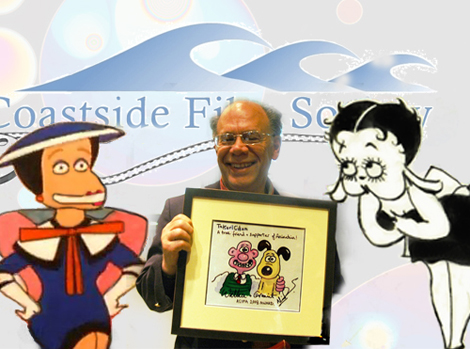
Feature: A night of Classic Cartoons with Karl Cohen
The Pet - a Dream of a Rarebit Fiend Nightmare, Winsor McCay, 1920, 11 mins, silent B&W
A meal of rarebit leads to a dream of a dog-like pet that keeps eating and growing til it threatens the whole city.
Koko, The Haunted House, Fleischer, 1927, 6:05 mins, silent B&W,
Animator draws a haunted house for Koko to explore.
Betty Boop, Mysterious Mose, 1930, Fleischer Brothers, 6:30 mins.
The Fleisher Brothers loved to push the boundaries of reality. Here Betty Boop (she still has dog ears in 1930) wakes up to find lots of strange singing creatures cavorting through her house.
Betty Boop, Bimbo's Initiation, 1931, Fleischer Brothers, 6 mins
Bimbo falls through an open manhole into an initiation for a secret society.
Mickey's Nightmare, Burt Gillett, 1932, 6:57 minutes, B&W
A sleeping Mickey is licked by Pluto. He dreams the kisses are from Minnie which leads to the stork delivering far to many bratty mice babies.
The Little King. The Fatal Note, Otto Soglow, 1933, 7:36 mins
Chubby monarch bathes and plays with his dog while a dastardly villain plots his murder.
Popeye, Wotta Nitemare, 1939, 7:20 minutes, B&W.
Popeye's dreams of a picnic in the clouds.
Who Killed Who, Tex Avery, 1943, 7:55 mins.
A detective tries to solve a murder in a haunted house that is not making his job easy.
Bad Luck Blackie, Tex Avery, 1949, 7:06 mins.
A small white cat being tormented by a bulldog is saved by a bad luck black cat. Rated 15th funniest cartoon of all time in a poll of professional animators.
Bambi Meets Godzilla, Marv Newland, 1962, 2 mins
Guess who wins? Rated 38th best cartoon in the book, "The 50 Greatest Cartoons".
Vicious Cycles, Chuck Menville, 1967, 7 mins
Stop motion animation with live people depicts a motorcycle gang without motorcycles. Part Tarentino, part Monty Python.
Make Me Psychic, Sally Cruickshank, 1978, 10 mins
Anita the duck buys a gizmo that makes her a psychic and the hit at a party in an alternate universe.
Karl Cohen will be there in person to introduce the films and lead a discussion afterwards.
Back to
take 26Programme for November 18, 2011
The real life story of a Don Quixote on a motorcycle
For 25 years in a remote corner of New Zealand, a real life character named Burt Munro tinkered away on his beloved 1920 Indian motorcycle. He dreams of taking it to Utah's Bonneville Salt Flats to see how fast she can go.
In 1967, when heart disease threatens his life Burt decides to go for it. He mortgages his house, signs on as a ship's cook, and makes his way to the USA. In Los Angles Burt buys an old car, builds at rattletrap trailer, and begins a road trip to the salt flats -- charming everyone he meets along the way.
Will they let an old guy compete in the land-speed trials on an ancient cycle with bald tires, no brakes, and no chute? You can probably guess the answer. No matter. The racing sequences are thrilling, but it is the trip there that makes this such a great ride.Feature: The World's Fastest Indian
"I am a motorcycle aficionado, but I truly think this movie transcends that. It's not a "guy's film" at all but a serious look at the life of a man that was average by his own reckoning - by ours he's a hero. When you find yourself ... saying "I would have quit" and it was only the beginning of the movie, well, that's some tough stock Burt Munro came from. And it's not tedious, not an uphill struggle all the way against insurmountable odds, none of those clich's. It's a great movie about a real guy and I can't imagine someone watching it and not being entertained, moved, and frankly, impressed." Lee Inck, International Movie Database
Rated PG-13 for brief language, drug use and sexual references.
Back to
take 27Programme for October 21, 2011
A documentary about life, liberty, and the pursuit of healthiness.
"A fascinating exploration and powerful indictment of a pressing national problem. This is Moore's biggest, best and most impassioned work." Claudia Puig, USA Today
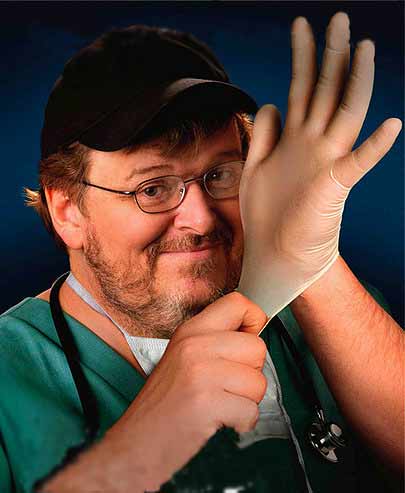
Activist filmmaker Michael Moore's unabashed critique of the American for-
profit healthcare system.
Yes Moore predictably bemoans the plight of the 50 million Americans who have no health coverage, but the heart of this movie is made up of the stories of middle class Americans who thought they had great healthcare coverage up and until the moment they got sick.
Feature: Sicko
Moore clearly believes that socialized healthcare systems provide better outcomes than capitalist ones. To prove his point Moore travels to Canada, Cuba, England, and France, where he talks to doctors and patients who seem quite happy with the treatment they are receiving.
Given that this is Michael Moore you have to expect a few on-screen gimmicks - like when he brings a collection of 911 responders with no coverage to Cuba to get free treatment.
"The film emerges as a fascinating exploration and powerful indictment of a pressing national problem. This is Moore's biggest, best and most impassioned work. And while he probes a vitally serious subject and makes a case for widespread reform, he does so with lighthearted flourishes, large doses of humor, clever use of film footage and a catchy soundtrack. These assets, along with well-chosen interview subjects, make Sicko a film that will arouse surprise, outrage, sadness and heated discussion." Claudia Puig, USA Today
"Moore's films usually make conservatives angry. This one is likely to strike home with anyone, left or right, who has had serious illness in the family." Roger Ebert, Chicago Sun Times
Back to
take 28Programme for September 23, 2011
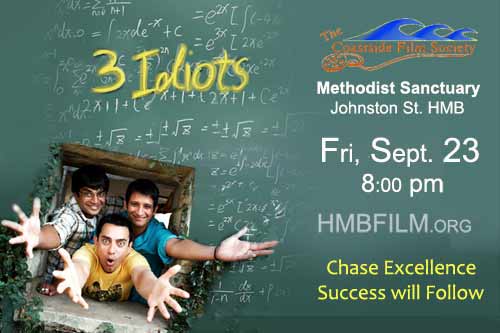
3 Idiots will get you laughing and touch your heart.
If you have never seen a Bollywood blockbuster, or if you have seen one and was put off by the general cheesiness of some films in this genre, the Coastside Film Society has a treat for you.
3 Idiots is not only a superlative comedy, it's also a great coming of age drama, morality tale, and musical all rolled into one. It is not only the highest-grossing Bollywood film ever made, many film critics have already labelled it a classic that is going to stand the test of time.
Feature: 3 Idiots
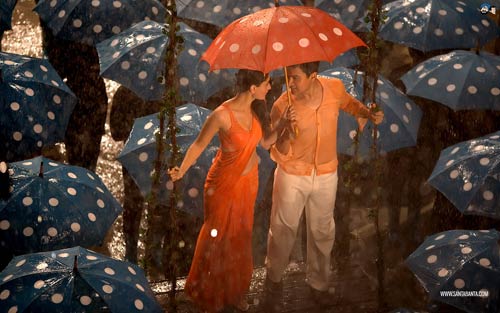
Along the way the three friends crash a few weddings, shove a funeral impossibly out of control, save a few lives, tug a few heart-strings, and solve a deep mystery. There are three musical numbers that left this author's kids humming for weeks. The film is set in India, so English is spoken in school, and Hindi outside. (Subtitles provided)
Gaurav Malani, of the India Times calls the film "One of the most entertaining films of the decade. Diretor Hirani grabs your attention from scene one with an unconventional opening to the film. Thereafter every single scene written in the screenplay is not just relevant but also has a clear set objective - to be funny or be deeply poignant. Which means it either makes you laugh or cry and at some superlative instances do both simultaneously (which is an achievement).... The writers have kept absolutely no room for any intermediate option. After watching the film, you won't mind being certified as an idiot. If you still don't approve of the film, you are a certified cynic."
Rated PG 13 -- for a drinking scene, college high jinks, and occasional crude words spoken in Hindi.
Back to
take 29Programme for August 5, 2011
An aching portrait of modern China
"Last Train Home is the best kind of documentary filmmaking: transportive cinema that takes viewers to a place they never much considered, immersing them in experiences they never knew existed."
Mike Scott, Times-Picayune
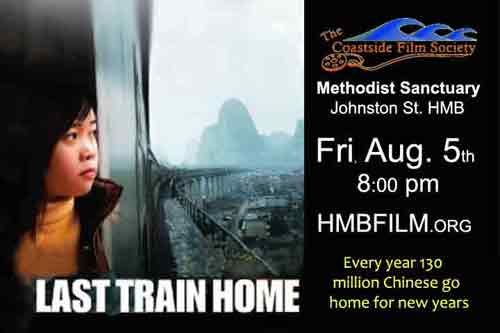
Feature: Last Train Home
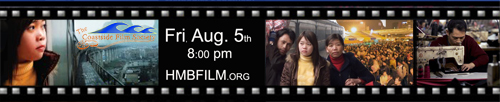
The Chinese industrial revolution is fueled by the labor of hundreds of millions of Chinese workers who leave home and family to take jobs in the factories that circle the big cities. Most of these workers get a single vacation each year - during the week-long celebration of Chinese new years. The result is the world's largest human migration, a week when an unfathomable 130 million human souls cram into every available mode of transport to grab a week of family time. The shots of this mad migration at the beginning of the Last Train Home are majestic and overwhelming.
Having established the scope of the problem, Chinese-Canadian director Lixin Fan humanizes the film by focusing the majority of the screen time to the story of a single Chinese couple. Fifteen years ago Changhua Zhan and Sugin Chen left young children in the care of grandma to take low-paying jobs in a textile factory a thousand miles away. They live in a dorm with no privacy, bent over sewing machines from dawn to dusk to earn enough money to pay for a good education for their kids.
Very noble, but the kids are now estranged teenagers who have ideas of their own. Director Lan follows the family for three years as the kids gradually detach from the dreams of their parents.
"Last Train Home will tug at your heartstrings as it opens your eyes, but it also will make you feel incredibly lucky and more than a little spoiled." Mike Scott, Times-Picayune
Professor Jenny Lau, a Chinese film scholar at San Francisco State, introduced the Film Society to this masterpiece and will lead the post screening discussion.
Back to
take 30Programme for July 22, 2011
Celebrating Four Ancient Cultures
A night of documentaries celebrating the art and culture of ancient Celtic Irish, Native American, and Aboriginal Australian peoples, and of a lost culture still thriving high up in the mountains of Northern India. 
Short: Malana, A Lost Identity
Feature: Time after Time

"A lyrical and jubilant interpretation of the human spirit through time and cultures - a visual and aural feast to remind us of our common harmonious ancestry." Brian Kavanagh, Australian Screen Editors Guild
Back to
take 31Programme for June 17, 2011
A loving homage to the great movies of China
"In an astonishingly accomplished first feature, female filmmaker Xiao Jiang puts an entirely different face on China's Cultural Revolution." Maria Garcia, Film Journal International
A troubled young woman named Ling Ling attacks a bicycle delivery boy named Mao in modern Beijing. Thus begins an emotionally compelling tale from China.
Friendless and heading to jail, Ling Ling asks Mao to do her a favor - take her apartment key and feed her fish. He agrees, and his simple life is uprooted forever.
Back to
take 32Programme for May 20, 2011
Merge with the Transcendent Man
Director Barry Ptolemy's compelling feature-length documentary about the life and ideas of controversial inventor and futurist Ray Kurzweil. The focus of the film is Kurzweil's prediction that mankind is quickly approaching a moment of "Singularity" - the time when human and machine intelligence will merge to create a joined organism that is much smarter than the sum of its parts. 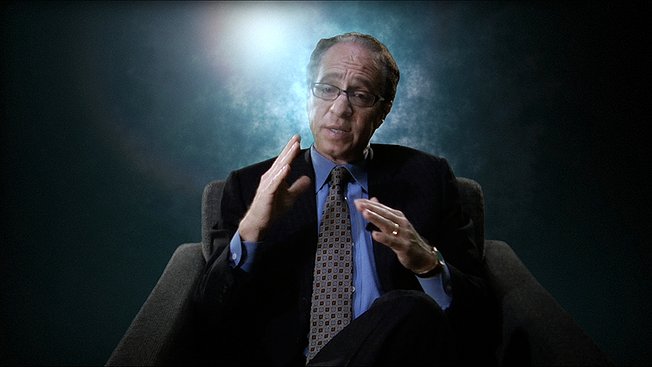
Feature: The Transcendent Man
Kurzweil is not only predicting that we will see a merging of mind and machine by the year 2030, he says this merger will provide us with the smarts to start tackling mankind's most profound limitations. In Kurzweil's new world, disease, aging, hunger, poverty, and even death will soon be conquered. Kurzweil is personally planning to stick around long enough to see the cloning of his late father's body and insertion of an artificial intelligence derived from the son's memories of dear old dad.
The movie delves deeply into the social and philosophical implications of Kurzweil's world through Kurzweil's own words and though interviews with the likes of Colin Powell, Wired co-founder Kevin Kelly, 3Com and Metcalfe's founder Robert Metcalfe, evolvable hardware researcher Hugo de Garis, Segway inventor Dean Kamen, and Kurzweil's friend Stevie Wonder. There is an attempt to balance Kurzweil's ebullient confidence in the future with more cautious points of view. Iconic American composer Philip Glass contributes the original music used in the film's score.
"Whether Kurzweil is a good salesmen of his ideas is irrelevant here because of how entertaining they are. He's the intellectual equivalent of a Michael Bay explosion. That's not meant to belittle the subject matter though. The answers he's come up with lead to the kind of questions we've always asked ourselves, and they demand that we re-frame them to make sense of the world we live in currently. .. Now who wants to live forever?" Cole Abaius. FilmSchoolRejects.com
Back to
take 33Programme for April 8, 2011
Animation of Nina Paley
Nina Paley is an amazing animator, syndicated comic strip artist, a professor at Parsons School of Design, and a Guggenheim Fellow who creates masterworks all by herself.
"Nina Paley is half revelation, half revolution. A Western woman who took an Eastern story and with a personal computer single-handedly animated a full-length film that received accolades from Roger Ebert and attacks from conservative Hindus, a story that morphed into a protracted fight with Sony and others about copyrights, catapulting the artist into an Internet hero and her struggle into a cause celebre for Creative Commons, a flexible rights model being evolved to meet the needs of a digital era. Come as we share the tale, the adventure, the trials of Nina Paley's Ramayana." Lavina Melwani, Hinduism Today
Karl Cohen, the famous animation collector & scholar will introduce both films and lead the post screening discussion.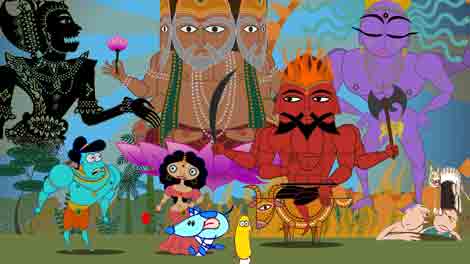
Short: Fetch!
Feature: Sita Sings the Blues
Sounds confusing? Roger Ebert of the Chicago-Sun Times freely admits he was put off when he first read the description of the film and had to be talked into watching it. When he did he was blown away. "I put on the DVD and start watching. I am enchanted. I am swept away. I am smiling from one end of the film to the other. It is astonishingly original. It brings together four entirely separate elements and combines them into a great whimsical chord. ... To get any film made is a miracle. To conceive of a film like this is a greater miracle."
Don't make the mistake Roger almost did. Come see this miracle when the Coastside Film Society screens it! It boasts battle scenes that put modern anime to shame, a mixed Indian and classical American Jazz soundtrack that will thrill, two heartbreaking tales of love gone wrong, artistic flourishes that will amaze, enough humor keep both young and old amused, and opening credits that will blow you away.
"Ms. Paley did everything in this an amazingly eclectic, tour de force by herself. The ingenuity is dazzling -- and a lot of fun." A. O. SCOTT New York Times
Back to
take 34Programme for March 18, 2011
Two Tales of Japnese-American INternment in WWII
Two Tales of Japanese-American Internment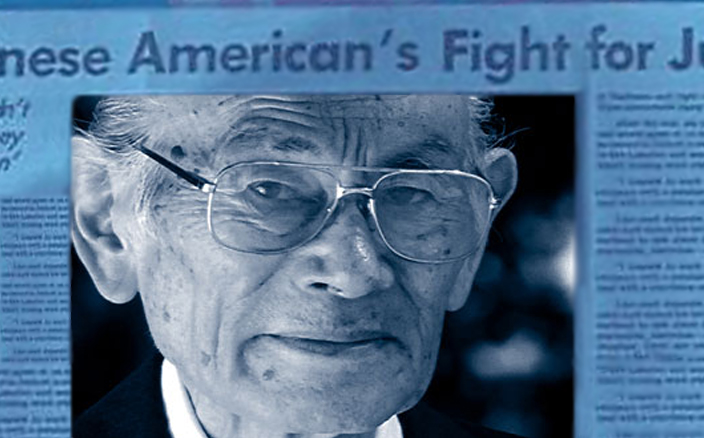
Feature: The Fred Korematsu Story
Thus begins a 50 year battle. In 1944 the Supreme Court ratified a felony conviction for his defiance. It takes Korematsu half a century to get this ruling reversed. In the end, he is not only exonerated, but also awarded the Presidential Medal of Freedom, the nation's highest civilian honor.Short: The Art of Gaman

The Art of Gaman began as a book and exhibition of artwork written and choreographed by Delphine Hirasuna. Director Rick Quan took this source material and added filmed interviews of people who remember this time well to complete the story.
The film will be introduced by its director, Rick Quan, a familiar face in the Bay Area area thanks to his many years service as a popular television sports anchor.
Back to
take 35Programme for February 18, 2011
Consistently gripping, Visually intoxicating.
"A landmark of contemporary Turkish cinema.” Stephen Holden, NY Times
Seventeen year old Meryem's life is of little use to her anymore, for she is the victim of an ‘honor crime’; her chastity lost brutally. When Meryem refuses to take her own life her cousin Cemel is ordered to take her to Istanbul & dispose of her.
The trip transforms them both.
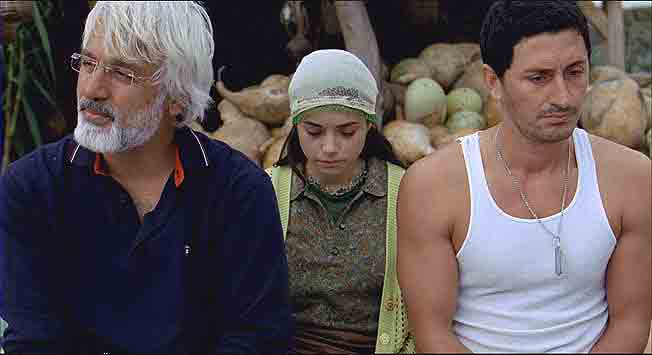
Feature: Bliss (Mutluluk)
Seventeen year old Meryem's life is of little use to her anymore, for she is the victim of an ‘honor crime’; her chastity lost brutally. When Meryem refuses to take her own life her cousin Cemel is ordered to take her to Istanbul and dispose of her. The trip transforms them both. Will Cemel defy his father's wishes and refuse to kill a girl he begins to suspect is innocent? Can Meryem learn to take control of her own life? And how will their more traditional perspectives affect the worldviews of the people who show them kindness in the big city?
“Consistently gripping, visually intoxicating. A landmark of contemporary Turkish cinema.”
Turkish with English subtitles
Back to
take 36
Programme for January 14, 2011
Solutions for a world faced with declining oil production.
By most accounts the world has passed the point of peak oil. There is only so much oil in the ground. We have already tapped the easy to reach reserves.
Sooner or later we are going to have to move away from an oil-based economy. When will this happen? How will this happen? That's the topic the two documentaries we will be screening in January are going to tackle.

Feature:
The Next Frontier: Engineering the Golden Age of Green.
An exploration into the practicality of adopting wind, solar and hydro as replacements for fossil fuels. Funded by the Professional Engineers in CA Gov. This film is more interested in discussing what can be done using
existing technologies than done than in debating what happens if we don't go green. It features animation by Emmy Award winner Charlie Canfield who will be at the screening.
This documentary film evaluates green energy schemes adopted throughout the world - from tidal turbines in Ireland to concentrated solar plants in California and suggests approaches that have the best chance to flourish in the United States and in California. It features animation by Emmy Award winner, Bay Area resident, and friend of the Film Society, Charlie Canfield - who will join us at the screening.
Feature 2:
In Transition 1.0: From oil dependence to local resilience.
A look at the "In Transition" movement and its focus on rebuilding local economies so they can thrive in a world where oil production has peaked. Members of the Half Moon Bay Branch of Coastside Transition will attend the screening and lead the post-screening discussion with the audience.
Back to
take 37
Programme for November 19, 2010
A Night of Surreal Animation with Karl Cohen
Many thanks to professor Karl Cohen, the famous animation collector and scholar. The Film Society asked for his help building a night of animation. He provided us with original film for a dozen of his personal favorites.Bring the whole family to enjoy these great films. Modern kids don't know what they are missing. If you like, stay for the Q/A session with professor Cohen after the screening. We anticipate the dialog is going to be lively.
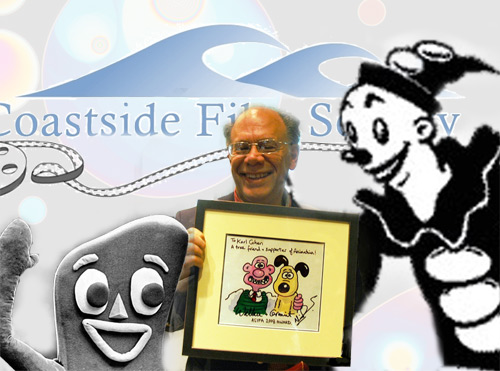
Feature: An Evening of Classic Animation
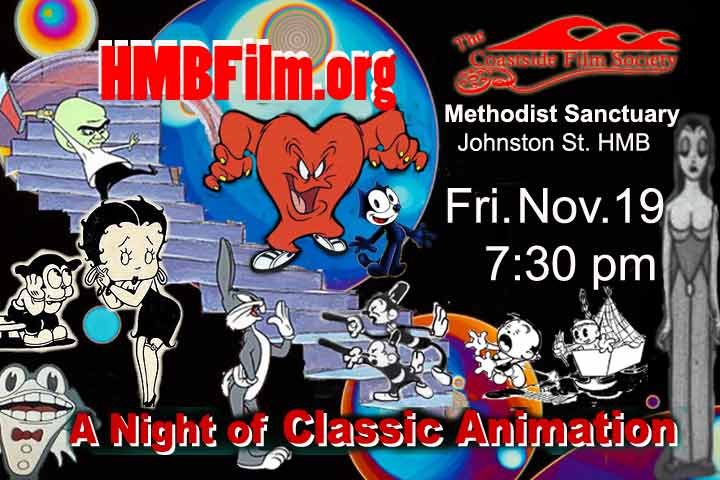
Karl's picks from the 20s and 30s were all famous back in the days of black and white. Felix the Cat plays with shadows in the twilight. Betty Boop is now human, but still pals around with her old boyfriend Bimbo the dog and his
sidekick Koko the clown. Little roundheaded Oopy is kidnapped and bratty brother Scrappy comes to the rescue. Tom and Jerry (still in human form) save a beautiful singing mummy. Flip The Frog battles a creepy magician.
The characters from the 40s and 50s are more familiar to a modern audience, but retain an edge that was lost in their later years. Porky the Pig and Daffy Duck mix up baby deliveries to animal families. James Mason narrates a creepy
version of the "Tell Tale Heart". Daffy Duck is tormented by a sadistic off-screen animator. Bugs Bunny outwits a mad scientist and his furry orange monster.
Karl Cohen will introduce the films and lead the post screening discussion.
Back to
take 38
Programme for October 22, 2010
Lonely are the Brave
Kirk Douglas produced and stars in his favorite film, a nuanced and beautiful western that laments the vanishing of the Old West and its unique breed of heroes.
Douglas, a star known for his independence and contempt for the studio system loved the original Edward Abbey novel this movie is based upon. He bought the rights to the novel and hired another rebel, his friend the blacklisted screenwriter Dalton Trumbo, to write the screenplay. Working with Director David Miller they crafted a literate gem that Steven Spielberg calls one of the best films ever made.
"Lonely are the Brave is a film chock full of strong performances, but this is Douglas' film. He exerts a presence & believability in the role of the man who wants to keep his soul free. An American classic of the 1960s." George Perry, BBC
Feature: Lonely are the Brave
Douglas plays Jack Burns, an old-time cowboy still rolling his own smokes in 1962. He gets himself tossed into jail to spring a friend (Michael Kane). The friend elects to stay put. Jack escapes by himself, in the process branding himself as a serious criminal. If they catch him they will throw away the key. So Jack bolts for the Mexican border on his trusty horse Whiskey. Sheriff Johnson (Walter Matthau), admires Jack's pluck, but feels duty bound to use all his newfangled jeeps and helicopters to hunt Jack down.
Back to
take 39
Programme for September 24, 2010
A brave film that dares to tackle an issue polarizing America
A tale of a family divided by the US/Mexican border.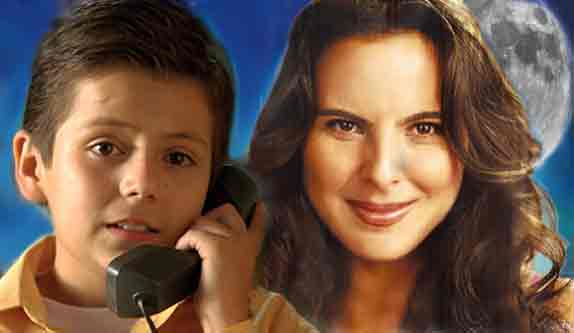
Feature: Under the Same Moon (La misma luna)
"Director Patricia Riggen's Under the Same Moon is a brave film that proudly puts a face to an issue that has polarized America." Joseph Belanger, IMDB.com
Nine year old Carlitos lives with his grandmother in a depressed Mexican town. His mother, Rosario, cleans houses in Los Angeles, working hard to raise enough money to support her mother and her son. They long for each other, and keep in touch via a
weekly phone conversation. "We are not so far apart my love" Rosario likes to tell her son, "look up and you will see the same moon I see".
When Carlitos' grandmother dies, he decides to make his way to L.A. to find his mother. From this point on Moon becomes a road movie, with Carlitos hooking up with the wrong people, who put him in jeopardy, and the occasional right ones.
"The characters in Moon are vividly drawn, and their plight does more to illuminate the problem of divided Mexican families than countless newspaper stories. The movie gets to you,earning the audience's emotions honestly rather than by manipulation."
"It's impossible not to care about the fate of Carlitos as played by Adrian Alonson. Alonson may be the most most adorable child actor since Abigail Breslin, but he is also a natural who never appears to be acting." Ruthe Stein, San Francico Chronicle
Parental warning - This film is rated PG-13 for strong content
Back to
take 40
Programme for September 24, 2010
Una película valiente que se atreve a abordar un problema de polarización de América.
La historia de una familia dividida por la frontera Mexicana.Feature: La Misma Luna: Under the Same Moon
"Una valiente película que pone una cara orgullosa al problema que ha polarizado a los Estados Unidos ”
Joseph Belanger, IMDB.com
Español & Inglés con subtítulos en Inglés PG-13
Carlitos, de nueve años, vive con su abuela en una deprimida ciudad Mexicana. Su mamá, Rosario limpia casas en Los Angeles y trabaja duro para ganar dinero y mantener a su mamá y a su hijo. Madre e hijo se extrañan mucho y se mantienen en contacto por medio te llamadas telefónicas semanales.
Cuando su abuela muere, Carlitos decide hacer el viaje a Los Angeles a encontgrar a su madre. De este punto en adelante la pélicula se convierte en un camino donde Carlitos se engancha con personas no gratas, que lo ponen en peligro, y de vez en cuando con personas buenas que lo ayudan.
“Esta película se mete en el corzón del público, ganandose las emocines de la gente en vez de manipularlas. Es imposible no apoyar la vida de Carlitos, niño de nueve años, personaje que actua Adrian Alonson….Una actuación perfecta y natural que no parece ser actuada” Ruthe Stein, San Francisco Chronicle
Back to
take 41Programme for August 27, 2010
Sins of the fathers?
What to do when you learn that the slave trade was your family's business.
Feature: Traces of the Trade: A Story from the Deep North
"A far-reaching personal documentary examination of the slave trade. The implications of the film are devastating."
--Stephen Holden, The New York Times
What would you do if you discovered one of your ancestors was one of the greatest slave traders of all time? Director Katrina Browne's reaction was to invite members of her family to travel with her to Africa to explore and confront the implications of this shocking family discovery. Nine of Browne's relatives took up her challenge and traveled with her on the long road from Ghana to Cuba to New England, tracing the steps of the slave trade that made her family so rich.
Who should pay for the sins of our fathers? It is tough question to ask, and harder to answer. Holly Fulton, one of Katrina Browne's relatives who appears in the film, will be on hand to discuss her take on this most difficult of questions.Parental warning - Recommended for 5th grade and up.
Back to
take 42
Programme for July 23, 2010
Madcap French New Wave Comedy
Feature: Zazie dans le métro
"Are you in an agreeable mood to have your leg pulled right out of its socket by a practical joker with a movie camera? Then you may just be ready for "Zazie," an elaborate French exercise in cinematic Dadaism." Bosley Crowther. New York Times
A frenetic comedy and satirical view of society by the great French New Wave director, Louis Malle. The film stars Catherine Demongeot as an 11-year-old dumped for the weekend with her strange uncle Gabriel. We get to experience the surreal side of Paris that Gabriel loves though Zazie's large eyes.
"The French New Wave was the most exciting and energetic of all film movements, because of the unmistakable joy that the directors involved had in deconstructing the mechanics of cinema.
Zazie is not merely Surrealist, it leaves Surrealism behind on its merry trip into outright absurdism. While I watched the film I thought of neither Godard nor Truffaut, but of Monty Python's Flying Circus and its aggressive abandonment of causality and
even physics in the pursuit of the grotesque and ineffable.
We expect a story about a child to be more fantastic and dare I say zany than a story about adults, and Zazie in the Metro exploits that expectation, leading us to first laugh at the film and only realising the implications of what we're laughing at moments later. The film is constantly one step ahead of the audience, always just a little bit smarter than we are. That might be the most uncomfortable part of the whole experience. But then, nobody would ever argue that the revelation that we're all living like foolish cattle should be comfortable."
Tim Brayton, Antagony & Ecstasy
92 mins, French with English Subtitles
Parental warning: strong language and joyfully shocking situations
Back to
take 43
Programme for June 25, 2010
THE COVE
An Environmental Documentary with all the thrills of a James Bond Movie.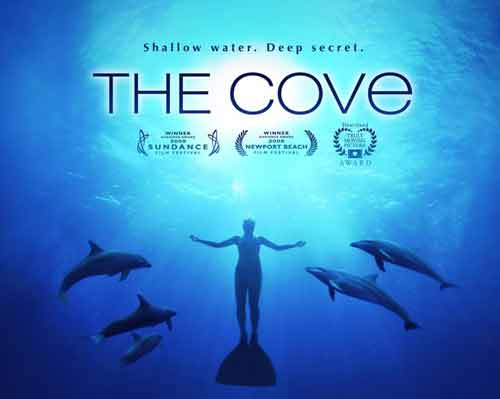
Feature: THE COVE
Winner 2010 Academy Award - Best Documentary Feature
Winner 2009 Sundance Film Festival - Audience Award
"Plays like the James Bond version of an environmental doc. It's quite simply one of the year's best movies." Peter Howell Toronto Star
Some of the footage is graphic and bloody, but the Cove also "makes points that don't depend on those shots for their effectiveness. We learn a lot about dolphin intelligence, witness the ineffectiveness of the International Whaling Commission in the face
of Japanese lobbying, and learn how the high mercury levels in dolphin meat bring to mind the earlier mercury poisoning scandal at Minamata." Kenneth Turan, Los Angeles Times
"The Cove is an astounding piece of investigative journalism with the heart ofan action thriller. Led by Louie Psihoyos, leader of the Ocean Preservation Society, and Richard O'Barry, an internationally recognized authority on dolphin training who is best known for his work on the 1960's TV show Flipper, the film follows a high-tech dive team on a mission to discover the truth about the International dolphin capture trade as practiced in Taji, Japan. Utilizing state-of-the-art techniques, including hidden microphones and cameras, the team uncovers how this small seaside village serves as a horrifying microcosm of massive ecological crimes happening worldwide." Rotten Tomatoes.com
ADMISSION IS FREE FOR THIS EVENT
Back to
take 44
Programme for May 21, 2010
Safety Last
Half Moon Bay Silent Film Night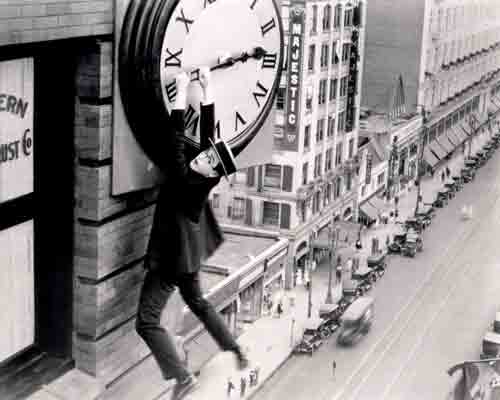
Feature: Safety Last
It's arguably the most famous image from the silent film era. Harold Lloyd in horn-rimmed glasses and straw hat hanging precariously from a broken clock face.
The film is hilarious with breathtaking stunts. The story is quite simple. Lloyd's bespectacled character wants to get married but needs money. So he endeavors to win a prize by climbing a skyscraper. At each ledge Lloyd encounters new difficulties
including flapping pigeons, windows opening, and mice running through his clothes.
"Where Charlie Chaplin and Buster Keaton made their stunts look effortless, Lloyd got laughs by making the things he did look nearly impossible.... And because vertigo-inducing camera angles put audiences in the roughly the same spot he was in, they identified big-time." Bob Mondello, All things Considered
When the silent film era ended Lloyd retired and pulled his films from release with no apparent concern that his legend was gradually fading. Now that his granddaughter has started re-releasing his films that may well change.
The film will be accompanied by live music scored and played by pianist Shauna Pickett-Gordon.
Back to
take 45
Programme for April 30, 2010
Silent Holy Stones
Tibetan director Wanma-Caidan's dramatic feature debut.Winner of the "Golden Rooster" award. (Known in the U.S.A. as China's Oscar.)
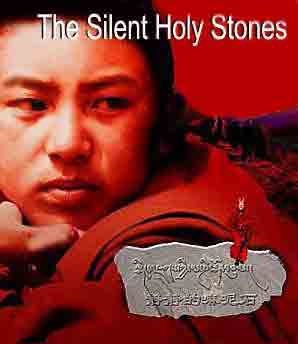
Feature: Silent Holy Stones
"Will you plead with the Master, Your Holiness, so we may watch TV for a while?" Asks a ten year old Buddhist monk to the seven year reincarnated living Buddha he has been asked to oversee.
Thus begins a movie that delves into the relative merits of strict monastic training versus youthful exploration of the outside world as seen through the novelty of television.
Professor Jenny Lau, of the Film School at Francisco State, discovered this film for us in China, and will handle introductions and our post screening discussion.
Back to
take 46
Programme for March 19, 2010
Heavenly Secrets and Chilling Crimes
Short: Remedios the Beauty
Remedios the Beauty
A film by Jesse Cobb and friends from Pacifica's Terra Nova High School. The script for Remedios was adapted from Gabriel Garcia Marquez's classic, "100 Years of Solitude". Filmed on location in San Francisco's vibrant Mission District, the film is a magical urban fable about the power of beauty.
First prize winner, Coastside Teen Film Festival.
Feature: Heavenly Creatures
Based on a true story of two high school friends who share a love of fantasy and literature -- and kill to protect that friendship.
At the time this film was made, writer/director Peter Jackson (The Lord of the Rings & District 9) was still known as a purveyor of gory horror flicks. "It would have been easy to make a pulpy, over-the-top murder yarn -- focusing on the murder and reinforcing the standard perception of girls as fiends without mercy. Instead, the film (Jackson) made is an evenhanded, fascinating look at two lives." Edward Guthmann, San Francisco Chronicle
Jackson did a superb job casting the two leads. Melanie Lynskey plays the chubby Pauline with a palpable desperation. Newcomer Kate Winslet plays Juliet as a pretty thing, whose bubbly laughter verges on hysteria. It is an accomplished performance that makes it easy to see why Winslet has gone on to become such a big star.
"The insight of "Heavenly Creatures" is that sometimes a mob can be as small as two persons. What makes Jackson's film enthralling and frightening is the way it shows these two unhappy girls, creating an alternative world so safe and attractive they thought it was worth killing for." Roger Ebert Chicago Sun-Times
Rated R for violence and sexual situations
Back to
take 47
Programme for February 26, 2010
Two Heartfelt, Ridiculous & Belated Valentines
Feature: Absurdistan
"A wildly imaginative world worthy of Gabriel Garca Marquez at his most playful, drenching it in vivid color and a Slavic sense of bleak humor."
Ann Hornaday, Washington Post
In a town so inconsequential no country lays claim to it, a young love is born. Grandma predicts their love will reach fruition when both bathe under the light of a rare celestial alignment. Hard to do when the local aqueduct runs dry.
"With a gloriously saturated palette, rich textures, a fanciful imagination and an unerring, light touch, (Director) Helmer gives "Absurdistan" a distinct narrative style and visual verve that seem at once ancient and new, childlike and wise. Those who prefer their cinema austere and joyless will no doubt find its humor a bit twee, but anyone looking for a break from empty nihilism should seek out this small, sparkling gem."
The dialog is in Russian but is so spare, English viewers can almost get by without the subtitles.
Back to
take 48
Programme for January 15, 2010
A Global Warning
Feature:
A GLOBAL WARNING
Arctic ice is melting, sea levels are rising, and glaciers are shrinking at alarming rates. And the Earth is getting unmistakably warmer. But is this vast, potentially catastrophic, climate change the result of human behavior? Or is it simply the Earth's natural cycle of warming and cooling periods that have occurred since the planet formed?
"A GLOBAL WARNING" offers an in-depth study of the science behind this controversial, hot-button issue.
Scientists explore the skies to examine the warming effects of the sun and dig deep into the Earth to study continental movement and the volatile activity at the planet's core. Experts speculate on how natural events, including volcanic eruptions and massive meteor impacts, have affected temperatures and weather systems over the planet's 600-million-year history.
Shot on location at some of the most breath-taking locations on the planet, and filled with dynamic special Effects, "A GLOBAL WARNING" is a captivating look at the Earth's climatic evolution and a study of the longevity of our planet--and man's future on it.
Back to
take 49
Programme for November 13, 2009
Three Comic Masterpieces from Buster Keaton
Feature:
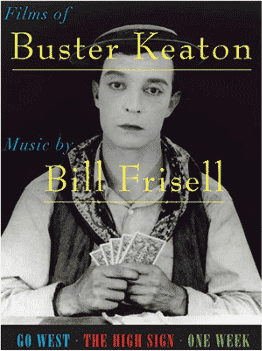
THE HIGH SIGN (1921) 21 mins
Keaton is hired as both the bodyguard and the assassin for the same man!
"There's really no need to explain in detail the unbelievable plot line. This physical comedy is the closest you'll ever come to seeing human beings act in real time to what would become the clear domain of animators some years later... You won't believe your eyes." Clark Richards, The Internet Movie Database
ONE WEEK (1920) 19 mins
A newlywed Keaton and wife attempt to build, furnish, and settle into a build-it-yourself-dream-home. The instructions say you can build it in a week. Unfortunately, they have been provided with the wrong set of instructions.
GO WEST (1925) 20 mins
The most unusual love story of the silent era. Is this Keaton's only sentimental movie, or is a joke about the devoted cow-eyed leading ladies featured in so many other silent films?
"With a charming cow as a romantic lead, Keaton's character is recognizable as a real person, but one that is easy to underestimate." Jeremy Heilman, MovieMartyr.com
MUSIC BY GRAMMY-WINNING GUITARIST BILL FRISELL.
"I watched the Keaton DVD with my son, who is two-and-half years old, and he really flipped for it. I think there's something really special about how instrumental music can bypass a lot of our language oriented logic, and I saw that perfectly in my son's
giggling, delighted reaction. ... There's a spark that emerges in this collaboration (between Keaton and Frisell) where it's clear (they have) things to say to each other." Dennis Cook, JamBase Magazine.
CRITICS LOVE KEATON AND FRISELL
"He was the greatest of the silent clowns. In films that combined comedy with extraordinary physical risks, Buster Keaton played a brave spirit who took the universe on its own terms, and gave no quarter." Roger Ebert, Chicago Sun Times
"The music is lithe and responsive and honors Keaton's genius sincerely." Nate Chinen, New York Times
Back to
take 50
Programme for October 30, 2009
When Ruoma Was Seventeen
Feature: - - - - - - -
A story about love across a cultural divide.
"A beautiful and bittersweet film, a coming-of-age tale that simultaneously gives us a small peek into the rapidly
escalating clash between the Old China and New China as the huge country races to modernize." — Don Willmott, Filmcritic.com
Ruoma is a teenage girl living in a beautiful remote region of China's Yunnan Province, who longs for a taste of the big city. Ming is a big city boy, an amateur photographer come
to take pictures of the gorgeous mountain rice fields.
Before long Ming is taking pictures of Ruoma posing in her colorful Hani garb to sell to tourists. They split the take. Of course a romance is kindled, and just as inevitably that romance is challenged by their profound cultural
differences.
The photography is gorgeous, full of Hani "songs, dances, and harvest rituals, all of which Ruoma takes part in with great joy. The last thing Ruoma needs, you'll think, is to
be taken away from this simple life, and yet the world encroaches." Filmcritic.com
Jenny Kwok Wah Lau, Associate Professor from San Francisco State will introduce the film and take questions from the
audience.
Back to
take 51
Programme for August 21, 2009
An Iranian film with heart
Feature: The Color of Paradise
"Transcendent, deeply committed & beautifully wrought. It will make anyone who sees it look at the world with new eyes."
Bob Graham, San Francisco Chronicle
Mohammad wants to come home for the summer. His dad, a widower, is afraid that the presence of a blind son at home will make it hard for him to find a new wife. When the dad is forced to bring his son home, he walls himself away, failing to appreciate the joy his son brings to the rest of the world.
"Because they do not condescend to young audiences, [director] Majidi's films are absorbing for adults as well, & there is a lesson here: Any family film not good enough for grownups is certainly not good enough for children."
Roger Ebert, Chicago Sun Times
Back to
take 52
Programme for July 24, 2009
Two American women who wanted to vote
Feature:
Back to
take 53
Programme for June 26, 2009
A mysterious film from Bhutan
Feature: Travellers and Magicians
A film so enchanting one hates to see it come to an end."
Kevin Thomas, Los Angeles Times.
Deep in the Himalayas, in the Buddhist kingdom of Bhutan, two men seek to escape their mundane lives. One of those men is Dondup, a university graduate who hopes to leave his job as a government official behind so he can emigrate to the US and become a farm laborer. On the way out of town Dondup misses his bus. While waiting for next bus he encounters a bizarre series of wayfarers. The most interesting of the characters he meets is a monk who spins the tale of Tashi, a handsome young farmer and apprentice magician who is just as frustrated with his life as Dondup is.
The film deftly cuts back and forth between the tales of these two restless young men, both with girls on their mind and both with a deep desire to find a place of more fun and action.
Travellers is the first feature film ever shot in the kingdom of Bhutan. Filmed in the native language (Dzongka) with English subtitles. It may be the first role most of these actors have ever played but they more than pull it off. The San Francisco Chronicle raves that Travellers & Magicians is a warm, embracing film of transcendent beauty and spirituality.
Back to
take 54
Programme for May 22, 2009
Films about the American Experience
Short: ABOVE THE TIMBERLINE
A film that honors the work of the poet, artist and teacher, Carl Zimmermann (1950-1994). It was in the wilderness of the mighty Sierra that Carl was inspired to write volumes manifesting the essence of climbing to the rocky mountain tops. Zimm's
heartfelt words, set to the beautiful music of Steve Ewert (recorded by California Zephyr), combined with the awesome photography of documentary filmmaker and Film Society Board member Warren Haack, is a record of a place that few people have ever
experienced.
Feature: ALWAYS BEEN A RAMBLER
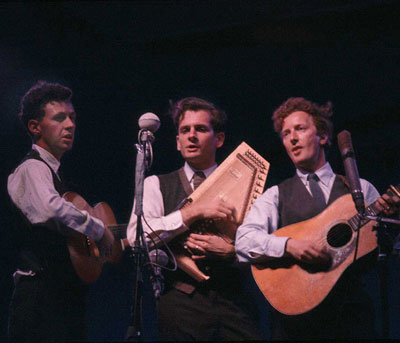
A documentary by Yasha Aginsky about the New Lost City Ramblers, arguably the most influential contemporary old-time string band of all time.
The band began just before the folk boom of the early '60s. What made the band so successful was its authentic sound. NLCR left the soft sappy folk covers to lesser artists. These guys dipped deep into the roots, serving up an authentic string-band sound
that could compete with the best of the bands from the 1920s and '30s. The popularity of the band soared. Through the Ramblers' own words, "Aginsky's film documents the evolution of Old Time American Music and the soulful NLCR sound, their influences,
their mentors and their influence on contemporary musicians."
Yasha Aginsky is a San Francisco-based documentary film maker and film teacher whose work has twice been nominated for Academy Awards.
Both Yasha Aginsky and Warren Haack will attend the screening and talk to the audience.
Back to
take 55
Programme for April 24, 2009
CUBA
Two films about how Cuba has benefited from the US embargo.Short: ARTE CUBANO: Contemporary Art and Culture In Cuba
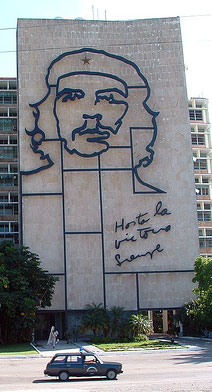
Director Bob Freimark's roadtrip movie focuses a spotlight on the art of contemporary Cuba. What he discovered was an exotic artistic landscape untainted by the market-driven forces that have shaped the work of Cuban expatriates working in the US. Who says
a 50 year embargo can't provide positive benefits? Edited by the Coastide Film Society's own Warren Haack.
Feature: THE POWER OF COMMUNITY: How Cuba Survived Peak Oil (53 mins)

When the Soviet Union collapsed in 1990, Cuba's economy went into a tailspin. Imports of oil cut by more than half and food by 80 percent. People were desperate!
THE POWER OF COMMUNITY shows how Cuba transformed itself from an imported oil glutton to a surprisingly resilient country with an economy rooted in localized food and energy production. "It shows a glimpse of what is possible when a community reinvests its financial, educational and social capital in its own people and the systems that sustain life - food, energy and health care." Alisa Kane.
"We have a lot to learn from this unlikely role model"
The evening will begin with a sampling of music that the Film Society's own technical guru, Warren Haack, gathered during his recent trip to Cuba.
Back to
take 56
Programme for February 20, 2009
REMEMBERING GASHERBRUM1
Bob Swift was a member of the climbing team and produced this commemorative film. He is well known in Half Moon Bay and will present the film and do Q & A.
Feature: REMEMBERING GASHERBRUM1
Remembering GasherbrumI made its debut at the International Mountaineering Film Festival in Graz, Austria, on November 15, 2008. The movie commemorates the first ascent of this (the only 8000-meter peak first climbed by Americans) by Pete Schoening and Andy Kauffman on July 5, 1958.Back to
take 57
Programme for January 17, 2009
The Half Moon Bay Public Library presents...
Filmmaker Caveh Zahedi, winner of the Critic's Award at the Rotterdam Film Festival in 1994, will visit the Half Moon Bay Public Library on Saturday, January 17, 2009 at 7:00pm in the Reading Room.This event is free and open to all members of the public, though the film does contain adult themes.
For more information, visit www.halfmoonbaylibrary.org or contact Adam Lipman at (650) 726-2316, Ext. 228.
Feature: In the Bathtub of the World
Cave Zahedi (www.cavehzahedi.com) will present a special screening of his film, In the Bathtub of the World, an autobiographical portrait of a relationship that spans the course of one year, and discuss the film afterwards, with questions and answers about the film and his career as a filmmaker.
Caveh is also an actor and has appeared in such films as Citizen Ruth which stars Laura Dern, directed by Alexander Payne (Sideways; Election) and Waking Life, directed by Richard Linklater (Dazed and Confused; Before Sunrise) While studying Philosophy at Yale University Cave Zahedi began making films in his spare time. After graduating from Yale, he studied film at UCLA where he made his first film A Little Stiff.
With the success of that film Caveh received several grants to pursue making his films; and through the subsequent success of future films he has appeared on Larry King Live and NPR among other media outlets. His films are not quite documentaries and not wholly fictional narratives either.
Through the medium of film Caveh uses his own life with only the camera lens as a med iator to pursue the dilemmas of the ego, which he thinks of as "the central question in art…"
Back to
take 58
Programme for November 21, 2008
Stories of Passion, Murder, and a Mysterious Coastal Creature
Short: Coastal Creature
Local construction engineer and videographer Rob Carey's encounter with a mysterious creature lurking on one of our local beaches.
Feature: La Bete Humaine (The Human Beast)
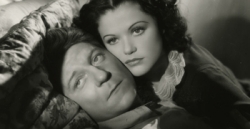
(French with English subtitles)
A tense, psychological thriller produced in 1938 by the legendary French director Jean Renoir based on a novel by Emile Zola.
"It is simply a story; a macabre, grim and oddly-fascinating story. Sitting here, a safe distance from it, we are not at all sure we entirely approve." Frank S. Nugent, The New York Times
Railroad engineer Jacques Lantier (Jean Gabin) lusts after Severine (Simone Simon), who is the wife of Roubaud, a railroad station master (Fernand Ledoux). When Lantier stumbles across Roubaud murdering another man, who has done Severine wrong, Lantier is faced with many conflicted motivations. In the course of the film we discover that Lantier has quite a few skeletons lurking in his own closet. So too does his love Severine.
It is a deliciously convoluted film noir in which the plot line has more branches than the gritty railroad line on which it all takes place.
Back to
take 59
Programme for October 24, 2008
Two Films about the Problem of Darfur
The Coastside Film Society is teaming up with the Half Moon Bay Library and the American Association of University Women to sponsor a FREE night of films about the problems of Darfur Africa.Although ADMISSION IS FREE we will be collecting donations to help out the people of Darfur.
Feature: Darfur Diaries: Message from Home
Directors Aisha Bain and Jen Marlowe take us on-site to Darfur. The desert landscape is gorgeous, wind-swept, and littered with bomb fragments. The personal anecdotes are heart-breaking and appalling.
Chosen by Amnesty International as an educational tool, this film provides the historical & cultural context needed to understand the germination of this political & humanitarian crisis. It also provides a testament to the continuing strength and resilience of a people whose lives, homes, safety, & rights deserve to be protected.
Short: The Lost Boys

In Peter Pan, the lost boys fought off pirates and crocodiles before flying off to Never Never Land. In Sudan, thousands of lost boys also fought off crocodiles and other dangers we can barely imagine before flying off to a new life in the US.
Back to
take 60
Programme for September 19, 2008
A program full of talented local filmmakers.
Three Bay Area film makers screen their irreverent documentaries about the California experience. All three films are feisty, fun, and informative.Short: Textilis108
Filmmaker Jander Lacerda asked 108 people in San Francisco's Mission District to explain why America is the "land of opportunity".
Lacerda will be at the screening to help explain why an artist from Brazil came to make a film about American possibilities.
Short: Amazing: The Rebuilding of the MacArthur Maze
David L. Brown presents the remarkable story of the fiery collapse and rebuilding of a key connector in the Bay Area.
The MacArthur Maze is that stretch of highway where three major freeways meet just east of the San Francisco-Oakland Bay Bridge. We have all driven it,and those forced to navigate its path everyday had to be amazed and grateful when it was replaced in just 26 days.
How was this Herculean feat accomplished so quickly? Brown tells the story in the words of all of the main players in the drama: the legendary contractor C.C. Myers; Caltrans Director Will Kempton and the engineers working for him; the Arizona steel fabricator whose company built the steel girders; the firefighters who responded to the accident; and the reporters who covered the story.
Feature: The Bridge So Far -- A Suspense Story
"A documentary that is very funny. As a bonus, you'll find yourself learning something - almost against your will." Sacramento Bee
Everybody agrees that the Eastern span of the San Francisco-Oakland Bridge is in danger of falling into the Bay. Why has it taken almost two decades to replace? In this Emmy-winning documentary filmmaker David L. Brown explores the subject through interviews with engineers, bridge builders, architects, lawyers, seismologists, comedians, and a couple of well-known politicians.
"That producer-director David L. Brown was able to create a snarky and compelling documentary - leaning more toward Michael Moore filmmaking territory than Ken Burns - is surprising in itself. See, Brown's project was sponsored by the Professional Engineers in California Government, an organization that represents Caltrans workers." Sacramento Bee
Brown won an Emmy for his work on this documentary. So did animator Charlie Canfield. Both will be at the screening.
Back to
take 61
Programme for August 22, 2008
A tantalizing tale of passion and betrayal.
Feature: CARIBE
"In Caribe, unspoiled tropical beaches and jewel-toned forests teeming with indigenous flora and fauna make the case against an unscrupulous oil company seeking to drill offshore more eloquently than do any of the impassioned speeches delivered by script's homegrown activists. But it is the imported charms of Cuban heart throb Jorge Perugorria ("Strawberry and Chocolate"), Spanish actress Cuca Escribano, and Mexican sex kitten Maya Zapata, enmeshed in a torrid love triangle, that explain pic's unprecedented popularity." Variety
Vicente (Perugorria) and Abigail (Escribano) run a small banana plantation on Costa Rica's beautiful Caribbean coastline. An oil company wants to build oil platforms off the coast near their plantation. The platforms will bring in a lucrative new source of money but endangers the tourism, agriculture and fishing that drive the local economy.
Should Vicente and Abigail try to preserve their idyllic home or sell out for a fast buck? That's the Faustian bargain they are struggling with when Abigail's seductive half sister arrives to stir the pot just a little bit more.
Based on a book by Costa Rican literary legend Carlos Salazar Herrera, Caribe was the first Costa Rican film ever to be submitted to the Academy Awards.
"Mario Cardona's gorgeous and seductive widescreen lensing is ably accompanied by Walter Flores' exotic score. Vincente is the perfect representative of the liberal bourgeoisie caught between impoverishment and exploitation. Yet the pic resists such a reading, mainly because of the sheer power of Perugorria's Vincente, who reads as quasi-heroic right up until pic's final, sly feminist coda."
Because this story has a steamy side to it, the Film Society decided to move the screening to the Depot at Johnson House rather than show it at their usual digs at the Methodist Sanctuary.
Back to
take 62Programme for July 25, 2008
An Insider's Look at the Modern History of Iraq
Feature: No End In Sight

"No End in Sight is the most cool headed of the Iraq war documentaries, the most methodical and the least polemical. Yet it's the one that will leave audiences the most shattered, angry and astounded." Mick LaSalle, San Francisco Chronicle
"This is not a documentary filled with anti-war activists or sitting ducks for Michael Moore. Most of the people in the film had top government or military jobs in the Bush administration. They had responsibility in Iraq or Washington, they implemented policy, they filed reports, they labored faithfully in service of U.S. foreign policy and then they left the government. Some jumped, some were pushed. They all feel disillusioned about the war and the way the White House refused to listen to them about it." Roger Ebert Chicago Sun-Times
Back to
take 63
Programme for June 20, 2008
The Crazy Stranger (Gadjo Dilo)
Back to
take 64
Programme for May 23, 2008
TOWARDS EVENING
Back to
take 65
Programme for April 23, 2008
A beautiful and profound look at what man is doing to our planet
Feature: Manufactured Landscapes
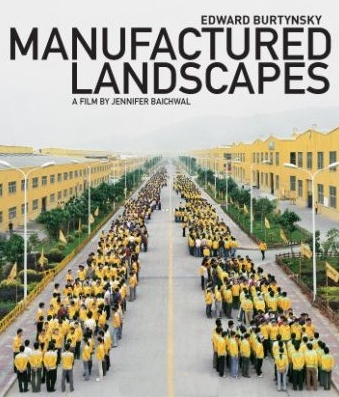
A documentary about Canadian photographer Edward Burtynsky and his attempt to document modern industrialization gone amuck in China and other hypergrowth hotspots. Burtynsky is a master at finding beauty in dangerous industrial vistas.
The film makes no attempt to scare the audience with statistics and charts. Instead Director Jennifer Baichwal chose to follow Burtynsky as he travels the world looking for mindblowing industrial vistas he can capture on film. Burtynsky throws in an occasional comment about his subjects, but for the most part he lets the images and the words of the people behind the images do all the talking. It's clear that the workers depicted in the film are profoundly grateful for the jobs that have lifted them out of poverty. At the same time, they are fully cognizant and deeply concerned about the impact this rampant industrialization is impacting the world they are going to pass on to their children.
Jenny Lau, an Associate Professor in the Department of Cinema at San Francisco State and a member of the Script Committee of the Beijing Olympics will introduce the film and lead the post screening discussion.
Back to
take 66
Programme for March 28, 2008
An Evening of Films about Coastside Treasures
Short: Symphonic Meditations

The latest collaborative effort by composer George Roumanis and photographer Lou Solitske, both of Half Moon Bay. George has written three movements of hauntingly beautiful music that add resonance to Lou's shots of coastside seascapes, sunsets, big wave surfers, birds and other natural beauties he has captured while roving our majestic California Coastline.
World famous alto saxophonist, Dale Underwood is the featured artist of this innovative opus.
Short: Ragtime Dogs

Lou Solitske's pictures of a wide variety of local dogs, some funny, some cute, some beautiful, but all our best friends; keep perfect time to George Roumanis's ragtime rhythms.
Feature: A Seal's Life
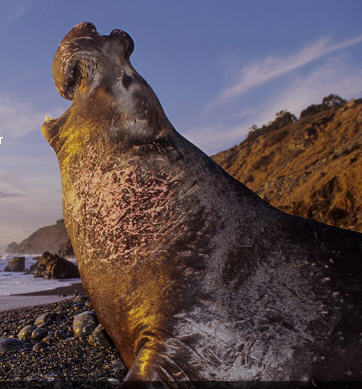
For hundreds of thousands of years an extraordinary journey has taken place in the sea. Twice a year along the west coast of North America, elephant seals set out alone on a nearly impossible round trip migration across vast expanses of the North Pacific.
For months they remain at sea, swimming thousands of miles while diving relentlessly to unimaginable depths in search of food. By journey's end they'll have traveled farther in a year than any other mammal on Earth.
From the rugged, wave-swept shorelines of Northern California to the cold dark depths of the North Pacific, this is the incredible story of one of the greatest migratory marine mammals ever to inhabit the sea, a remarkable creature living a life of extremes and their species∙ never-ending struggle for survival.
Come enjoy this great film with Drew Wharton, the Santa Cruz-based film maker behind this project and ask him questions about the two years he spent filming, writing and directed and producing this wonderful documentary. Chances are you will recognize many of the places he shot at including our own Año Nuevo State Reserve, Farallon Islands, and Point Reyes National Seashore.
Visit A Seal's Life Trailer
Back to
take 67
Programme for February 22, 2008
An Evening with Filmmaker Bob Elfstrom
Feature: Finding Lucy

When "I Love Lucy" debuted on national television on October 1951, the show became an instant sensation, defining the format of the situation comedy, driving thousands of first time viewers to television, and turning its unlikely star, Lucille Ball, into a legend. The documentary "Finding Lucy" tells the story of how a B Grade movie actress from Jamestown, N.Y. used her penchant for comedy to transform herself into the very first female television superstar and first female head of a major studio.
Winner of the Emmy as Best Documentary, "Finding Lucy" features one of the most extensive compilations of archival television and movie footage ever gathered for a single production as well as interviews with countless industry insiders who can tell the give the back story of how and why this program has become a broadcasting icon.
Feature: Tutorial on Proper Lighting and Sound
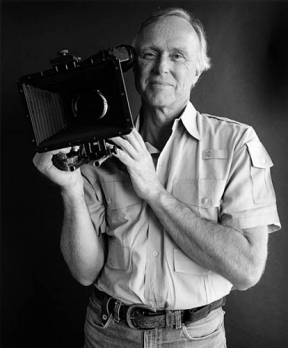
Much of Bob Elfstrom's success can be attributed to his deep understanding of how to properly light a scene and capture sound. During the break between features, Bob has graciously agreed to teach a mini-workshop on how to use proper lighting and sound recording techniques to improve any video shoot.
Feature: Moses Pendleton presents Moses Pendleton
Moses Pendleton is one of the most influential choreographers of the 20th century. He is a founder of two internationally-renowned dance companies, the hyper-athletic Pilobolus company and Momix, a company of dancer-illusionists.
This unusual film seamlessly blends dance performance shots with autobiographical essays by and about Moses Pendleton. By skillfully melding two film genres together in this way, Eldstrom created a superb hybrid that earned him the coveted Cine Golden Eagle award.
Back to
take 68
Programme for January 11, 2008
An Evening with Filmmaker Joan Saffa
Feature: An Evening with Joan Saffa
For over 25 years Joan Saffa has been producing award-winning non-fiction television programs. Her documentaries have been honored with several Northern California Emmys, Golden Cine Eagles, a national Emmy, and a George Foster Peabody Award. Come meet her and see two of her films.
San Francisco in the 20s (60 mins)
SF in the 20s captures the frolicking good times, as well as the uncertainties lurking just below the surface of a decade defined by prohibition, flamboyance and racism and ending with the great stock market crash. Narrated by Ed Asner.
Keeping Score: MTT on Music
The Music of Aaron Copland (116 mins)
In this fascinating behind-the-scenes documentary, conductor Michael Tilson Thomas and the San Francisco Symphony take viewers on a guided tour of the music of one of America's greatest composers. It's a great ride not only for those familiar with Copland and his "American" sound, but for those willing to listen and discover this terrific music for the first time. The selections chosen cover Copland’s iconic Americana classics (Appalachian Spring, Rodeo) but also lesser know works of a probing artist who straddled the popular-classical divide.
Back to
take 69
Programme for December 7, 2007
Two narrative films based upon historical events.
Short: MUERTO EN LA SIERRA
DEAD IN THE SIERRA
"The spectre of Joaquin Murieta still rides in the California countryside. Whoever approaches the legend of this bandit will feel the charismatic force of his gaze." - Pablo Neruda
The California Gold Rush of 1849 occurred in the aftermath of the US-Mexican War, which annexed nearly half of Mexico to the United States. Amid the greed, suspicion, and fear of that era, many who lost land, family, and their futures fought back. Told from a Mexican point of view, this is a story of two very different men, both named Joaquin, whose fed the legend of outlaw and rebel Joaquin Murieta. Beautifully shot in 16mm black and white over three decades, the film sports a superb sound design by Academy Award-winner Richard Beggs (Apocalypse Now).
A film by Coastside Film Society Board Member, Warren Haack.
Feature: 1918
Feature starts at 8:15
It's 1918, and the United States is deeply embroiled in World War I. Horace Robedaux is living a bucolic life with his wife and little girl in their little Texas town way back in piney woods. But historical forces are straining to reshape his life.
To most of his neighbors the war is a romantic adventure. Young men like Horace are encouranged to do their patriotic duty. Will he end up in the killing fields of France? Or will the impending influenza pandemic grab hold of his life before this can happen?
Written by Oscar-winning screenwriter Horton Foote (To Kill a Mockingbird, Tender Mercies).
Back to
take 70
Programme for October 26, 2007
Two Tales About Confused Identity
Feature: EL MARIACHI
"Shooting with amateur actors on real locations, plundering his surroundings for his shots and props, Rodriguez gets a gritty, sweaty, dusty feel that drips with atmosphere." Roger Ebert. Chicago Sun Times
El Mariachi was writer/director Robert Rodriguez' first commercial film. That is if you call a film made for $7,000, targeted at the direct-to-video Hispanic market, with money raised by volunteering for medical research a commercial release.
In spite of its low budget, the movie became a hugh commercial success, It won the coveted Audience Award at the 1992 Sundance Film Festival, went on to make millions at the box office, and launched the career of one of our most prolific modern directors. (Spy Kids, Sin City, Desperado, GrindHouse).
El Mariachi is an action thriller and a masterwork of low-cost filmmaking improvisation. The hero of the film is a mariachi-a singer of traditional Mexican songs. As the movie opens, the mariachi has just arrived in the small Mexican border town of Acua looking for work at local cantina. His misfortune is that a ruthless assassin has also arrived in town at the same moment. Both men wear black and carry guitar cases and the musician is mistaken for the assassin. Life suddenly becomes much more interesting for the mariachi!
Short: MUERTO EN LA SIERRA
DEAD IN THE SIERRA
"The spectre of Joaquin Murieta still rides in the California countryside. Whoever approaches the legend of this bandit will feel the charismatic force of his gaze." - Pablo Neruda
The California Gold Rush of 1849 occurred in the aftermath of the US-Mexican War, which annexed nearly half of Mexico to the United States. Amid the greed, suspicion, and fear of that era, many who lost land, family, and their futures fought back. Told from a Mexican point of view, this is a story of two very different men, both named Joaquin, whose fed the legend of outlaw and rebel Joaquin Murieta. Beautifully shot in 16mm black and white over three decades, the film sports a superb sound design by Academy Award-winner Richard Beggs (Apocalypse Now).
A film by Coastside Film Society Board Member, Warren Haack.
Back to
take 71
Programme for September 21, 2007
Nail Biting Documentary for All Ages
Feature: Spellbound

"A nail-biting competition film, an engrossing group character study and a wonderfully graceful comedy of manners."
William Arnold, Seattle Post-Intelligencer.
Every spring since 1925, Scripps Howard newspapers have sponsored spelling bees at grade schools across the U.S. This award winning documentary presents the intense, real life experience of the National Spelling Bee through the eyes of eight, driven young spellers.
The film travels from the plains of Texas to the lawns of Connecticut, from redneck countryside to the troubled inner city of Washington D.C.. We get to share the private lives of these kids as they advance through regional competition, prepare for, and eventually do battle at the national contest.
"An unassailably great film! Anyone who has not seen it assumes it's good in the most earnest, studied kind of way--good for you. I've seen Spellbound four times, most recently with my grade 6 class, and the initial thrill hasn't waned a bit. For a film about something as staid as a spelling bee, where requests for a word origin count as major plot twists, it's as sly and disarming as can be."
Phil Dellio, RockCritics.com
Back to
take 72
Programme for August 31, 2007
A Classic African Screwball Comedy
Feature: Xala
"An Outrageously funny comedy of manners."
Linda Gross, Los Angeles Times
A film by OUSMANE SEMBENE, the father of African cinema, who passed away this June.
Ousmane Sembene's savage and hilarious
satire of modern African bourgeoisie. Forsaking the more obvious (and politically acceptable) targets of European exploitation and racism, Sembene zeroes in on a far touchier subject: the entire blackfacing of white colonial policies after independence was granted.
Set in a newly independent Senegal, the story centers on self-satisfied, westernized Senegalese businessman who decides to take advantage of the rampant corruption. Flush with government money, he decides to marry his third (polygamous) wife. On his wedding night, he is suddenly struck down with the xala, an ancient Senegalese curse rendering him impotent. With his virility in question, he tries a number of ridiculous and bizarre cures. This vain search for a cure becomes a metaphor for the impossibility of Africans achieving liberation through dependence on western technology and bureaucratic structures.
An interesting point is Sembene wrote both the novel of that name and the screenplay.
JENNY LAU, Associate Professor of Cinema at San Franciso State University will introduce the film.
Back to
take 73
Programme for August 25, 2007
Film Night in Pacifica
Shorts include:Unknown Pacifica
plus a selection of locally produced student shorts
Feature: Returning Home: Bringing Back the Common Murre

In 1986, a breeding colony of Common Murres on Devil's Slide was devastated by an oil spill.
Using innovative restoration techniques in a challenging location, scientists worked with local schools and government agencies to restore the colony.
The film chronicles the decade of restoration efforts required to bring these birds back to their ancestral home.
For more info call: (650) 355-8000 (ask for Marty)
or go to: www.PCT26.com
-----------------------------------------------------------------
Produced, written, and directed by Kevin White.
Narrated by Terri Orth-Pallavicini
Camera: Scott Stender, Don Starnes, Kevin White
Editor: Theron Yeager &; Marnie Berringer
Associate Producer: Marnie Berringer
Back to
take 74
Programme for August 11, 2007
Healing with the Labyrinth
Feature: Returning Home:e
In 1986, a breeding colony of Common Murres on Devil's Slide was devastated by an oil spill.
Using innovative restoration techniques in a challenging location, scientists worked with local schools and government agencies to restore the colony. The film chronicles the decade of restoration efforts required to bring these birds back to their ancestral home.
-----------------------------------------------------------------
Produced, written, and directed by Kevin White.
Narrated by Terri Orth-Pallavicini
Camera: Scott Stender, Don Starnes, Kevin White
Editor: Theron Yeager & Marnie Berringer
Associate Producer: Marnie Berringer
Back to
take 75
Programme for July 13, 2007
Dinner and a Movie
The fire at the Methodist Sanctuary forced us to look for a new venue for Film Night.Starting in July we are moving to a great new venue, the Enso Gallery at the end of Kelly Ave in Half Moon Bay (a block from the beach).
The master chef at Enso has agreed to whip up A BUFFET OF SOUP AND SALAD WE CAN ENJOY BEFORE THE SCREENING.
Dinner starts at 6:30 and will cost $7:00.
The movie starts at 7:30 and will cost $6:00.
Tickets for both the dinner and the movie can be bought before hand from Bay Books in Half Moon Bay. Buying your tickets early will help the chef prepare the proper amount of food for the night.
Feature: Yi Yi (A One and a Two)
One of the most critically acclaimed films of the decade.
Winner "Best Picture" -- National Society of Film Critics.
"Best Director" -- Cannes Film Festival.
"Best Foreign Film" by both the New York Film Critics Circle & the LA Film Critics Association.
The movie is a portrait of three generations of a Taiwanese family. These are characters living in a a modern world that an American audience can relate to and care about. The protagonist is an electronics executive whose comfortable world is rocked by a chance encounter with his first love; a girl he almost married 30 years ago. While he ponders his past and present we gradually get to know the people who frame his life; his wife, his mother-in-law, his teenaged daughter, and the 8-year old son who always seems to drop the water balloon on the wrong head.
A.O. Scott of The New York Times said in his rave review, "I struggled to identify the overpowering feeling that was making me tear up. Was it grief? Joy? Mirth? Yes, I decided, it was all of these. But mostly, it was gratitude."
"Only rarely is a film this observant and tender about the ups and downs of daily existence."
Roger Ebert of the Chicago Sun-Times
Back to
take 76
Programme for June 22, 2007
Do you drive through Colma every day on the way to work? Do you tell yourself everyday “someone should to make a movie about this beautiful town. NO, BETTER YET, A MUSICAL!” Finally, some local filmmakers have felt your plea. This Friday and Saturday is your chance to experience it.Feature: COLMA: The Musical
Friday & Sat, June 22 & 23rd at the Embarcadero Center Cinema
Director Richard Wong & Actor/Writer/Composer H.P. Mendoza
In Person
Fri & Sat, June 22 & 23! June 22 & 23 at 7:30 & 10:00pm!
Best pals Rodel (H.P. Mendoza), Billy (Jake Moreno) and Maribel (L.A. Renigan) find themselves in a state of limbo. Fresh out of high school, they are just beginning to explore a new world of part-time mall jobs and crashing college parties.
As newfound revelations and romances challenge their relationships with one another and their parents, the trio must assess what to hold onto, and how to best follow their dreams.
A fresh personal look into the ups and downs of early adulthood, boasting 13 original musical numbers composed by Mendoza. Debut feature for director Richard Wong.
More info at the OFFICIAL WEBSITE http://www.colmafilm.com/
You can buy tickets at:
http://movies.aol.com/theater/landmark-embarcadero-center-cinemas/1154/showtimes?date=20070622
Back to
take 77
Programme for May 25, 2007
Two Films about Forging New Beginnings
Short: The Danish Poet
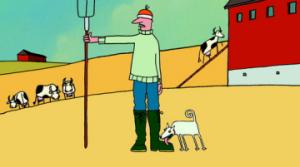
2006 Oscar winning short animation written, directed and animated by Torvill Kove and narrated by Liv Ullmann.
The film deals with heady questions. Can we trace the chain of events that lead to our birth?. Is our existence just coincidence? Do little things matter?
To explore these questions, we follow Kasper, a poet whose creative well has run dry, on a holiday to Norway to meet the famous writer, Sigrid Undset. As Kasper's quest for inspiration unfolds, it appears that a spell of bad weather, an angry dog, slippery barn planks, a careless postman, hungry goats and other seemingly unrelated factors might play important roles in a big scheme of things after all."
Feature: The White Rainbow

The story of four remarkable women and their struggle to overcome the stigma and brutal reality of widowhood in modern India. The protagonist Priya, is an educated and affluent woman who is widowed young. Despondent, alone and desperate, she seeks solace in Vrindavan, the "city of widows." There she meets three women who become her best friends. Roop has spent 30 years making her own way in this temple town, and knows all the town's dirty secrets. Her own mother-in-law tragically disfigured gentle Mala. Young Deepti was forced into servitude and the underground sex trade run by the local Panda priests. These four women for a deep bond and through their friendship begin to discover a way to take charge of their own fate. Their journey is not without adversity and tragedy from a system dominated by men who prosper from the exploitation of India's most disenfranchised citizens.
Film makers Linda and Dharan Mandrayar will be in attendance to present the film and do Q&A.
Back to
take 78
Programme for April 20, 2007
Two Films about Musical Inspiration
Two Films about Musical InspirationShort: Moon Bay Concerto
A short musical photographic exhibit in three movements featuring music by local composer George Roumanis and photographer Lou Solitske. Both gentlemen live in Half Moon Bay and will be at the screening to answer questions. (8 mins)
Feature: Touch the Sound

Evelyn Glennnie lives in our universe in a way
that almost no one else does. She’s a top classical solo percussionist. She is also profoundly deaf using her body as a "resounding chamber" through which she experiences her work.
In this documentary, we get to follow Glennie as she plays the snare drum in New York's Grand Central Station, a guitar case in the Cologne airport, pigeon coops on row house roof tops and the china at her favorite Japanese restaurant. But the movie really breaks out when we get to follow her and avant-garde musical legend Fred Frith improvise work for a new album while roaming
through a vast, decaying, industrial warehouse.
"Innovative sounds and striking visuals combine to form an exquisite cinematic work that's both a portrait of hearing-impaired percussionist Evelyn Glennie and a radical
reexamination of sensory experience." Ken Fox, TV Guide
"Exquisitely beautiful for the eyes as for the ears." David Sterritt, Christian Science Monitor
Back to
take 79
Programme for March 9, 2007
Of Wind and Waves
Film Director David Brown will attend and answer audience questions.Feature: Of Wind and Waves

Of Wind and Waves: The Life of Woody Brown is an award-winning hour-long documentary on a 95-year-old legend in the worlds of surfing, sailing and soaring.
Attending the screening is David L. Brown, the Brisbane-based filmmaker behind the film. Brown states, "I see Woody as a modern Thoreau sitting on a surfboard, living in harmony with the world around him, alive to the possibilities of each new day, and following his own singular vision of how to be in the world."
The documentary captures Woody's unique blend of enthusiasm, wisdom, humor and spirituality that have made him a truly inspirational figure.
Of Wind and Waves explores Woody's life in his own words and from the perspectives of his family, friends and surfing colleagues. The film also features a remarkable archive of film and photography from every stage of Woody's long life.
Of Wind and Waves also provides a valuable cross-cultural portrait of the land, people and culture of Hawaii over the six and a half decade span of Woody's life there.
Winner of the 2006 Inspiration Award at Mountain film in Telluride, and the Award at the 2004 Maui Film Festival.
For more info see: www.hmbfilm.org
Feature:
Back to
take 80
Programme for January 13, 2007
The Visionary Edge presents...
All of us are searching for solutions and ways to take personal actions to affect change, especially for our children’s future . . . An Inconvenient Truth raises compelling questions; Nobelity offers compelling answers.
-- Christopher Gavigan, CEO of the Children's Health Coalition
Remarkable new film . . . Nobelity leaves you wanting more and thinking that if Pipkin's nine were in charge, we would leave a better world indeed.Certainly Mr. Pipkin has given us a call to action. It is our job as individuals to find our passion and move forward creating change. That is why I choose the films that we show to help people do just that.
--Esquire magazine
-- Reba Vanderpool, co-founder of The Visionary Edge Turk Pipkin is an actor and author whose books include the novel When Angels Sing. He can be seen as a recurring character in the third season of the acclaimed TV series The Sopranos. Nobelity will be screened at The Depot (by the Johnson House), 110 Higgins Purissima Road, Half Moon Bay. Doors open at 7:00 pm, film at 7:30 pm, Saturday, October 28. Advance tickets $12, $18 at the door. Call 650-560-0200.
Feature: Nobelity
Inspired by love and concern for his two daughters, and wondering what kind of planet they will inherit, actor and award-winning director Turk Pipkin traveled the world to pose the toughest questions of our time to some of today's greatest minds. The result is Nobelity, a highly acclaimed documentary that explores the crises and possibilities facing the environment, education, economics, family, peace, social justice, and spirituality.
Pipkin's odyssey took him across the United States, and overseas to France, England, India, and Kenya. One of the distinguished Nobel laureates he spoke to was Rev. Desmond Tutu (Nobel Peace Prize, 1984) who talks about the power of love and forgiveness, and the human capacity to accomplish great things. Pipkin says "The most moving of the meetings was with Sir Joseph Rotblat, a 96 year old nuclear physicist (Nobel Peace Prize, 1995) who fifty years earlier had joined with Albert Einstein in signing an open letter to the world calling for an end to nuclear proliferation. Sir Joe confided to me that the mission for the remaining days of his life was to fulfill the task that Einstein left to him, and put America and the world back on the track to nuclear disarmament."
Seeking solutions to the most daunting problems confronting us today, Pipkin says of his personal journey: "Again and again, I learned that the world's problems are much larger than I'd thought, but I was also learning that there is much reason for hope. The answers are there, but we have to seek them out and act on them in a much more proactive fashion." “There’s nothing magic about change,� Turk was told by Jody Williams, Nobel Laureate and the founder of the International Campaign to Ban Landmines. “You have to pick an issue that’s important to you, then get off you’re backside and take action.� Other laureates featured in Nobelity are: Steven Weinberg, Jody Williams, Ahmed Zewail, Rick Smalley, Wangari Maathai, Dr. Harold Varmus, and Amartya Sen.Back to
take 81
Programme for January 12, 2007
A remarkable musical travelogue of the gypsy life.

Feature:
LATCHO DROM ("Safe Journey")A celebration of gypsy music from a French director with Rom (gypsy) roots. The movie traces the Rom people from their ancestral home in India through Egypt, Turkey and up into Europe.
This documentary uses no narration, preferring to let the pictures and the music speak for themselves. Via song and dance, young and old celebrate, embody, and teach the cultural values of family, journey and love--even though they were often separated and persecuted. The movie reveals how the sad and fiery Rom music becomes laced with elements of whatever culture the musicians find themselves living in. In India the music is light and romantic. In Egypt it absorbs elements from Muslin prayer. Southern France provides us with the wild Romani jazz popularized by Django Reinhardt. In Romania and Germany the music turns darker, reflecting the harsh treatment Rom's have long encountered here.Back to
take 82
Programme for November 18, 2006
The Visionary Edge presents...
Will be screened at The Depot (by the Johnson House), 110 Higgins Purissima Road, Half Moon Bay. Call 650-560-0200.Feature: The Peaceful Warrior
Back to
take 83
Programme for November 17, 2006
Three Locally Produced Documentaries
IRVING NORMAN (TO WHOM IT MAY CONCERN) (27 mins) Documentary by Half Moon Bay's own Susan Friedman about the life and work of the social surrealist painter Irving Norman. Norman saw art as a medium for social reform, and his uncompromising visual criticisms of US socio-political structure rattled many of the important movers and shakers of the art world of his day. He spent the later years of his life working on larger and larger canvases in his studio just south of Half Moon Bay. Filmmaker Susan Friedman and Irving Norman's wife Hela will attend and introduce the film.On Nov 24 there will be a celebration to launch Irving Norman's book DARK METROPOLIS at the San Gregorio Store (6:30 to 8:00 p.m.)
Two films about the redemptive power of music to heal by Suzanne Girot and Renato Frota.
MISTER SPAZZMAN (47 mins)
Two perspectives on how relationships evolve in the wake of a life-shattering event:
1.) Two men and the evolution of their music;
2.) Love between a man and woman withers as they realize the futility of a shared life.
GIRL BEAT--THE POWER OF THE DRUM (27 mins).
A documentary about the Brazilian Cultural Center for Music and Dance. Here young girls learn to appreciate their rich heritage. In doing so they transform the lives of their families. A film full of vibrant music and dance.
GIRL BEAT profiles members of Banda Dida, an all-girl drumming and vocal group based in SALVADOR, BRAZIL. The music that this group plays grows out of the Portuguese colonial history of Brazil, and the African slave market that used to be held in the Pelourinho (slave square) in Salvador.
Although slavery was abolished in Brazil in 1888, an economic separation of black and white populations is still entrenched throughout the country. The Dida Music School (A Brazilian Cultural Center) was established in Salvador to empower Brazilian blacks with their history, music, and a chance to succeed in the rich samba-reggae music scene that is currently popular in South America. Several members of the music group are interviewed, rehearsals of the group are shown, and discussions related to Brazilian black history and religion are interspersed throughout.
This film illustrates the power and importance of giving young people, especially those of ethnically and economically diverse backgrounds, the gift of learning about music. That makes their lives more meaningful and fulfilling. It provides some perspective on the current popular music scene in Brazil. In addition, the girls' families were transformed by reconnecting with their Black Heritage.
Director Suzanne Girot will be on hand to introduce her two films and take questions.
Feature:

Back to
take 84
Programme for October 27, 2006
Coastside Peace presents...
Feature: IRAQ FOR SALE: The War Profiteers
Robert Greenwald's film about who's getting killed and who's making a killing.
Back to
take 85
Programme for October 27, 2006
The College of San Mateo chapter of Phi Theta Kappa (international honor society) presents...
"The Constant Gardener" and some wonderful guest speakers will be there from Amnesty International, the AIDS foundation, and two CSM professors. After the movie, we will discuss the movie themes: human rights, global capitalism and exploitation, etc.Free admission and dinner at a great price!! We will be donating all proceeds to the food bank.
Please note that The Constant Gardener is rated R -- mostly for violence. The guest speakers will put all questionable content into context. So, this is a great event for adults and mature teens!There will be great food available (gourmet dinner for only $5!) so please come hungry!!
Feature: The Constant Gardener
Back to
take 86
Programme for October 20, 2006
SPECIAL EVENT & SCREENING: Orson Welles' (Nearly) Lost Documentary Classic -- "IT'S ALL TRUE"
Joseph McBride, author of the newly published book WHAT EVER HAPPENED TO ORSON WELLES?: A PORTRAIT OF AN INDEPENDENT CAREER will present and discuss IT'S ALL TRUE, its importance in Welles's career, and some startling revelations he makes about it in the book. He is an assistant professor of cinema at San Francisco State University.
Feature: It's All True
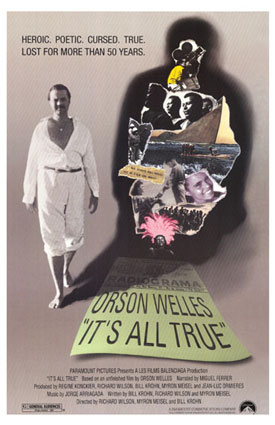
For many years, Orson Welles's IT'S ALL TRUE, was one of Hollywood's legendary lost films. The film was a documentary project Welles began shooting in Brazil in 1942 for the U.S. Government and RKO. It was intended as a tribute to the people of Latin America, a soft-sell propaganda film to promote hemispheric solidarity and counter the threat of fascism. But what Welles found and filmed in Brazil was not what his sponsors had in mind. He shot a radical film dealing sympathetically with the musical culture, the political aspirations, and the economic plight of poor Brazilians, many of whom were black and lived in the favelas of Rio de Janeiro.
Under pressure from the Brazilian government and alarmed by the racial themes of the film, RKO terminated the production and fired Welles. Despite all of Welles' efforts to finish the film back in Hollywood over a period of several years, it was taken away from him and partially destroyed.
After 309 cans of footage of IT'S ALL TRUE were discovered in the 1980s, Richard Wilson (Welles's righthand man in Brazil), Myron Meisel, and Bill Krohn spent years constructing their magnficent documentary feature: IT'S ALL TRUE: BASED ON AN UNFINISHED FILM BY ORSON WELLES. Experience the genius of Orson Welles through his work and through the eyes of the artists with whom he worked.Back to
take 87
Programme for October 4, 2006
Matinee: The Social Concerns Prayer Group presents An Inconvenient Truth
An Inconvenient Truth, presented by The Social Concerns Prayer Group, a newly formed group at the Methodist ChurchParamount Classics has made a gift of 4,000 Inconvenient Truth DVDs to houses of worship all over the country through a faith-based ecological sustainability organization called Interfaith Power and Light (IPL). IPL is a non-partisan ministry that works with congregations to reduce pollution through energy audits, efficient lighting and appliances, supporting the development of clean energy and providing education.
The Social Concerns Prayer Group, a newly formed group at the Methodist Church, are sponsoring the film. What’s the connection between a church and global warming? Global warming is not a political issue; it is a moral issue. People of most faith traditions are called to love one another and to be responsible stewards of God’s creation. As we saw in New Orleans, the ones who suffer most during natural disasters are the poor. We must start planning now to support those who will be affected in our community when the effects of global warming strike. Although the film offers potential solutions for global warming if we act now, it portends extreme disruption of life as we know it.
"Today we are hearing and seeing dire warnings of the worst potential catastrophe in the history of human civilization: a global climate crisis that is deepening and rapidly becoming more dangerous than anything we have ever faced….At stake is the survival of our civilization and the habitability of the Earth….This is not ultimately about any scientific discussion or political dialogue. It is about who we are as human beings. It is about our capacity to transcend our own limitations….To see with our hearts, as well as our heads, the response that is now called for. This is a moral, ethical and spiritual challenge." An Inconvenient Truth, by Al Gore, 2006
Students, parents and teachers are especially invited to attend. We need to give our kids the training they will need to deal with the broken earth we are leaving them. “Imagine we are 17 years into the future and share a brief conversation with our children and grandchildren as they are living their lives in the year 2023. Imagine now that they are asking us: 'What were you thinking? Didn’t you care about our future? Were you really so self-absorbed that you couldn't – or wouldn't—stop the destruction of Earth's environment?' What would our answer be? We can answer their questions now by our actions, not merely with our promises. In the process, we can choose a future for which our children will thank us." An Inconvenient Truth, Al Gore, 2006.
The views expressed in An Inconvenient Truth do not necessarily reflect the opinions of the members of Community United Methodist Church.Feature: An Inconvenient Truth
What scientists are saying about An Inconvenient Truth:
"The scientific understanding of climate change is now sufficiently clear to justify nations taking prompt action." – Science Academics’ Statement from 11 countries (the G8, China, India, and Brazil): Global Response to Climate Change, 2005
"Delaying action for decades, or even years, is not a serious option." – Sir David King, Chief Science Advisor to the British government – Science Magazine, Jan. 2004
"AP (Associated Press) contacted more than 100 top climate researchers for their opinion. Among those contacted were vocal skeptics of climate change theory. Most scientists had not seen the movie, which is in limited release, or read the book. But those who have seen it had the same general impression: Gore conveyed the science correctly; the world is getting hotter, and it is caused by the burning of fossil fuels." – Seth Borenstein, Associated Press June 30, 2006
To see a trailer and lots more cool information, go to the film’s website: www.climatechange.netBack to
take 88
Programme for September 15, 2006
A great classic, comic work.
Feature: The General
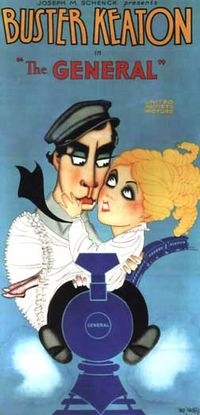
A classic comedy made in 1927 and considered one of the all-time funniest films ever made.
The hero Johnnie loves his train ("The General") and Annabelle Lee. When the Civil War begins, he is turned down for service because he's more valuable as an engineer. Annabelle thinks it's because he's a coward. Union spies capture The General with Annabelle on board. Johnny must rescue both his loves.
Matt, age 16 :THE GENERAL has started, the girl is kidnapped by some Union raiders on Keaton's train, and so begins the greatest (and funniest) chase ever filmed. For the next 75 minutes, the viewer is in Keaton's world. His gags, routines, and amazing slapstick serve to make this the greatest screen comedy ever filmed.Stars BUSTER KEATON and MARION MACK
Back to
take 89
Programme for August 18, 2006
Under the Rainbow
Filmmaker J.R. Heffelfinger visits from Japan to present his film Under the Rainbow.Feature: Under the Rainbow
An American's observations on the dreams amid the humdrum realities in current-day Japan.
Back to
take 90
Programme for July 21, 2006
The Traveling Life
For 20 years Bill Daniel, San Francisco exile and confirmed tramp, has put his life at risk filming the hobo life from the rooftops of speeding freight trains and down in the dark hobo jungles.On July 21 Bill will stop his traveling long enough to make a stop in Half Moon Bay to screen his new film about hobo culture and art.

Feature: Who is Bozo Texino?
Who Is Bozo Texino? is a documentary film about the 100-year-old tradition of hobo and railworker graffiti.
The project is the result of a 20-year study of "monikers" by filmmaker/artist Bill Daniel and is created from hours of 16mm and super 8 film, most of it shot on freight trips across the western US.
The film includes interviews with some of the railroad's greatest graffiti legends: Colossus of Roads, The Rambler, Herby (RIP) and the granddaddy of them all, Bozo Texino.
The film also catches some of the socioeconomic history of hobo subculture from its roots after the Civil War to the present day.Back to
take 91
Programme for June 16, 2006
Movies That Matter: Whale Rider
The Our Lady of the Pillar Catholic Church in Half Moon Bay presents the first in a series of movies selected from the book, Movies the Matter: Reading Film through the Lens of Faith by Jesuit Father Richard Leonard. Discussion to follow based on questions from book.Back to
take 92
Programme for June 2, 2006
Season of the Horse
Family-friendly, and a horse of a different color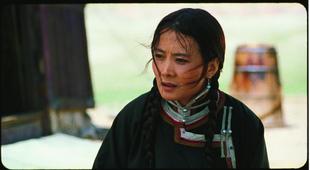
Back to
take 93
Programme for May 12, 2006
Documenting Ruins...
Short: COASTAL RUINS
A film by KATHRYN MURDOCK and SUZANNE GIROT. Forgotten historic sites in our community.
Feature: Burden Of Dreams
A classic documentary film by LES BLANK on the making of FITZCARRALDO by director WERNER HERZOG.
Back to
take 94
Programme for April 21, 2006
Family night at the Coastside Film Society
Short: AMORE FAMILY STYLE
A tribute to ITALO AND ANGIE LUCCHESI.
Feature: Saint Ralph
A heart-warming film about chasing
miracles.Written and directed by MICHAEL
MCGOWEN. ADAM BUTCHER plays fourteen-year-old Ralph Walker who is told that his comatose mother won't recover without a miracle. He decides to create one:
winning the Boston Marathon! Little does he know he's in the run of his life.
Back to
take 95
Programme for March 10, 2006
Five Films from Local Film Makers

Short: Lighten Up
From John Tedesco & Half Moon Bay's own Michael Lederman. The story of a young boy trying to secure his Dad's attention during a breakfast at Half Moon Bay's Original Johnny's diner.
Short: Spirit of the Land
A Documentary that follows the Yup'ik Eskimos of Western Alaska through the cycle of the seasons. It is a poignant film showing Eskimos struggling to keep in touch with ancient traditions in the modern world. By Gail Evenari of Half Moon Bay.
Short: Just Like Me but Different
Pilot for a children's series about global diversity. Shot recently in Oaxaca, Mexico by Gail Evenari. A young boy watches over a turtle as she lays her eggs, then joins other children helping the hatchlings return to the sea.
Short: Last Journey for the Leatherback?
Documentary that takes a hard-hitting look at the plight of the leatherback sea turtle and its fellow ocean dwellers. Uses graphics, video footage, & interviews to tell the story.
Short: Twilight
A film in Russian about a mother's search for her missing daughter. By student filmmaker Victoria Gamburg of SF State. Winner of the Golden Gate Award for Best Narrative Short at the San Francisco International Film Festival.
Back to
take 96
Programme for February 10, 2006
Tibetan Mountain Patrol
Featured guest presenter is Jenny Lau, Professor of Cinema at San Francisco State University.
Feature: KekexiliI: Mountain Patrol
A dramatic narrative set in the last virgin wilderness of China, Kekexili is a plain in Tibet nearly 4 miles high, and the only remaining habitat of the Tibetan antelope.
In 1985, poachers began hunting antelope for their fine wool which was prized in foreign markets. Within a few years, the number of antelope plunged from over one million to less than ten thousand!
To fight the poachers, a volunteer civilian patrol was formed in 1983. It was led by Ritai, a retired Tibetan army officer. The patrol fought firece battles with the poachers and aroused the attention of the outside world. This is the true story of Gayu, a journalist that was sent from Beijing to cover the story at great peril.
Back to
take 97
Programme for January 20, 2006
Africa: The Musical Continent
A grand celebration of the music of this influential continent as interpreted by legendary African artists such as juju star King Sunny Ade, Senegal's Baaba Maal, Afro-pop artist Salif Keita, Miriam Makeba, Nigeria's rebel star Fela Kuti and Cesoria Evora of the Canary Islands.Feature: Africa: The Musical Continent
Come immerse yourself in the sights and sounds of the many cultures of Africa. "Africa: The Musical Continent" helps us understand Africa's diversity by studying its indigenous music and the people and political forces that shaped the music.
Back to
take 98
Programme for November 18, 2005
Come share an insane obsession with the Coastside Film Society
Warren Haack, film historian and member of the Film Society's Board of Directors, will lead our discussion of what makes this such a great film.
Feature: Fitzcarraldo
Werner Herzog is one of our most obsessive directors. When he heard the tale of an opera lover who built a concert hall in middle of the Amazon jungle he knew it to be a story he had to tell. To realize his vision, the opera buff had to haul a riverboat across a mountain. Herzog decided he had to duplicate this insane endeavor. So the film was shot in and around a real 300 ton steamship as it was dragged up a real mountain by the sweat labor of local Indians. The conditions under which the film was shot proved to be too harrowing for the first crew. So filming started all over again with Klaus Kinski, an actor who matched Hertzog obsession for obsession. The end result is a visually arresting trip through the jungle that feels insanely real because it is insanely real.
"Fitzcarraldo is a movie in the tradition of grandiose cinematic visions. Like Coppola's Apocalypse Now or Kubrick's 2000, it documents a quest and a dream. As a record of man's audacity and foolish, visionary heroism, there has never been another movie like it.
I would not have missed it for the world." Roger Ebert, Chicago Sun-Times
Back to
take 99
Programme for October 21, 2005
Two classic films and some conversation
Warren Haack, film historian and member of the Film Society's Board of Directors, will lead our discussion of what makes this such a great film.
Short: Calder's Circus
 While Calder was inventing the mobile, he fiddled with wire to create little circus creatures. In this charming little film we get to see Calder coax his tiny wire performers into walking tightropes, dancing, lifting weights, and other feats of daring do.
Feature: Vertigo
 Perhaps the most famous movie starring San Francisco ever made. Certainly Hitchcock's best known psychological thriller.
Jimmy Stewart is a gumshoe with a fear of heights, tortured by the memory of a lost love. Kim Novak is the suicidal blonde he is hired to keep an eye on. He saves her when she flings herself from the Golden Gate Bridge and realizes he has fallen in love.
Vertigo is a complex film that broke a great many film making conventions and established just as many new ones.If you haven't seen this recently restored version, it's time to watch Vertigo again. The colors jump out at you and Bernard Herrmann's score jangles the nerves.
Back to
take 100
Programme for September 9, 2005
Life is short. The works of Shakespeare are long...
With special guest: Tom Woosnam.
A native of Bedford, England, Tom has directed and performed with many theaters in the Bay Area. In the more than forty local productions of which he has been a part, some of his favorite roles include Alan Turing in Breaking the Code, James Leeds in Children of a Lesser God, Frank in Educating Rita, Robert Scott in Terra Nova and Atticus Finch in To Kill a Mockingbird. For Half Moon Bay’s Coastal Repertory Theatre Tom has directed Bedroom Farce, The Importance of Being Ear- nest, Come Back to the Five and Dime, Jimmy Dean, Jimmy Dean and Twelfth Night.
In addition to acting and directing, Tom has had a long-standing interest in the Shakespeare authorship question, being convinced that the true author was Edward de Vere, the 17th earl of Oxford.Feature: THE REDUCED SHAKESPEARE COMPANY’s Complete Works of Shakespeare (abridged)
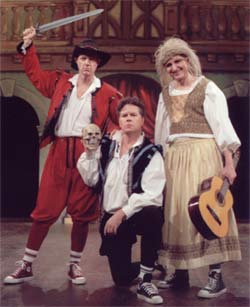
Life is short. The complete works of Shakespeare are long. On Friday, September 9, THE REDUCED
SHAKESPEARE COMPANY comes to the rescue with the film of a hilarious theatrical performance by three
incredible actors: Adam Long, Reed Martin and Austin Tichenor.
Back to
take 101
Programme for August 19, 2005
America through the eyes of two orphaned teenagers
All profits from this screening will be forwarded to the Genocide Intervention Fund. We also want to thank the Methodist Church of Half Moon Bay, which has waved their usual venue fee for this screening.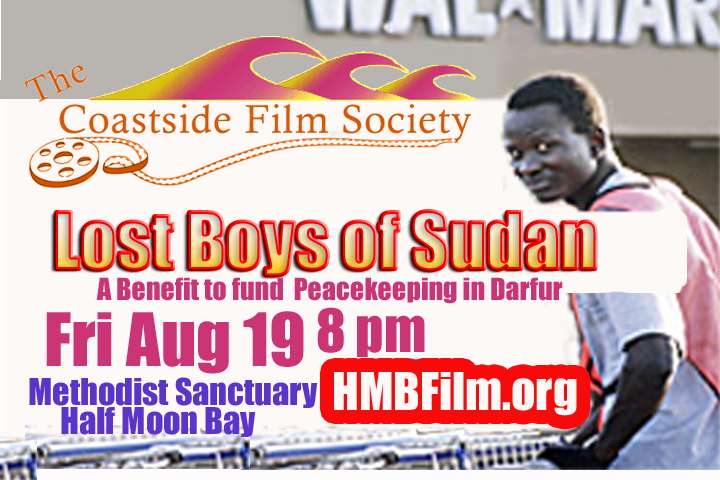
Feature: Lost Boys of Sudan
In 2001, 3,800 Sudanese youngsters were relocated to the United States. For nearly two decades, children have been the pawns in a brutal civil war raging throughout the Darfur region of Sudan. This is one of those wars that turns innocent children into soldiers forcing them to murder relatives, friends and neighbors. The only rational response to this sort of violence is to run as far away as possible. And that is exactly what Santino Chuor and his friend Peter Dut have done. When they are offered the chance to relocate from a refugee camp in Kenya to the US they jump at the chance to get as far away as they can.
"Lost Boys of Sudan" documents Peter and Santiano's first year fending for themselves in their new home of Houston Texas. The film touches only superficially upon their struggles in Africa. Instead we get to see America through the eyes of these two orphaned teenagers whose previous life in a war torn land of shepherds and rural cattle farms does little to prepare them for their new life as minimum wage refugees.
The film was brought to our attention by Arianna Morales, a native of El Granada and a student at Vassar College. Arianna is a member of the Genocide Intervention Fund -- a collection of students so outraged by how little our government is doing in Darfur that they began fundraising to support the UN sanctioned peacekeeping efforts in the region.Back to
take 102
Programme for August 12, 2005
ART, LIFE and the FAITH that binds them
Critical reviews:- "THE FIVE OBSTRUCTIONS glories in ART, LIFE and the FAITH that binds them." Entertainment Weekly.
- "Keep SURVIVOR and FEAR FACTOR, and give me this SPELLBINDING MIND TEASER, the ultimate game for movie buffs." Rolling Stone
- "...DELIGHTFUL...terrifically entertaining..." -Premiere Magazine
- "BRILLIANT...ENGROSSING..." -The New York Times
- "...Exceptional..." -Kenneth Turan, Los Angeles Times
Feature: The Five Obstructions
In 1967, Danish filmmaker Jorgen Leth
made a 12-minute film called The Per-
fect Human. It is a short look at the
superficial properties Madison Avenue
uses to sell products. Now, 35 years
later, director Lars von Trier challenges
Leth to remake his film five times, each
time with a new obstruction to force Leth
to rethink the story and characters of the
original film.
Back to
take 103
Programme for July 9, 2005
A special SATURDAY night Film Night.
On SATURDAY July 9th, we present The Fire Next Time, which challenges communities to re-dedicate themselves to respectful dialogue and broad civic participation.

Feature: The Fire Next Time
 As in many other towns in America, in Kalispell, Montana disagreements about growth led to fervent conflict.
The resulting high-stakes battle over developmental and environmental issues may sound familiar to many of us here on the San Mateo coast.
In Kalispell, tensions were exacerbated by extremist talk show hosts who took to the air to stridently represent the many points of view.Patrice O'Neill, the film's director and co-producer, from The Working Group (based in Oakland) will lead our discussion.
THE FIRE NEXT TIME will air nationally on the PBS series POV on July 12 at
10 pm (check local listings).THE FIRE NEXT TIME is a presentation of the Independent Television Service.
Back to
take 104
Programme for June 11, 2005
A special SATURDAY night Film Night.
On SATURDAY June 11th, we present a collection of short films by Bill Brown and Thomas Comerford about the space of history and the history of spaces. These films explore how historical text becomes physical texture, and how filmmaking itself is memory recovered from landscape's amnesia.
Short: Mountain State
A brief history of the westward expansion of the United States as told by 25 roadside historical markers in the state of West Virginia.
Short: Land Marked
Comerford's Land Marked is a series of four landscape films, each examining a specific place in Chicago. These places are connected in their relationship to 17th-century exploration of the Chicago area by Europeans, in particular, the highly-celebrated French Jesuit missionary, Jacques Marquette. Rather than attempt to tell Marquette's story or offer history, the films examine the monuments to Marquette--the "stories" they tell--and the relationship of the monuments to their surroundings.
Short: Chicago Detroit Split
In Chicago Detroit Split, Bill Brown and Thomas Comerford find the common ground of shared street names in their respective cities, yet they employ the unslit 8mm format to juxtapose these like-named tracts of land--the juxtapositions allowing for chance encounters across time and space between these two midwestern cities.
Back to
take 105
Programme for June 10, 2005
The BARN
Redcoats invade the Coastside: two shorts and the US debut of a new feature film by director Ruaridh Webster.Short: The Verge
Two friends wait by the side of the road in the middle of nowhere. They hitchhike. No one comes.
Short: A CAR STOPPED
Neal and Jack, young American friends, are traveling through England dreaming of Kerouac and Bob Dylan. Dreams and fantasies fade into the ether as each has to come to terms with the reality of the other's true personality.
Feature: The Barn
When a crooked deal goes bad for 2 Americans they find themselves locked in a dilapidated barn in the middle of the English countryside.
Back to
take 106
Programme for May 21, 2005
The Visionary Edge presents...
Advance tickets $15, door $20.Call 650-560-0200 for more information.
Feature: Himalaya
Nominated for an Academy Award for Best Foreign Film, Himalaya, from French director Eric Valli, will have its first local screening, in Half Moon Bay.
Doors open at 7:00, film at 7:30
Advance tickets $15, door $20. Call 650-560-0200
Back to
take 107
Programme for May 13, 2005
HMB Short Film Festival
An Evening of Shorts, many of them locally producedThe main program runs around 95 minutes.
Filmmakers will be on hand for the post screening discussion.
Short: West Bank Story
by Ari Sandel -- Musical comedy about the Israeli Palestinian conflict. David is an Israeli soldier. Fatima is a Palestinian fast food cashier. They are an unlikely couple who fall in love in the middle of a war between dueling falafel stands run by their respective families.
Short: Devil's Teeth
by Roger Teich -- A short documentary about the only remaining sea urchin diver making a living working the shark-infested waters of the Farallon Islands near Half Moon Bay.
Short: Stealing Altitude
by John Starr and Roger Teich -- An exercise in cinema-verite that gives us an intimate look into one of the word's most covert sports. Stealing Altitude follows one brave jumper as he climbs some of the largest structures in Los Angeles and, when luck is with him, safely parachutes back to earth.
Short: The Statue
by Suzanne Girot -- A study of the statue in SF's Mechanic's Monument Plaza in San Francisco created by deaf mute sculptor Douglas Tilden and architect Willis Polk. Suzanne reveals how the statue has touched the lives of her grandmother, a young skateboarder and a homeless man who lives in the plaza's shadow.
Short: Fish Tale
by David and Hinjian Hodge -- Sushi is edible art. Fish Tale is a documentary focusing on one sushi artist and the people who appreciate his work. The film is the work of a film-making team from Half Moon Bay.
Short: Snake Bite
by Morgan and Max Hampton -- Another spooky mystery by our own famous father and son filmmaking team from El Granada. Shot in downtown Half Moon Bay with all local actors. Great campy fun with the Hampton's usual surprise ending.
Short: Calder's Circus
by A. Calder & Carlos Vilardebo -- Long before Alexander Calder became famous for inventing the mobile, he was fiddling with wire to create his little circus creatures. In this charming film we see Calder coax his tiny wire performers into acts of daring do.
Back to
take 108
Programme for April 8, 2005
War from a Child's Point of View
The Doves of WarFeature: Paloma de Papel (Paper Dove)
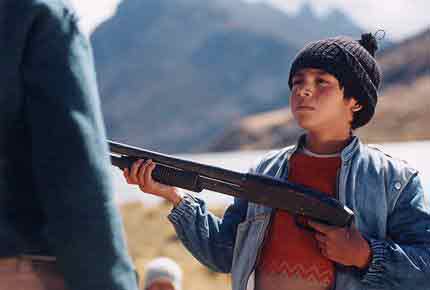
Set in the Peruvian Andes during the chaotic 1980s, this tense drama follows a group of paramilitary guerillas trying to survive in the midst of a bloody civil war. It's an incredible coming-of-age story of a young boy who is forcibly recruited into the Shining Path movement.
Back to
take 109
Programme for March 11, 2005
Four Films about our Oceans
The environmental clubs of Half Moon Bay present four riveting documentary films highlighting the role of our oceans as a stabilizing force for life on the Earth.Feature: 4 Films on our Ocean's Ecology
Join the Environmental Clubs of HMB in their screening of four riveting documentary films that highlight our oceans.
Film 1
Hanging in the Balance chronicles a network of Marine Protected Areas and their impact on the Bahamian marine environments and the people who depend on them. Told through the voices and lives of the fishermen of The Bahamas.Film 2
Seeds Of The Future highlights the survival of species and the lives of the people of Fiji. For millennia, fish have gathered in certain places to spawn. Why are these particular places important for both the fish and the fishing communities? And why are both under threat?Film 3
Our Synthetic Sea documents the research conducted by the Algalita Marine Research Foundation in the Pacific Ocean focusing on the buildup of "non-biodegradable" plastic debris in the world's ocean.Film 4
Empty Oceans, Empty Nets: The Race To Save Our Marine Fisheries explores the marine fisheries crisis and the pioneering efforts of fishermen, scientists and communities to sustain and restore these fisheries and our oceans. Understanding why some fisheries are thriving while most are in serious decline may be the key to averting an impending food crisis. These marine fisheries provide food, income and employment for 200 million people worldwide, but how long can the massive hunt be sustained?Also sponsored by Friends of Fitzgerald Marine Reserve and Save Our Shores.
For more information, contact Ben Pittenger at (650) 712-7190, or email to pittengerb@cabrillo.k12.ca.usBack to
take 110
Programme for March 4, 2005
Get wet with the Coastside Film Society
SurfingFeature: RIDING GIANTS
"A bedazzling trip through the history of big wave surfing."
-- Owen Geibermann, ENTERTAINMENT WEEKLY
"Astounding", Sharon Waxman, The New York Times
RIDING GIANTS is the story of big wave surfing.
We meet Greg Noll, the pioneer, whose push into Hawaii's big surf in the late 1950's earning him the nickname The Bull. There's Jeff Clark, Half Moon Bay legend, who discovered the massive Mavericks waves and rode them alone for over a decade. And finally, Hawaii's Laird Hamiliton, considered the best big wave rider ever.
Including archival footage and contemporary interviews with some of the world's greatest surfers, experts and storytellers, RIDING GIANTS creates a visual history of one of the most spectacular sports of our time.
Back to
take 111
Programme for February 11, 2005
The Future of Food is here now
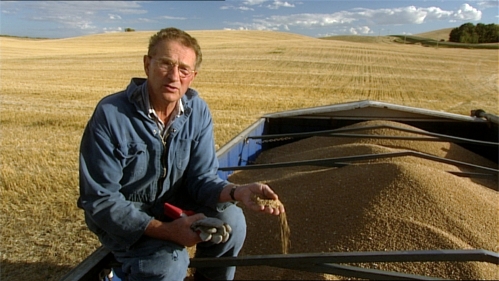
Short: Flowers in the Snow
Flowers in the Snow - The Health Crisis of Children in Tibet
Teresa Harris and filmmaker Perry Pickert from the Terma Foundation will take audience questions.
Feature: The Future of Food
There is a revolution happening in the farm fields and on the dinner tables of America -- a revolution that is transforming the very nature of the food we eat.
THE FUTURE OF FOOD offers an in-depth investigation into the disturbing truth behind the unlabeled, patented, genetically engineered foods that have quietly filled U.S. grocery store shelves for the past decade.
Shot on location in the U.S., Canada and Mexico, THE FUTURE OF FOOD examines the complex web of market and political forces that are changing what we eat as huge multinational corporations seek to control the world's food system. The film also explores alternatives to large-scale industrial agriculture, placing organic and sustainable agriculture as real solutions to the farm crisis today.
Back to
take 112
Programme for January 14, 2005
A Finnish masterpiece
Come see a Finnish masterpieceFeature: MAN WITHOUT A PAST
Aki Kaurismaki is Finland's pre-eminent filmmaker, but is not yet well-known in the United States. He should be!
This film won the GRAND PRIX at the 2002 Cannes Film Festival. The Movie Nation review of this film starts: "Stop wasting time reading this review and go see this movie now."
They report that 100% of the readers who have seen and rated this movie gave it 5 out of 5 stars.Back to
take 113
Programme for January 7, 2005
The Cunha Environment Club presents ...
Oil On IceFeature: OILonICE
Oil on Ice is a vivid, compelling and comprehensive documentary connecting the fate of the Arctic National Wildlife Refuge to decisions America makes about energy policy, transportation choices, and other seemingly unrelated matters. Caught in the balance are the culture and livelihood of the Gwichn people and the migratory wildlife in this fragile ecosystem.
Back to
take 114
Programme for November 12, 2004
A classic restored
A classic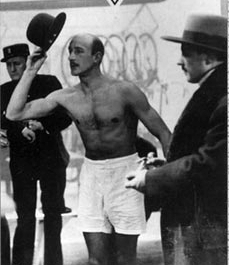
Feature: Le Million
In the early 1930s Hollywood was having a difficult time coming to terms with a revolution in filmmaking the arrival of the talkie. It took a French director named René Clair to show them the way. René showed them how you could use voice as a integral part of the artistic whole, not just another special effect slapped on top of an overly theatrical silent film. Amazon.com calls it the quintessence of the effervescent comedy-musical-romance and "One of the true treasures of international cinema".
The story: A poor artist discovers he has purchased a winning lottery ticket at the moment his creditors come to collect. Unfortunately the ticket is in the pocket of his coat ... which is at his girlfriend's apartment ... who gave the coat to a man hiding from the police ... who sells the coat to an opera singer who uses it during a performance ...
Charming and inventive, this lyrical masterpiece provided the template that was soon brazenly copied by American artists like Charlie Chaplin and the Marks Brothers.
Almost lost to film history by decomposition of the original film stock, Le Million has recently been digitally remastered. Our resident film historian, Prof. Warren Haack, will lead us in the post screening discussion about what makes this film great.
"René Clair at his exquisite best; no one else has ever been able to make a comedy move with such delicate inevitability." -- NEW YORKER
Back to
take 115
Programme for October 8, 2004
Flower Power, Black Power, and Paranoia
Short: LSD A GO GO
CIA + LSD = things are out of hand -- A work of comedic muckraking of the highest order assembled from public domain educational film footage, photos from the National Archives, and recently declassified CIA security memos.
November 19, 1953, a man plunges to his death from 10 floors above the streets of Manhattan. Things like this happen in a city as large as New York. This case, however, was different. For the man who jumped was a just another CIA operative doing his job -- experimenting with a new drug called LSD.
Shot in the style of a 50s documentary meant to scare kids straight the movie provides a history of the CIA s investigations of LSD as a tool for national defense.
A work of comedic muckraking of the highest order assembled from public domain educational film footage, photos from the National Archives, and recently declassified security memos.Short: The listener
Norah is "Listener #684448", a civil servant in a futuristic, oppressive regime where thought and emotion are regulated by "protocol". Material necessities are rationed, independent thought is a crime and anything outside the city is forbidden. She dutifully records the secrets and suppressed longings of the collective psyche of the city, until a "Talker" reveals a plot and Norah is forced to make a decision.
Mahri Holt is a locally-based (Oakland) film maker who recently graduated from SF State Grad school. She will be at the screening to discuss her film.
Feature: MOVE
This documentary covers the controversial history of the radical movement, MOVE. Created by John Africa in the 1970's, Move was a radical group that would not eat processed or cooked food, would not let children go to school and lived in a compound in downtown Philadelphia.
When confronted by social service agencies, Move's members barricaded themselves inside their building. They used bullhorns to broadcast radical philosophy into the night time air of their blue collar neighborhood. The police moved in and the situation escalated until entire neighborhood was burned to the ground. Five children and six adults never made it out of the burning Move compound.
The story is told through interviews with surviving Move members, supporters, neighbors, and journalists who covered the story live.
Howard Zinn, author of "The People's History of the United States" narrates this interesting and informative documentary.
Directors Benjamin Garry & Ryan McKenna are traveling from Philadelphia to be on hand to answer questions during the screening.
Back to
take 116
Programme for September 24, 2004
Peace Flix: A Night of Progressive Film and Open Dialog
Peace Flix: A Night of Progressive Film and Open Dialog is a presentation of Coastside Peace.Feature: Hijacking Catastrophe, 9/11, Fear & the Selling of American Empire
Examines how a radical fringe of the Republican Party has used the trauma of the 9/11 attacks to advance a pre-existing agenda to radically transform American foreign policy while rolling back civil liberties and social programs at home.
Feature: Orwell Rolls in His Grave
 Director Robert Kane Pappas draws disturbing parallels between George Orwell's classic novel of Big Brother totalitarianism, 1984, and the current relationship between big media and government in the United States.
Feature: There's Something about W

Back to
take 117
Programme for September 17, 2004
In the Light of Reverence
In the Light of ReverenceFeature: IN THE LIGHT OF REVERENCE
A documentary can touch hearts, open minds and inspire people to take action.
While chronicling the ravages of coal and uranium mining in Hopi and Navajo country, native elders taught me that the environmental crisis is a spiritual crisis because the absence of a conscious connection to land and water inevitably leads to violence and threatens all life.
Each of my films explores this environmental-spiritual crisis and reveals the clash of worldviews between adherents of private property and those of sacred land. My films aim to spark dialogue about our culture's relationship to nature, encourage a reassessment of history, and achieve reconciliation with native people and the earth
--Christopher McLeod, Project Director.
(His wife, Jessica Abbe, wrote the film.)
Back to
take 118
Programme for September 10, 2004
Musical musing on small town life: the encore presentation
Encore presentation of Greendale, in which a cheeleader from a small coastal town turns eco-activist.
Feature: greendale
a film by Neil Young
a town coming to you soon.
Greendale is the story of some inhabitants of a small coastal town that, with its rugged green hills and location just south of San Francisco, may seem familiar. Not surprisingly, because most of the footage was taken in and around Half Moon Bay and other parts just south of San Francisco.
This project by rock legend Neil Young began as a few songs he wrote while driving to his studio. "As I wrote these songs I was very surprised. I'd never written a song that had characters before. Then the next song had the same characters. It surprised me as much as anybody else."
There is a lot going on in the songs. Grandpa Green whiles away his time with his paper while his wife putters around him. Cousin Jed gets into a violent altercation with the local police. Granddaughter Sun quits cheerleading squad to become an eco-activist. Collectively they paint a complete picture of the extended Green family and the people they encounter living day to day.
Once the album was done, Young realized he had written a novel in music. He assembled a cast of friends and neighbors who could play the parts of the characters he had created and set out to make a movie -- though he'd prefer to call Greendale a "musical novel."
This is not your usual Hollywood movie. The film's entire soundtrack comes from the album; the actors lip-sync in place of regular dialogue. Much of the film was shot using an old Super 8 camera, yielding a grainy home movie feel that matches the stark realities of the storyline.
Back to
take 119
Programme for August 13, 2004
Two locally grown films
The Coastside Film Society proudly presents two locally grown films -- One focused on a local landmark
- the other on a natural history issue of global concern.
Short: Little Brown Church
A look at one of the few remaining historical buildings in Pacifica, and what is being done to preserve it for a useful community life. The Pacifica-based filmakers, Sharron Walker and Steve Brown responsible for the film will be on hand to discuss their film.
Feature: Farming the Seas
Demand for seafood now far exceeds the ocean's ability to keep pace and the crisis is deepening. Ninety percent of the big fish in the world's oceans have disappeared, and most experts argue that if we are to save our oceans and feed the world we need to raise domesticated fish species.
Farming the Seas, sequel to the landmark documentary Empty Oceans Empty Nets, explores the growing pains of a global aquaculture industry that already produces a third of the world's seafood.
But the seemingly plentiful harvest has many marine scientists concerned that some types of fish farming contribute to the further loss of ocean fish and pose a serious risk to our health. In what may be one of the most critical environmental and food safety stories of our time, Farming the Seas journeys around the world to explore the promise and perils of the new industry. Stunning photography and an engaging cast of experts offer an unblinking look at how America's seafood is really produced and what's being done to solve the crisis; efforts that seafood lovers can participate in.
Local filmmaker, Steve Cowan and his crew have captured footage of farming operations in every part of the globe. Steve will be on hand to discuss his experiences.
Back to
take 120
Programme for July 9, 2004
Musical musing on small town life
Neil Young used footage from Oil-on-Ice to help explain the motivations of one of his Greendale characters - a cheeleader turned eco-activist.Speakers will include:
- Dale Djerassi, the producer of Oil on Ice
- L.A. Johnson (Larry) who produced Greendale and also acts in the film
- Paul Supplee (from Total Media Group) who is responsible for post-production (he plays a role, too).
Feature: OILonICE
One of the main plotlines in Greendale is the story
of Sun Green, a young cheeleader turned eco-activist. This role was
influenced by OILonICE, a documentary about the cost of drilling for oil in Alaska. We get to to see the short version of Oil-on-Ice tonight -- and later on will get to scenes that were pulled out of Oil-on-Ice and incorporated into our feature. OILonICE is the production of Dale Djerassi of Half Moon Bay in association with Lobitos Creek Ranch (also of Half Moon Bay).
OILonICE highlights the controversies surrounding the pursuit of oil drilling in the Arctic National Wildlife Refuge, illustrating the inextricably linked issues at stake in the conflict between conservation and energy extraction interests.
Feature: greendale
a film by Neil Young
a town coming to you soon.
Greendale is the story of some inhabitants of a small coastal town that, with its rugged green hills and location just south of San Francisco, may seem familiar. Not surprisingly, because most of the footage was taken in and around Half Moon Bay and other parts just south of San Francisco.
This project by rock legend Neil Young began as a few songs he wrote while driving to his studio. "As I wrote these songs I was very surprised. I'd never written a song that had characters before. Then the next song had the same characters. It surprised me as much as anybody else."
There is a lot going on in the songs. Grandpa Green whiles away his time with his paper while his wife putters around him. Cousin Jed gets into a violent altercation with the local police. Granddaughter Sun quits cheerleading squad to become an eco-activist. Collectively they paint a complete picture of the extended Green family and the people they encounter living day to day.
Once the album was done, Young realized he had written a novel in music. He assembled a cast of friends and neighbors who could play the parts of the characters he had created and set out to make a movie -- though he'd prefer to call Greendale a "musical novel."
This is not your usual Hollywood movie. The film's entire soundtrack comes from the album; the actors lip-sync in place of regular dialogue. Much of the film was shot using an old Super 8 camera, yielding a grainy home movie feel that matches the stark realities of the storyline.
Back to
take 121
Programme for June 11, 2004
A cinematic tour de force through Russian history and culture

Feature: Russian Ark
"One of the most ASTONISHING FILMS ever made." (Roger Ebert, CHICAGO SUN-TIMES) -- THE RUSSIAN ARK, a film by Alexander Sokurov. Russian with English subtitles.
Invisible to everyone around him, a contemporary filmmaker magically finds himself in the Hermitage in St. Petersburg- back in the early 1700's! He meets a cynical French diplomat from the 19th Century and the men become accomplices in an extraordinary time-traveling journey through Russia's turbulent past. Exploring the splendid corridors and salons of the Palace, the Marquis and the filmmaker witness astonishing scenes from the Tsarist Empire: Peter the Great thrashes his general with a whip; during rehearsals of her own play, Catherine the Great rushes around looking for a place to relieve herself; the family of the last Tsar dine together, oblivious to the impending revolution; and hundreds of dancers waltz at the last Great Royal Ball of 1913 with Valery Gergiev conducting.
As their time-voyage unfolds in a single, uncut steadicam shot, the two men engage in a passionate and ironic dispute. The Marquis clearly has a Western love-hate relationship with Russia, whereas the modern filmmaker questions his country's uneasy connection to its past and to Europe today. The two tease each other, and share their amazement at the scenes they encounter.
About the locale of the Russian Ark
The Hermitage is the Russian Ark, affectionately guarding art and history until the world sees better days. In the popular imagination the Hermitage is a living entity, a fabric that breathes Russian history and culture. Quite apart from the endless procession of people who have come to admire its many artistic treasures, generations of the Romanov family actually lived, loved, and, in some cases, died in a place they called 'home' for all its rare splendour. This film attempts to recreate, as precisely as possible, the historical events which took place in and around the palace.About the film-maker techniques used in the Russian Ark
Inside the Hermitage the film director, Alexander Sokurov, shot the Russian Ark as a feature-length film in an hour and a half of real time. The camera was switched on and ninety minutes later it was switched off after proceeding through thirty-five rooms, crossing four centuries, and re-enacting history on the grand scale by means of an array of sophisticated effects. As many as eight hundred and fifty actors and extras took part in some of the scenes in this unique production.About the programme
Local filmmakers will lead a discussion about the innovative techniques used in creating this film using clips from interviews with the Director and others involved in the production.Back to
take 122
Programme for May 14, 2004
Night of historical films
Two films based on historical events that tested the courage of women and men threatened by extraordinary circumstances over which they had no control. Although many people died, the stories of those who survived are vivid and moving.
Short: GOLD, GREED, and GENOCIDE
GOLD, GREED, and GENOCIDE deconstructs the myth of the California Gold Rush and unearths the genocide of California indigenous peoples. It also shows the ecological destruction gold mining has done to the California environment. The soundtrack of the film features an intriguing mix of traditional California native songs and native hip hop. This music enhances the compelling interviews with descendents of Native Americans who suffered under the 49ers. Clearly, those interviewed are not giving up. This film is a production of the International Indian Treaty Council and Project Underground.
Short: SONG OF SURVIVAL
SONG OF SURVIVAL is about women who survived four years in a Japanese prison camp in Sumatra during World War II. These courageous women recreated from memory the great music of Beethoven, Schubert, Chopin and other composers. Having no instruments but the human voice, they sang the complex symphonic music they had loved. Even as disease and malnutrition thinned their ranks, these Australian, Dutch and British women used their unique choir to sustain a spirit that refused to accept defeat. The Peninsula Women's Chorus of Palo Alto sings the rapturous music that made life endurable in a remote prison camp in Sumatra.
Back to
take 123
Programme for April 30, 2004
A belated Earth Day presentation
Two films brought to you by the Cunha Intermediate School Environment Club.Admission is by donation. Proceeds above costs will benefit the Environment Club.
Short: Our Synthetic Sea
This fascinating and startling documentary highlights recent research by Algalita Marine Research Foundation, regarding the explosive increase of plastic debris in the world's oceans, especially the north Pacific. "Synthetic Sea" depicts how this plastic menace is negatively impacting sea life in increasingly alarming ways.
Feature: Butterfly
BUTTERFLY is an independent documentary by Doug Wolens of SF. On its face this film is about Julia Butterfly Hill, whose 2-year vigil atop a 180 foot ancient redwood tree in Humboldt County prevented the tree from being clear-cut. At its heart, BUTTERFLY is about a community's journey when one woman allowed her ideals to guide her life.
Back to
take 124
Programme for April 16, 2004
An evening with Warren Haack
an El Granada filmmakerWarren Haack has been teaching about film at SF State & the Film Arts Foundation since the early 80s. His work as a director, editor, and sound editor has been featured on dozens of documentary films. Come meet Warren and enjoy seven of his films.
Short: Animation with Kids
Last summer, 20 local kids, ranging in age from 5 to 14, met with Joe Devlin of the CFS to spend a week learning about animation & video. Come see 10 minutes of their best work & talk to the kids.
Short: Return To The Circle
Fundraiser for the American Indian Family Healing Center, a substance abuse rehab program in Oakland which includes attention to the spirit, mind and body.
Short: Ama's Traditions
Everybody called Dorothy Stanley "Ama" (my grandmother). She was a respected leader of the Northern Sierra MeWuk and a reknowned tradional basket weaver.
Short: Rina Pacini: The Garlic Granny
Rina reflects on her life growing up on her family farm in Half Moon Bay. She was interviewed by Eric Shapira at her home in El Granada, where she shows us her huge garden.
Short: Reno
A Country Western Music Video with a twist.
Short: Rough Cut Life: Logging Railroad Stories
Four retired steam locomotive logging engineers tell humorous anecdotes which are intercut with 16mm archival film dating back to 1930's.
Short: El Dia Tarasco (Excerpt)
Documentary, filmed in Mexico, focuses on the making of art objects for celebrating the Day of the Dead. Art historian Robert Freimark provides the commentary.
Short: The Legend of Two Joaquins (Work In Progress)
The issues of cultural stereotyping and greed are interwoven in the story of Joaquin Murieta - folkhero of the California Gold Rush of 1849.
Back to
take 125
Programme for March 12, 2004
A Full Night of Film
A Full Night of Film
Short: The Bottle
Look out Spielberg; the Hamptons are gunning for you. Morgan and Max
Hampton are a father/son team of El Granada-based filmmakers. When not
filmmaking, Max is a local middle school student. The Bottle is a
no-budget special effects tour de force. It involves a bottle
(natch), familiar coastside beaches, and, of course, a few space aliens. Max
and Morgan will be on hand to describe this and their many other filmmaking projects.
Feature: Doing Time, Doing Vipassana
Winner of the Golden Spire Award at the 1998 San Francisco
International Film Festival, this extraordinary documentary takes
viewers into India's largest prison - known as one of the toughest in
the world - and shows the dramatic change brought about by the
introduction of meditation.
This is the story of an ancient meditation technique named Vipassana,
which shows people how to take control of their lives and channel them
toward their own good. It is the story of a strong woman named Kiran
Bedi, the former Inspector General of Prisons in New Delhi, who strove
to transform the notorious Tihar Prison and turn it into an oasis of
peace. But most of all it is the story of prison inmates who underwent
profound change, and who realized that incarceration is not the end
but possibly a fresh start toward an improved and more positive life.
Attending the film will be two volunteers from the Bay Area Vipassana
organization, Philip Pfeifer a Vipassana instructor and David
Donnenfield a San Francisco-based filmmaker and Vipassana devotee.
Between them they should be able to handle any questions about the
Vipassana organization, the use of meditation in prisons and
filmmaking behind bars.
Short: Get Me Out of Here
From "A Knights of the Roses" performance at the Twinberry Cafe of El
Granda. Cinematographer (our own Bill Katke), musicians, and special effects crew will all be on hand to discuss the video.
Short: La Milpa/The Cornfield

A group of desperate campesinos whose corn crop is threatened by drought. A young woman torn between the love of her father and her young man. A Grandmother's remembrance of her big love during the Mexican Revolution. The three stories blend together to reach a dramatic conclusion.
Writer/director PATRICIA RIGGEN is a graduate student at Columbia University's Film Division. At last count, the film has won 19 awards, including a student Academy Award gold medal and a Mexican Academy Award.
(Spanish with English Subtitles)Back to
take 126
Programme for February 6, 2004
Truck Stop Still Lifes: A Night of Experimental Short Films
On FRIDAY February 6th, we present a collection of short films by Bill Brown. "Truck Stop Still Lifes": three short films about the New World that weren't exactly shot from the window of a moving car, but that's the idea.Short: Mountain State
A brief history of the westward expansion of the United States as told by 25 roadside historical markers in the state of West Virginia.
Short: Buffalo Common
2003 Sundance Film Festival official selection.
A portrait of the prairies of North Dakota as the state loses its Cold War arsenal of intercontinental ballistic missiles,as well as its aging population of Scandinavian farmers.
Short: Confederation Park
A diary of a trip across Canada. Francophones, Anglophones, and Allophones duke it out over what it means to be a Canadian, and whether, in the end, it even matters.
Back to
take 127
Programme for January 16, 2004
Nixon and Elvis meet Romeo and Juliet
On FRIDAY January 16th, the Coastside Film Society hosts its third Coastside Film Night, which showcases the work of local and Bay Area filmmakers in a public forum.Short: The King & Dick
Official Selection - Sundance Film Festival 2003
Filmmaker Scott Calonico bases his hilarious, insightful and unique documentary on actual transcripts from the historic 1974 meeting between President Nixon and Elvis Presley.
Feature: Eldra
Winner - 'Spirit of Moondance' award at the prestigious 2003 Moondance International Film Festival in Colorado.
Eldra was also chosen as the UK entry in the 2003 Academy Awards, Best Foreign Language Film category.
Set in the 1930s, this is a beautiful Romeo and Juliet tale about two very different families in a small country village in Wales. The girl is a traditional Romany (gypsy) and the boy is a Welsh coal-miner's son and they take you into their innocent young hearts and dreams.
Eldra is an entrancing cinematic venture into unknown realms of fantasy paired with the realities of daily life in an ancient and distant land.
Back to
take 128
Programme for November 14, 2003
The evening news will never be the same...
On Friday November 14, 2003, the Coastside Film Society hosts its Coastside Film Night, which showcases the work of local and Bay Area filmmakers in a public forum. Local filmmakers will be in attendance to answer questions from the audience.Feature: Who's Counting: Sex, Lies & Global Economics
Divided into 15 short chapters, Who's Counting: Sex, Lies & Global Economics is an entertaining primer for anyone who suffers from what Waring refers to as "economics anxiety". See it and the evening news will never be the same.
Back to
take 129
Programme for October 10, 2003
An evening with Susan Friedman
On Friday October 10, 2003, the Coastside Film Society hosts its Coastside Film Night, which showcases the work of local and Bay Area filmmakers in a public forum. Local filmmakers will be in attendance to answer questions from the audience.
Feature: Gardens of Obsession
Magical, witty, bizarre and wildly wonderful, Gardens of Obsession takes viewers into the private realms of a group of eccentric Bay Area gardeners and their choreographed horticultural fantasies. The present footage showcases four extraordinary gardeners who work and create outside the mainstream.
Feature: The Planet Hunters
In June 2002, astronomers at U.C. Berkeley announced one of the most exciting discoveries in recent science. In the race to detect extra-solar planets -planets orbiting around other stars in our galaxy- they had hit the jackpot: a planet that looked like it could belong to our own solar system..
In this new 90-minute documentary, we follow the Planet Hunters as they experience the pure, unadulterated joy of discovery. Come see an up-to-the-minute digitally-realized tour of our solar system and beyond. Share with the excitement of the scientists who discover extrasolar planets. The movie also dips into the past explaining how indigenous peoples such as the first Hawaiians used the stars to navigate their way to a new world.
Back to
take 130
Programme for September 12, 2003
Meet local filmmakers
On Friday September 12, 2003, the Coastside Film Society hosts its Coastside Film Night, which showcases the work of local and Bay Area filmmakers in a public forum. Local filmmakers will be in attendance to answer questions from the audience.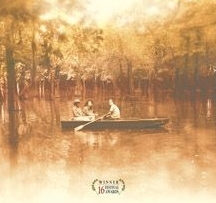
Feature: The Rising Place
Two women -- one black, one white -- fight to maintain a close friendship through a time of war and prejudice. This fine drama is set in the Mississippi Delta in the 1940s.
Back to
take 131
Programme for August 15, 2003
Fish and Illuminating Photography
On Friday August 15, 2003 the Coastside Film Society presents Fish and Illuminating Photography.Feature:
Feature: Illuminations
In more than half a century in photography, Ruth Bernhard has created an imposing body of work. Distinguished by their exquisite use of light, her images have been internationally rec-ognized and acclaimed by her peers. Ansel Adams called her the greatest photographer of the nude. Radiant still lifes and nude forms reflect her passionate search for the universal connection of all things. "I always say yes to life.. Light is the drawing pencil of the photographer." Ruth Bernhard reveals. She is interviewed in her home, observed with her students, and during the creative process: printing in her darkroom and photographing still life and the nude in her studio. A retrospective of over 250 of her photographs in presented.
Robert Burrill, the Milpitas-based filmmaker behind this fine documentary, will be on hand to discuss the film and his experiences in teaching filmmaking.
Back to
take 132
Programme for July 11, 2003
An Evening of Short Films
On Friday July 11, 2003 the Coastside Film Society presents an Evening of Short Films:** A Kids ShortsFest at the Half Moon Bay Library
** Shorts for grown-ups at Ted Adcock
Short: A collection of shorts, free, for kids of all ages.
- How Dinosaurs Learned To Fly, a cartoon account of the how poor dental hygiene, junk food and staying up late contributed to the demise of the dinosaur ( 6 minutes)
- Operation Cuckoo, an animated short about a mechanical cuckoo and his adopted bird family (13:21 minutes)
- The Hungry Squid -- is only the last of a series of animals that have eaten Dorothy's homework, but when he starts to rampage through the town, her school counsellor realizes this is much more than a lame excuse. ( 14:31 minutes).
- Putting up the Pickles, a look behind the scenes at the Pickle Family Circus. ( 29 minutes).
Short: Act I:An hour or so of Microcinema for grown-ups
- Walk by Jeff Drew Digital (animation 6:00)
Join Edgar, the man, and Gigi, the dog, on a casual stroll through a wacky cut and paste neighborhood filled with drunk clowns, smoking grandmas, and sidewalk preachers. Who knows what may go down. - Armor of God by Jim Haverkamp and Brett Ingram (documentary 12:45)
Can ear-splitting improvisational noise be considered "Christian music"? North Carolina musician Scotty Irving certainly thinks so. He builds instruments out of hockey masks and crutches. - Call of the Wild by Julia Sarcone-Roach (animation 8:00)
In this endearing animated film, animals in spinning houses engage in small domestic adventures, their lives connected by a phone line. - Without Leave by Gary Evans and Karl Fodor (drama 3:28)
Three soldiers leave their post. - Dragonfly by Kristiina Szabo (narrative 9:40)
A fusion of visceral image and sound that interweaves an ancient fairy tale with the story of one woman's emotional journey through the loss of a loved one. - Bird in the Wire by Phillip Donnellon (narrative 2:00)
A short and sweet tale about the opportunities we have to break the mould. - The Simpson Verdict Kota Ezawa (animation 3:00)
An animated film depicting the final minutes of the OJ Simpson criminal trial. - Counterfeit Film by Brett Simon (animation 2:00)
A look at money, movies, and reproduction. - Le Grande Tango by Pieter Jan Smit (experimental 12:00)
An experimental film in one shot about the way music takes hold of the musician. The film shows an extreme close up of the musician's face while he is playing Le Grand Tango, a piece written by Astor Piazzolla for Mstislav Rostropovitch.
Feature: Terminal Bar
** Winner - Best Short Film at 2003 Sundance Film Festival**
During the 10 years (1972-1982) that he served as bartender & manager of New York's Terminal Bar, Sheldon Nadelman took over 2500 photographs of the clientele and the activities inside and outside the bar.
Year's later Sheldon's son, Director Stefan Nadelman, takes these photos and uses them to create a kinetic, photo-driven documentary that tracks the transformation of yesterday's gritty American-Irish bar to today's African-American gay bar.
Back to
take 133
Programme for June 13, 2003
The Fight in the Fields
On Friday June 13th, the Coastside Film Society hosts its Coastside Film Night, which showcases the work of local and Bay Area filmmakers in a public forum.Feature: The Fight in the Fields
It's ironic that those who till the soil, cultivate and harvest the fruits, vegetables, and other foods that fill your tables with abundance have nothing left for themselves.
-- César Chávez
 This award-winning documentary tells the story of César Chávez, the charismatic founder of the United Farmworkers Union and the movement he inspired and led. Incorporating archival footage, newsreels and current interviews, the documentary traces Chavez's early days from his work as a community organizer through his successful efforts to unionize farmworkers. In the process he touched the consciences of millions and changed American politics forever.
Vicente Franco of Pacifica was the film's cinemetographer. The film was produced, written and directed by Rick Tejada-Flores and Ray Telles. Tejada-Flores and Telles will be with us to discuss the film.
Back to
take 134
Programme for May 9, 2003
Our Magnificent Waters
On Friday May 9th, the Coastside Film Society hosts its Coastside Film Night, which showcases the work of local and Bay Area filmmakers in a public forum.Short: Great Barrier Reef, The
Meet some of the creatures that thrive in the pristine seacapes of pastel coral, sea fans and sponges of the Coral Sea. Local filmmaker, Judy Brown will be on hand to answer questions.
Short: A Voice for the Fishermen
The voice in question here is that of Pietro Parravano, president of the Pacific Coast Federation of Fishermen's Associations. His ruminations are intercut with stunning coastside video taken by Arlene Billy, the local director and producer responsible for this film. Arlene and Pietro will both be on hand to discuss how they worked together to make an intimate conversation come alive.
Feature: Empty Oceans Empty Nets
 As the human population has increased, the fishing industry has developed new harvesting
techniques to meet the growing demand for fish. But in many cases, those methods are taking fish out of the ocean faster than the fish can reproduce. Local filmmaker, Steve Cowan and his crew have captured footage of fisheries in New England, Alaska, Japan, Europe, Latin America and the Canary Islands to create this stark and beautiful film. Steve will be on hand to discuss his experiences after the film.
As the human population has increased, the fishing industry has developed new harvesting
techniques to meet the growing demand for fish. But in many cases, those methods are taking fish out of the ocean faster than the fish can reproduce. Local filmmaker, Steve Cowan and his crew have captured footage of fisheries in New England, Alaska, Japan, Europe, Latin America and the Canary Islands to create this stark and beautiful film. Steve will be on hand to discuss his experiences after the film.
Back to
take 135
Programme for April 4, 2003
An unprecedented event
On Friday April 4th, the Coastside Film Society hosts its Coastside Film Night, which showcases the work of local and Bay Area filmmakers in a public forum.Feature: Unprecedented: The 2000 Presidential Election
An unprecedented event
The riveting story about the battle for the Presidency in Florida.
Filmmakers Richard Ray Pérez and Joan Sekler examine modern America's most controversial political contest: the Election of George W. Bush.
What emerges is a picture of an election marred by irregularities, electoral injustices, and voter purges in a state governed by the winning candidate's brother.
"Highlights those on the front lines ... the African-Americans who were turned away from the polling booths for assorted reasons ... In one memorable scene the filmmakers freeze-frame a 'protest' against the ballot recount, identifying participants as staff members of Republican elected officials." --Elaine Dutka, Los Angeles TimesBack to
take 136
Programme for March 7, 2003
Daughter From Danang
On Friday March 7th, the Coastside Film Society presents... A Sundance winner on the coast ...* Winner - Sundance Grand Jury Prize, Best Documentary 2002
* Nominated - Academy Award, Best Documentary Feature 2003
Feature: Daughter from Danang
A Film by Gail Dolgin of Berkeley and Vicente Franco.
Heidi, a proverbial all-American girl from Pulaski, Tenn., was born Mai Thi Hiep in Danang, Vietnam in 1968. She came to this county as part of "Operation Babylift", the Ford administration's effort to relocate mixed-race children to the U.S. rather than abandon them to a frightening, uncertain future.
After twenty-two years, Heidi and her mother reunite in Vietnam. For all that time, they dreamed of a joyful reunion, but cultural differences and years of separation have taken their toll. DAUGHTER FROM DANANG is about dealing with the legacy of war and making peace with the present. "Quite simply one of the best and most profound documentaries I have seen in years." -- John Petrakis, Chicago Tribune
Back to
take 137
Programme for February 7, 2003
Meet a member of Dorothy Faddiman's production team.
On Friday February 7th, the Coastside Film Society hosts its Coastside Film Night, which showcases the work of local and Bay Area filmmakers in a public forum. Local filmmakers will be in attendance to answer questions from the audience.Short: Moment by Moment
Preview : Dorothy Fadiman, the Menlo Park based, Academy-award winning, documentary filmmaker will show excerpts of her new film about a woman's struggle to recover from spinal injury. A member of Fadiman's production team will be on hand to discuss the film.
Short: Takeiteazz...
A slice of Italian-American life as seen by creator Patrick Scalise. Scalise not only wrote and directed the film but also plays most of the major roles. The backdrop is a real life Italian men's social club, The Columbo Club, located in Oakland CA.
Feature: Face to Face
Comedy directed by Ellie Kanner and starring Scott Baio (of TV fame). It' about
three Italian-American businessmen and how their sons --
eager to know their fathers better -- dupe them into spending more quality time with them.
Back to
take 138
Programme for January 10, 2003
An Evening of Surreal Film
On Friday January 10th, the Coastside Film Society hosts its Coastside Film Night, which showcases the work of local and Bay Area filmmakers in a public forum. Local filmmakers will be in attendance to answer questions from the audience.Short: They're Off!, Part 1
This film explores the commonality between jellyfish and guys who dress up like Elvis and try to fly. Filmed at the Monterey Bay Aquarium , and the San Francisco Flugtag (a competition in which handmade aircraft are judged more on creative appeal rather than flightworthiness). Film is by a Joe Devlin, a local filmmaker.
Short: Peeping Tom
Comedy short about a little boy whose wish to
see a beautiful neighbor lady naked is miraculously granted. He ends up seeing
more than he bargained for. Written and directed by Jason Todd Ipson
Feature: Easter
Award-winning independent feature about a young couple on the run and the series of mysterious church burnings left in their wake. Their comically surreal and ultimately redemptive journey across the Nebraska plains forces the pair to face truths hidden from each other and themselves.. Directed by Richard Caliban and written and produced by Will Sheffer.
Back to
take 139
Programme for December 6, 2002
Meet local filmmakers
On Friday December 6th, the Coastside Film Society hosts its Coastside Film Night, which showcases the work of local and Bay Area filmmakers in a public forum. Local filmmakers will be in attendance to answer questions from the audience.Short: Scenes from the Half Moon Bay Pumpkin Festival
A collaborative work by the members of the Coastside Film Society documenting the previous month's gala
celebration.
Short: Kona Cave Critters
Glimpse the "dark side" of Kona and the animals that live submerged in lava tubes.
Feature: Coming of Age
Apprehended for gay bashing, Stevie is sentenced to community service in an AIDS hospice. Phil Gorn, the San
Francisco-based director of this fine film, will take questions.
Back to
take 140
Programme for November 15, 2002
An Evening with Joan Saffa
On Friday November 15th, the Coastside Film Society hosts Joan Saffa at its monthly Coastside Film Night. Saffa has been producing award-winning non-fiction television programs for over twenty-five years now. Her documentaries have been honored with several Northern California Emmys, Golden Cine Eagles, a national Emmy, and a George Foster Peabody Award. Come meet her and see two of her films.Feature: Further! Ken Kesey's American Dreams
Intimate portrait of the author of One Flew Over the Cuckoo's Nest and Sometimes a Great Notion. Writer, wrestler and winner of a Stanford writing scholarship, Kesey was transformed into a psychedelic visionary after participating as a paid volunteer in C.I.A and U.S. Army experiments with L.S.D. In 1964, Kesey took his famous Day-Glo 1939 bus named "Further!" that was wired for sound and light on a transcontinental trip. He was accompanied by the "Merry Pranksters" including Neal Cassidy.
Kesey set out to show people that "it is possible to be different without being a threat." Did he succeed? Come to the Coastside Film Night and test your opinion.
Joan Saffa's film documents prolific Kesey's early life as a bridge from the beat generation to the hippy culture of the 1960s. The film has some great 60's music from the likes of the "The Grateful Dead", The Merry Prankster's house band. Saffa also explores Kesey's later life when he settled in Pleasant Valley, Oregon with his wife and children. He continued to write new works, farm, coached local wrestling teams and taught a graduate writing course at the University of Oregon. Did he still continue to dream "Further! American Dreams"? Come and find out.
Feature: Honor Bound
A heartfelt documentary about Japanese-Americans who fought bravely on the European front. These sons of Japanese
immigrants proved their courage and loyalty to the U.S. on the fiercest battlefields, as they fought to overcome the stigma of Japan's attack on Pearl Harbor. The 100/442nd Regiment suffered the highest rate casualty and became the most decorated unit in American history. Meanwhile back at home, their families were in desolate internment camps, forced to leave their homes, farms and businesses. The film tells their story through rare archived footage and the remembrances of one of the members of the 100th/442nd Regimental Combat Team as recounted by his daughter.
Back to
take 141
Programme for October 4, 2002
Meet local filmmakers
On Friday October 4th, the Coastside Film Society hosts its Coastside Film Night, which showcases the work of local and Bay Area filmmakers in a public forum. Local filmmakers will be in attendance to answer questions from the audience.Short: HOLY MAN MEETS BULL
Climb on a bull and ride it out of the shoot. Is man or beast the master?
First-time director Juli C. Lasselle explores the subject in this heart-pounding mini-drama cut to a disco beat. Laselle will field questions after the screening.
Feature: HOLY GHOST FESTIVAL--THE PORTUGUESE TRADITION IN HALF MOON BAY
Produced and directed by Connie Malach for MCTV, our local cable access channel. Edited by Suzanne Girot, another local filmmaker.
This 30 minute film explores how the festival came to the San Mateo coast and the people who keep the tradition alive. Filmmakers will be on hand to take questions.
Feature: SEE HOW THEY RUN
First time filmmaker and long-time political insider, Emily Morse
lets us view the campaign and candidates for the 1999 San
Francisco mayor's race through her eyes.
Who says real life
isn't stranger than fiction? Morse will be in attendance to
answer questions after the screening.
Back to
take 142
Programme for September 6, 2002
13 films that respond to 9/11
On FRIDAY September 6, we mark the first anniversary of Sept. 11, 2001.Note: Changed venue and special time: at the Mel Mello Center for Performing Arts 8 PM
Feature: Underground Zero
A particularly appropriate film night program for the one year anniversary of the disaster: "Underground Zero", a fantastic 90-minute set of experimental short films in response to 9/11.
Back to
take 143
Programme for August 11, 2002
Way of Story Screenwriting Workshop
Cathrine Ann Jones, award-winning playwright and screenwriter, gave a weekend writing workshop to benefit the Coastside Film Society on August 10 and 11, 2002.Click here for more information.
Back to
take 144
Programme for August 2, 2002
Meet local filmmakers
On FRIDAY August 2nd, the Coastside Film Society hosts its Coastside Film Night, which showcases the work of local and Bay Area filmmakers in a public forum. Local filmmakers will be in attendance to answer questions from the audience.Short: Ultimate Dive, The
Local filmmaker Suzanne Girot's, tongue-in-cheek video about the art and science of dumpster diving. The cameras follow Seattle's master diver, John Hoffman, as he shows a new disciple the ropes. Suzanne will respond to questions after the showing.
Feature: The Journeyman
Classic western, independent feature shot around the Rio Grande on the Texas-Mexico border. The Journeyman is the entertaining and hypnotic odyssey of two brothers whose paths separate and then reconnect. The great soundtrack captures the epic grandeur of Ennio Morricone's greatest work. The burnt-out vistas of West Texas are bleak and gorgeous.
Back to
take 145
Programme for July 12, 2002
Meet local filmmakers
On FRIDAY July 12th, the Coastside Film Society hosts its Coastside Film Night, which showcases the work of local and Bay Area filmmakers in a public forum. Local filmmakers will be in attendance to answer questions from the audience.Short: Sex and the City of Metropolis
Offbeat look at dating, mating, and relating in the City of Tomorrow. This bare-bones budget short spoofs the HBO hit series of a similar name...with comic book superheroes swapped into the main roles. (Adult content)
Short: Taking Satan to the Mat
Trailer for a feature-length documentary.
The film follows members of the Christian Wrestling Federation, a small professional wrestling troupe/fundamentalist Christian ministry, as they journey across the United States to save lost souls.
By Paul Aldridge and our own Tom Borden, President of the Coastside Film Society. Both will take questions after the showing.
Short: Two Days Till Tomorrow
This film has been called the CITIZEN KANE of high-school movies. Director Robert Temple plays Eddie, and Producer Joe Kicak is the main character Steve. The duo are also credited as: writer, editor, costume designer, art direction, first assistant director, A&B camera operators, set designer, head carpenter, set construction, chief lighting technician, sound editor, foley artist, storyboard artist, blue screen coordinator, props, make-up and design, computer graphics, credit sequences, and casting. Now that's an Indie credit roll! Technically excellent throughout, the film bursts with visual and sonic energy.
Back to
take 146
Programme for June 7, 2002
Meet local filmmakers
On FRIDAY June 7th, the Coastside Film Society hosts its fourth Coastside Film Night, which showcases the work of local and Bay Area filmmakers in a public forum. Local filmmakers will be in attendance to answer questions from the audience.Feature: Stalled
A feature-length independent narrative about a rock band that finds itself stranded in a small town. Filmmaker Mindy Weinberg of San Francisco will be in attendance to answer questions from the audience.
Short: Robber
A short film about a lonely girl who steals photographs to create an identity for herself. Written and directed by La Honda local Karen Aschenbach.
Back to
take 147
Programme for May 5, 2002
Frogs, Music & SK Thoth
On FRIDAY May 5th, the Coastside Film Society hosts its third Coastside Film Night, which showcases the work of local and Bay Area filmmakers in a public forum. Local filmmakers will be in attendance to answer questions from the audience.Short: Frogs
Documentary short film by local Tom Borden on the leading pesticide in the U.S. that happens to cause frogs to become hermaphrodites
Short: Bach Society
Film by local Bill Katke of recent musical performances at the Bach Society.
Feature: Thoth
2002 Academy Award winner, Thoth, a 42-minute documentary about San Francisco street performer, SK Thoth.